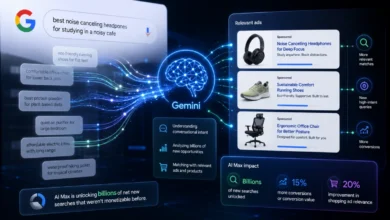
LLMs are time machines that strip away the essential context of the decision-making journey


The integration of Large Language Models (LLMs) into search interfaces has fundamentally altered the mechanism of information discovery, replacing a multi-stage research process with an instantaneous synthesis of data. Traditionally, human inquiry followed a linear, friction-heavy path: an initial question prompted a search, which led to the evaluation of various sources, the assessment of contradictory viewpoints, and the gradual synthesis of knowledge. This process functioned as a heuristic, where the time and effort expended served as a proxy for the reliability of the resulting conclusion. By compressing this journey into seconds, modern answer engines have decoupled the destination—the answer—from the path metadata that once allowed users to judge the veracity and weight of the information provided.
The Erosion of Information Friction
Historical research methods were defined by "friction." Whether navigating a physical library or scrolling through pages of Google search results, the user was forced to engage with the architecture of information. A researcher would cross-reference journal articles, weigh the credibility of a publisher, and identify gaps in existing knowledge. This journey provided implicit signals: a scarcity of sources suggested a niche topic; conflicting reports indicated a contentious subject; and the time invested served as a psychological indicator of the depth of the inquiry.
When a user spent four hours researching a complex topic, the resulting decision was backed by a nuanced understanding of the landscape. Conversely, an LLM-generated summary provides a definitive, confident answer regardless of the depth or scarcity of the underlying data. This compression is lossy; it removes the context that allows for critical evaluation. Consequently, users are arriving at conclusions without the benefit of the investigative process that previously acted as an intellectual filter.
Empirical Evidence: The Shift in Cognitive Engagement
Academic research published in 2025 has begun to quantify the behavioral and cognitive shifts resulting from AI-driven search. A study published in PNAS Nexus by Shiri Melumad and Jin Ho Yun of the Wharton School of the University of Pennsylvania involved seven experiments with over 10,000 participants. The findings revealed a clear decline in the quality of output when users relied on AI summaries compared to traditional search methods.
Participants who utilized AI summaries demonstrated a lower retention of information and produced advice that was characterized as less original and less compelling to third-party observers. Perhaps most significantly, the researchers found that providing live, verifiable web links alongside AI summaries did not prompt users to engage with those sources. The presence of the summary effectively ended the user’s curiosity, creating a "termination effect" where the convenience of the answer outweighed the desire for verification.
This trend is corroborated by real-world usage data. A July 2025 report from the Pew Research Center, which tracked 900 U.S. adults across nearly 69,000 search queries, found that the presence of an AI summary resulted in a sharp decline in click-through rates. Users were significantly less likely to explore original sources, with many browsing sessions concluding immediately upon reading the AI-generated text. This suggests that the "repair mechanism" of the internet—whereby users would click through to high-quality, original content to correct or supplement their knowledge—is effectively failing.
The Persistence of Misinformation and the "Correction Gap"
In the pre-AI era, the information economy possessed a self-correcting immune system. If a search result provided a shallow or inaccurate overview, the user’s subsequent clicks on authoritative, specialized content served as an automatic, decentralized validation process. This cycle occurred millions of times daily, creating a feedback loop that rewarded depth and accuracy.
Current AI search paradigms have largely bypassed this loop. If a model generates a hallucination or a misrepresentation, the error is often "frozen" in the summary. Because users are increasingly conditioned to accept the summary as the final word, there is no corrective engagement with the original source material. This creates an asymmetry: while the initial answer is delivered in seconds, the process of correcting an error—which requires the AI to be re-crawled, re-trained, or updated—is slow, costly, and opaque. The burden of correction has shifted from the user’s intuitive search process to a complex, opaque system of algorithmic updates, leaving inaccuracies to persist in the interim.
Cognitive Overconfidence: A Long-Standing Challenge
The psychological phenomenon of confusing "access" with "understanding" is not entirely new. In 2015, researchers at Yale University conducted nine experiments demonstrating that internet access frequently leads to a false sense of cognitive competence. Participants often believed they understood complex topics simply because they knew where to find information about them.
However, the current iteration of AI exacerbates this condition. While the 2015 study showed that users felt confident even when search results were fruitless, the modern AI interface validates that confidence with a coherent, authoritative-sounding narrative. Research from Microsoft and Carnegie Mellon in 2025 further indicates that users who exhibit high confidence in AI outputs demonstrate lower levels of critical thinking. The data suggests a correlation: the more a user relies on the model’s synthesis, the less likely they are to independently verify or challenge the logic presented.
Implications for Content Strategy and Marketing
For content publishers and marketing professionals, the implications of this shift are profound. The traditional "staircase" model of content marketing—which relies on a sequence of definitional explainers, comparative analysis, and deep-dive technical resources—is being disrupted.
Because AI models are adept at absorbing and restating "beginner" or "definitional" content, this information is often displayed directly within the search engine result page (SERP). As a result, the audience that reaches a company’s website is no longer the "curious researcher" who requires foundational education. Instead, they arrive as "confidently underinformed" individuals who believe their research is already complete.
This creates a paradox for content creators:
- The Obsolescence of Foundations: The content designed to welcome a newcomer is now being consumed by the AI model rather than the human user.
- The Mismatch of Expectations: When these users land on a website, they are met with introductory material they feel they have already surpassed, or advanced material that assumes a level of foundational knowledge they have not actually internalized.
Publishers must pivot their strategies to focus on "un-modelable" content—insights, proprietary data, and unique perspectives that cannot be easily synthesized by an LLM. Furthermore, this content must be positioned at the "front door" of the user journey, as the middle and bottom layers of the traditional sales funnel are increasingly being skipped by users who believe they are already well-versed in the topic.
Conclusion: The Need for Information Literacy
The transition to AI-integrated search represents the most significant change in information retrieval since the inception of the web. While the time-saving benefits are undeniable, they come at the cost of the cognitive labor that previously ensured the quality and credibility of information.
The challenge for the future is not merely technical but pedagogical. Users must develop a new form of digital literacy—an understanding that an AI summary is a synthesis, not an authoritative truth. Until such time as these systems can reliably signal the uncertainty or depth of their sources, the burden of verification remains with the user. The "time machine" works, but it leaves the passenger with no map of the terrain they have traversed, making the development of critical evaluation skills more essential than ever before. As the information economy continues to evolve, the ability to distinguish between the speed of an answer and the substance of a conclusion will define the next generation of informed decision-making.