The Evolution of WordPress Operations: How AI Agents Are Transforming Web Development From Passive Assistants to Active Executors


Artificial intelligence has crossed a critical threshold, shifting its role in web development and enterprise technology from a passive conversational tool to an active executor of complex workflows. For over a decade, developers and site administrators have interacted with AI primarily as a helper—a system capable of drafting code, answering technical queries, or generating content outlines. However, recent developments in automation protocols, Application Programming Interfaces (APIs), and Model Context Protocol (MCP) servers are enabling AI agents to independently carry out multi-step procedural tasks across digital environments.
This technological pivot marks the transition from assistive AI to outcome-focused workflow automation. According to projections from global technology research firm Gartner, more than half of enterprises are expected to abandon traditional assistive AI tools in favor of outcome-focused platforms by 2028. This paradigm shift means that human workers will increasingly transition from executing procedural steps to supervising autonomous software agents that carry out routine work on their behalf.
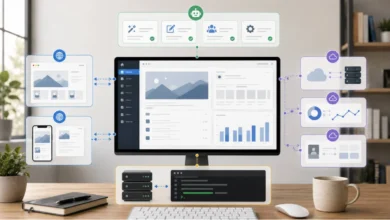
Within the WordPress ecosystem, this transition is supported by native architectural advancements. The introduction of the WordPress Abilities API provides a standardized framework for core software, plugins, and themes to define specific actions, along with their precise inputs, outputs, and permission scopes. Combined with the WordPress MCP Adapter, these abilities can be exposed as secure tools that AI agents can dynamically discover and execute. Rather than merely instructing a developer on how to configure a staging environment or run a security patch, an AI agent with appropriate permissions can now perform those technical actions directly.
The integration of agentic workflows into web operations addresses long-standing bottlenecks in site management, particularly for agencies and enterprise teams handling large portfolios of websites. Routine maintenance, server optimization, error troubleshooting, and content deployments traditionally require tedious, repetitive manual intervention through administrative dashboards. By routing these repeatable actions through programmatic interfaces, organizations can fundamentally rethink their operational efficiency.
To understand the trajectory of this transformation, it is essential to examine how modern hosting infrastructure facilitates automated execution. Advanced hosting providers, such as Kinsta, have spent recent years building robust, programmatic layers into their platforms. The Kinsta API exposes critical hosting operations, enabling scripts and external applications to create staging environments, push staging updates to production, clear server and Content Delivery Network (CDN) caches, update plugins and themes, manage backups, and analyze long-running background processes.
When combined with AI agents, these APIs serve as the foundational execution layer. A typical workflow no longer requires a human operator to log into a dashboard, click through a series of menus, and manually verify results. Instead, the operational paradigm has evolved to follow a structured loop: a human operator establishes a directive, an AI agent interprets the request, queries the appropriate API or tool, executes the approved action, evaluates the result, and logs the outcome for human review.

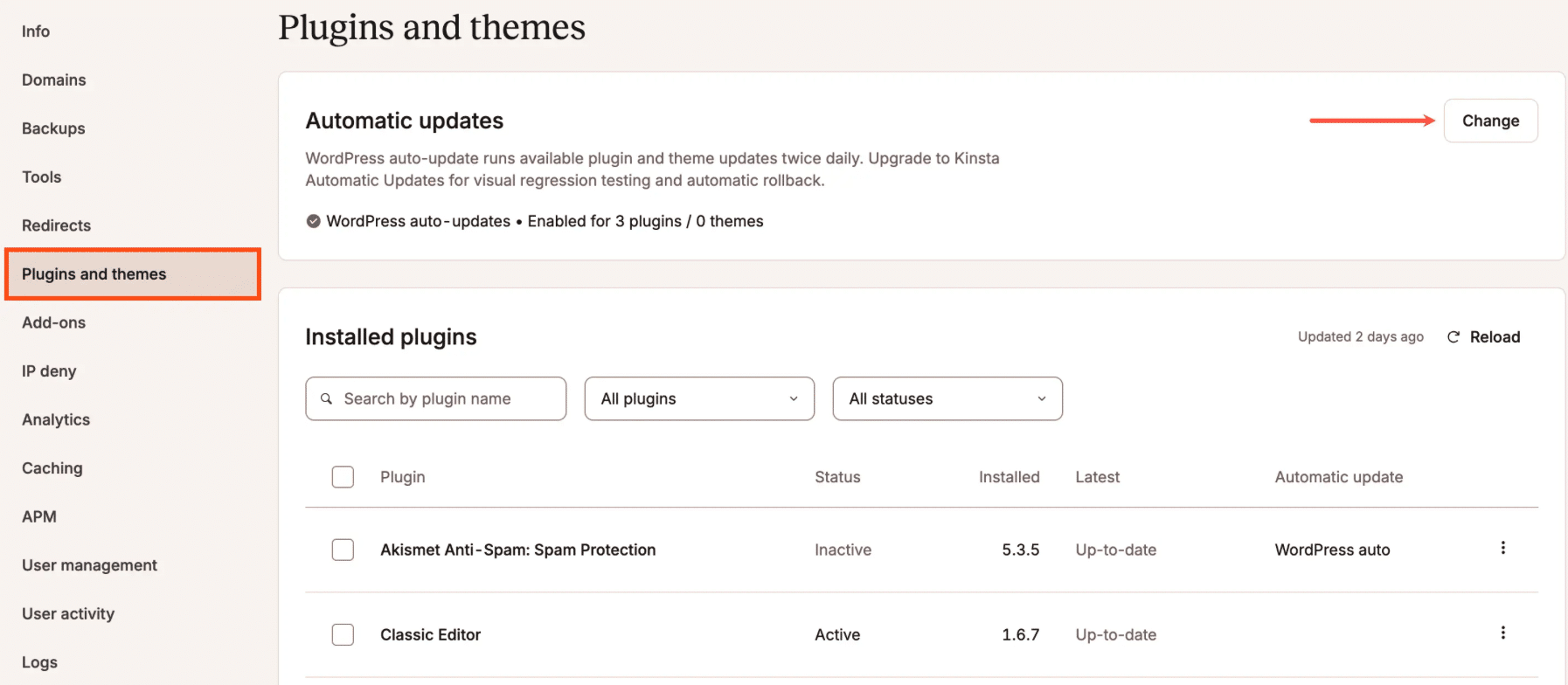
This architecture enables advanced use cases across several core pillars of website management, starting with maintenance and updates. Plugin and theme updates are notoriously time-consuming and fraught with the risk of visual regression or site crashes. While automated update systems already exist—such as Kinsta’s automated update feature, which captures backups, deploys updates, runs visual comparison checks, and triggers automated rollbacks if an error is detected—AI agents introduce a higher level of orchestration. An agent can analyze available updates across dozens of sites simultaneously, prioritize security patches, isolate high-risk updates in temporary staging environments, conduct pre-deployment checks, and escalate critical failures to a human engineer.
Staging and deployments represent another primary domain for agentic automation. Standard deployment pipelines require repetitive validation steps. An agent can programmatically provision a staging environment, deploy a set of code changes, trigger automated testing suites, compile the results, and prepare the package for final deployment, leaving the ultimate production-release decision in the hands of a senior developer.
Similarly, performance optimization and troubleshooting benefit significantly from agentic integration. When a WordPress site experiences latency or throws catastrophic errors—such as the dreaded "Error Establishing a Database Connection" or a fatal PHP memory limit exhaustion—diagnosing the root cause usually requires manually reviewing server logs, traffic analytics, caching behavior, and resource consumption metrics. AI agents can autonomously query analytics and log endpoints via APIs to aggregate error data, review recent update histories, isolate failing database queries or plugin hooks using Application Performance Monitoring (APM) tools, and either implement a pre-approved remediation strategy or present a synthesized diagnosis to the site administrator.
Despite the technical feasibility of full site autonomy, industry experts emphasize that operational autonomy and system security must be balanced through rigorous guardrails. Granting an AI agent unrestricted access to a production environment introduces unacceptable levels of risk regarding data loss, security breaches, and unexpected downtime. Consequently, enterprise adoption relies on supervised automation and strict principle-of-least-privilege access controls.
Security architectures for agent-driven workflows dictate that an agent should possess only the precise permissions required to complete its assigned task. For example, an agent tasked with compiling weekly traffic analytics requires read-only access to specific metrics and has no operational need to modify Domain Name System (DNS) records, manage user accounts, or execute code modifications. Higher-risk actions—such as pushing code to production, restoring system backups, modifying database structures, or altering security settings—must remain gated behind mandatory human-in-the-loop approval gates.
Furthermore, operational visibility becomes paramount when software executes changes independently. When a developer modifies a site manually, institutional memory is preserved because the human actor understands the intent and execution steps. When an automated agent handles tasks asynchronously, teams require absolute transparency to reconstruct event timelines without manual guesswork.
Comprehensive activity logging systems are vital to maintaining this transparency. Platforms like the MyKinsta Activity Log record granular, account- and site-level actions, capturing user identifiers, timestamps, execution statuses, and targeted components. By exposing these logs programmatically through APIs, engineering teams can ensure that every automated action executed by an AI agent is permanently documented, easily audited, and instantly reversible if an anomaly occurs.
The implications of agentic web operations extend deeply into the business and delivery models of digital agencies. Traditionally, agency revenue models for maintenance retainers have been tethered to human labor hours. Routine tasks such as monthly plugin updates, security scans, uptime monitoring, and client reporting consume significant bandwidth that could otherwise be directed toward strategic digital consulting, custom development, or creative design.
As AI agents absorb the repetitive execution layer of website maintenance, agencies face a fundamental operational restructuring. Managing twice as many client websites will no longer require a linear expansion of junior maintenance staff or result in burnout from repetitive administrative duties. Instead, agencies can scale their operations efficiently while reallocating human capital toward high-value activities that demand emotional intelligence, strategic foresight, and creative problem-solving. This shift allows technical teams to focus on bespoke architecture design, complex integrations, user experience optimization, and personalized client consultations.
The broader economic and operational implications point toward a future where developers spend less time operating web infrastructure and significantly more time architecting the operational rules that govern automated systems. Rather than viewing artificial intelligence as an existential threat to technical employment, industry leaders increasingly frame agentic automation as a force multiplier that elevates the strategic value of human oversight.
Organizations seeking to prepare for this transition do not need to execute an immediate, disruptive overhaul of their entire technology stack. Instead, industry analysts recommend a gradual, phased approach to operational maturity. Teams should begin by auditing existing manual workflows to identify repetitive, low-risk administrative bottlenecks that are prime candidates for programmatic execution. Standardizing internal documentation, implementing robust staging and rollback procedures, and familiarizing development teams with API-driven management tools establish a solid foundation.
As agentic frameworks mature, organizations can progressively expand the autonomy of their automated tools while maintaining strict human governance over mission-critical infrastructure. By combining the execution speed of AI agents with the accountability, judgment, and strategic vision of human developers, the digital web development industry is poised to enter a new era of efficiency, scalability, and technical reliability.