The integration of true nondeterminism into web design has long been considered a "holy grail" for developers seeking to move beyond static, rigid layouts. For years, the pursuit of organic, unpredictable UI—often referred to as "controlled chaos"—required cumbersome JavaScript libraries or complex server-side generation. However, the emergence of the CSS random() function, currently in an editor’s draft phase by the W3C, promises to fundamentally shift this paradigm. By allowing developers to declare randomized values directly within the stylesheet, the browser engine itself becomes a generative tool, paving the way for more dynamic, lifelike digital experiences.
The Philosophy of Uncertainty in Digital Design
The recent enthusiasm for generative UI is not merely a technical trend but a reflection of a broader cultural shift. In his influential work How to Be Perfect, Michael Schur, creator of the sitcom The Good Place, explores the "myth of meritocracy," arguing that individuals often underestimate the profound role of luck in their life outcomes. This concept—that reality is inherently probabilistic—is increasingly manifesting in our digital interfaces.
When websites embrace controlled randomness, they mimic the Heraclitean principle that one cannot step into the same river twice. By introducing subtle flux into a page’s layout, color palette, or typography, designers can create environments that feel less like sterile machines and more like evolving ecosystems. While some critics argue that extreme nondeterminism—such as Google’s experimental usage of Generative UI in search—risks confusing users by breaking the expectation of consistency, proponents argue that managed randomness enhances engagement and provides a sense of delight.
A Chronology of the CSS Random() Specification
The path toward native CSS randomness began in earnest as part of the W3C’s ongoing efforts to "pave the cowpaths"—identifying common, repetitive tasks currently offloaded to heavy JavaScript and standardizing them as native browser primitives.
In late 2025, the web development community reached a significant milestone when Apple’s WebKit engine, which powers Safari, became the first to implement the random() specification. This release allowed developers to test fine-grained control over layout properties, such as randomized confetti animations, starfields, and multi-colored grid systems.
Despite this breakthrough, the implementation remains siloed. As of mid-2026, Chrome and Firefox have signaled development activity on the feature, but native cross-browser support remains elusive. This has created a "Safari-only" landscape, leading to a state of fragmentation that hinders widespread adoption. For consultants and developers working on production-grade, greenfield projects, the lack of universal support presents a significant barrier, forcing a choice between waiting years for baseline compatibility or resorting to custom polyfills.
The Technical Case for Native Randomness
The argument for native implementation is rooted in the "Rule of Least Power," a principle stating that problems should be solved using the least powerful language capable of expressing them. By migrating randomization logic from JavaScript to CSS, developers reduce the runtime overhead of their applications. JavaScript-based randomization requires the main thread to compute values and manipulate the DOM, often leading to layout thrashing or performance degradation during complex animations.
Conversely, CSS random() is declarative. The browser’s engine can optimize these calculations at the rendering layer, ensuring that even complex, randomized layouts maintain a smooth 60 frames-per-second performance. Furthermore, the random() spec includes advanced features like element-shared base values, which allow developers to synchronize random values across multiple elements—ensuring, for instance, that all stars in a background field tilt at the same angle, even if their positions are randomized individually.
Bridging the Gap: The Rise of the Polyfill
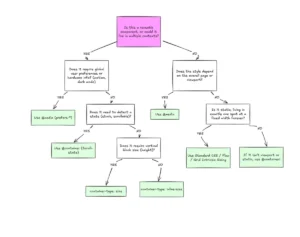
In the absence of cross-browser support, the development community has begun exploring polyfill solutions. A notable effort is the css-random-polyfill package, which enables the usage of random() syntax in browsers that do not yet support it natively. The polyfill operates by scanning the computed styles of elements for properties prefixed with --random and resolving them at runtime.
This approach offers a unique advantage: because the polyfill works with standard CSS custom properties, the underlying code remains "future-proof." If a developer writes --random-size: random(10px, 50px);, a polyfill can resolve this today, but once the browser adds native support, the same code will function without modification. This allows teams to iterate on cutting-edge designs without fearing technical debt or the need for a complete rewrite once standards reach baseline status.
Implications for Future Web Architectures
The ability to use random values in CSS opens the door to sophisticated design patterns previously deemed too resource-intensive. Beyond simple aesthetic flourishes, these capabilities support:
- Adaptive Layouts: Interfaces that subtly adjust their spacing or grid structure based on randomized seeds, potentially helping to break the monotony of grid-based design.
- Generative Branding: Companies can now programmatically generate unique, brand-aligned backgrounds or UI elements that differ slightly for every user, creating a personalized yet consistent brand experience.
- Reduced Payload Sizes: By eliminating the need for third-party animation libraries, developers can significantly decrease the JavaScript footprint of their sites, contributing to faster loading times and improved SEO rankings.
However, the industry must remain cautious. The "controlled" in "controlled chaos" is paramount. As the W3C continues to refine the random() and random-item() specifications, focus must be placed on accessibility and predictability. Randomness should never interfere with a user’s ability to navigate a site or access critical information.
Broader Impact and Industry Outlook
The transition toward declarative randomization represents a maturing of the web platform. As CSS evolves from a simple styling language into a powerful, logic-capable engine, the boundary between "content" and "code" continues to blur.
While we are still in the early exploration phase, the trajectory is clear: the web is becoming more organic. The success of the random() spec will ultimately depend on the collaboration between browser vendors and the open-source community to ensure that these features are performant, accessible, and, above all, interoperable.
For now, the state of the web remains in flux—a perfect reflection of the very randomness the new CSS standard seeks to embrace. As the industry watches Chrome and Firefox follow Safari’s lead, developers are encouraged to experiment with these tools, recognizing that the future of web design lies in our ability to harness uncertainty, turning the "luck of the draw" into a deliberate and sophisticated design strategy. Whether used for a simple, twinkling starfield or a complex, data-driven generative grid, CSS random() is poised to change how we interact with the digital landscape, one pixel at a time.