Shopify and Vercel are collaborating to build ecommerce shops for humans and AI alike

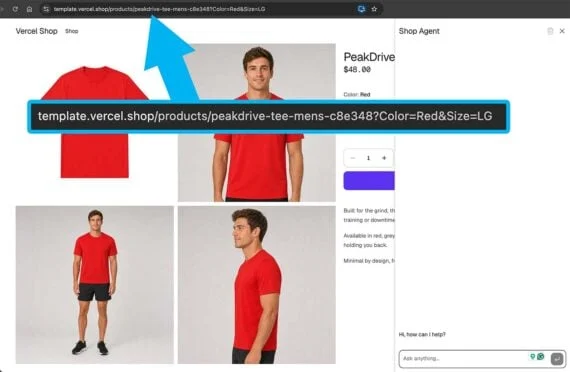
The digital commerce landscape is undergoing a paradigm shift as the integration of artificial intelligence transitions from experimental chatbots to autonomous, agentic shopping systems. On October 15, during the Ship 26 conference in San Francisco, Shopify CEO Tobi Lütke and Vercel CEO Guillermo Rauch unveiled a strategic partnership aimed at redefining the architecture of online storefronts. The collaboration centers on the release of a rebuilt Hydrogen software development kit (SDK) by Shopify and a new, AI-ready open-source storefront template from Vercel known as Vercel Shop. This initiative represents a concerted effort to ensure that the next generation of retail interfaces is as accessible to machine learning agents as it is to human consumers.
The Evolution of the Hydrogen Framework
The partnership is built upon the foundation of Shopify’s Hydrogen, a React-based framework designed to provide developers with a robust toolset for building custom storefronts. Historically, creating a headless commerce experience—where the frontend is decoupled from the backend—has been an arduous task requiring complex integrations for catalog data, pricing, inventory management, and secure checkout flows.
The collaboration, which follows a significant rebuild of Hydrogen announced on June 30, streamlines these processes. By organizing common commerce functions into shared, modular tools, Shopify and Vercel have created a system that allows developers to focus on user experience while relying on Shopify’s battle-tested infrastructure for the heavy lifting of transactional logic. Lütke emphasized the difficulty of building secure, reliable checkout systems, noting that such software requires decades of refinement. By opening these components to developers, Shopify is essentially providing a "commerce engine" that can be customized to suit any brand identity or technical requirement, all while maintaining the security and performance standards necessary for high-volume retail.
Chronology of the Strategic Alliance
The relationship between Shopify and Vercel has matured steadily over the past eighteen months, moving from general platform compatibility to deep architectural integration.
- Early 2023: Initial discussions regarding the limitations of standard headless commerce templates, which were primarily optimized for visual browsers.
- June 30, 2026: Shopify and Vercel officially announce a major overhaul of the Hydrogen SDK. The focus is on cross-framework compatibility, allowing developers to deploy Shopify-backed stores across various JavaScript runtimes, including Vercel’s edge network.
- October 15, 2026: At the Ship 26 conference, the companies demonstrate "Vercel Shop," a template that introduces the concept of agent-readable data structures.
- Post-Conference: Deployment of the Vercel Shop template begins, with Vercel’s own merchandise store serving as the primary proof-of-concept for the new AI-enabled architecture.
Bridging the Gap Between Human and Machine Shoppers
The core innovation of the Vercel Shop template is its dual-interface capability. For human users, the template functions as a standard, high-performance storefront. However, it incorporates structured data parameters directly into its URL schema and API responses, making it inherently "legible" to AI agents.
In a traditional web environment, an AI agent attempting to "shop" for a user would often need to navigate complex DOM structures, interpret CSS-heavy layouts, or rely on screen-scraping techniques that are brittle and error-prone. Vercel Shop eliminates this friction by providing a consistent, machine-readable data layer. Whether an agent is searching for a specific color of a garment or verifying a size availability, the information is presented in a standardized format that requires minimal parsing.
This approach acknowledges the growing trend of "agentic commerce," where consumers use personal AI assistants to perform research, compare products, and manage logistics on their behalf. By optimizing for these agents, merchants can ensure their products appear in the results generated by AI-driven shopping assistants, effectively creating a new SEO-like category for machine discovery.
The Rise of the On-Site Store Assistant
Beyond facilitating external agents, the Vercel Shop template includes an integrated, optional AI shopping assistant. This feature mimics the functionality of enterprise-grade retail bots like Amazon’s Alexa or Walmart’s Sparky, but with a level of customization previously unavailable to independent developers.
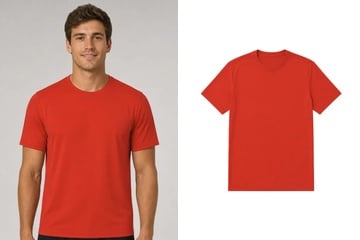
The assistant acts as an interface layer that communicates directly with the Shopify cart. A shopper can interact with the bot to inquire about store policies, filter products based on specific criteria, or request changes to an existing order. Crucially, the assistant remains tethered to the merchant’s official Shopify backend. This ensures that inventory levels, pricing, and tax calculations remain accurate and synchronized with the visual storefront.
Security remains a primary constraint of this implementation. The AI assistant is explicitly prohibited from finalizing payments or processing sensitive financial data. Instead, it guides the user to a secure, standardized checkout flow, maintaining the integrity of the transaction while offloading the burden of discovery and cart management to the AI.
Implications for the Ecommerce Ecosystem
The implications of this collaboration are profound for both small-to-medium businesses and enterprise retailers. Historically, implementing such advanced AI features would require massive R&D budgets. By democratizing access to this technology through the Vercel Shop template, Shopify and Vercel are lowering the barrier to entry for merchants who wish to remain competitive in an increasingly automated retail environment.
From a data perspective, the move signifies a departure from "page-view" metrics toward "intent-based" metrics. As shopping agents become more common, merchants will need to analyze how their products perform in agent-driven queries. The structured data approach championed by Vercel and Shopify provides the necessary telemetry to track these interactions, allowing brands to optimize their product descriptions and metadata for AI consumption.
Furthermore, the emphasis on modularity—what Lütke described as "remixing pieces" of the commerce experience—suggests that the future of the internet is not one of monolithic platforms, but of interconnected services. By providing the plumbing for these connections, Shopify is positioning itself as the central nervous system of global commerce, while Vercel provides the high-performance edge infrastructure required to make these interactions instantaneous.
Technical Hurdles and Future Considerations
While the promise of AI-driven commerce is substantial, the transition is not without challenges. Developers must navigate the complexities of AI gateway configuration, ensuring that the assistant provides accurate information while avoiding the "hallucinations" common in large language models. Additionally, the shift toward agentic discovery may alter the traditional customer acquisition funnel, forcing marketers to rethink how they build brand loyalty when an AI, rather than a human, is making the initial product selection.
Despite these hurdles, the industry response has been largely positive. By creating an open-source template, Vercel is inviting a community-led development cycle, where developers can contribute new plugins, safety guardrails, and interface improvements. This collaborative spirit is essential for the long-term viability of the project, as it ensures the technology remains adaptable to the rapid pace of innovation in the AI sector.
As the retail industry moves into 2027 and beyond, the success of this partnership will likely be measured by the adoption rate of these tools among top-tier merchants. If the Vercel Shop template becomes the industry standard, it will represent a significant milestone in the evolution of the web, proving that the digital storefront is no longer just a destination for human interaction, but a dynamic, intelligent system capable of engaging with the next generation of autonomous digital entities.