Mastering Media Management: How Filestack is Streamlining the Modern Digital Pipeline

Managing digital assets in an era of high-definition content, diverse file formats, and cross-platform accessibility has become a significant technical burden for developers and enterprises alike. Historically, building a custom media pipeline required stitching together disparate services for storage, processing, and delivery, often resulting in fragmented workflows and increased latency. As the volume of user-generated content continues to surge—with recent industry reports suggesting that global data creation is expected to reach 180 zettabytes by 2025—the necessity for standardized, API-driven media management solutions has moved from a convenience to a necessity. Filestack has emerged as a key player in this sector, providing a comprehensive utility that addresses the entire lifecycle of a file: ingestion, transformation, and high-speed delivery.
The Evolution of Media Pipelines
The traditional approach to handling media—especially when sourced from third-party locations or user uploads—was manual and error-prone. Developers often faced the "input chaos" scenario, where files arrived in varying sizes, resolutions, and file formats, requiring custom server-side scripts to sanitize, resize, or compress them before they could be safely displayed on a website or application.
The origins of current cloud-based media utilities can be traced back to the early 2010s, when the rise of mobile-first web development demanded faster image loading times to improve user experience (UX) and SEO rankings. Filestack entered this space by positioning itself as an abstraction layer. By offloading the complexities of storage bucket configuration, image processing server maintenance, and Content Delivery Network (CDN) management to a dedicated service, organizations could focus on core product development rather than infrastructure plumbing.
Streamlined Ingestion: The First Link in the Chain
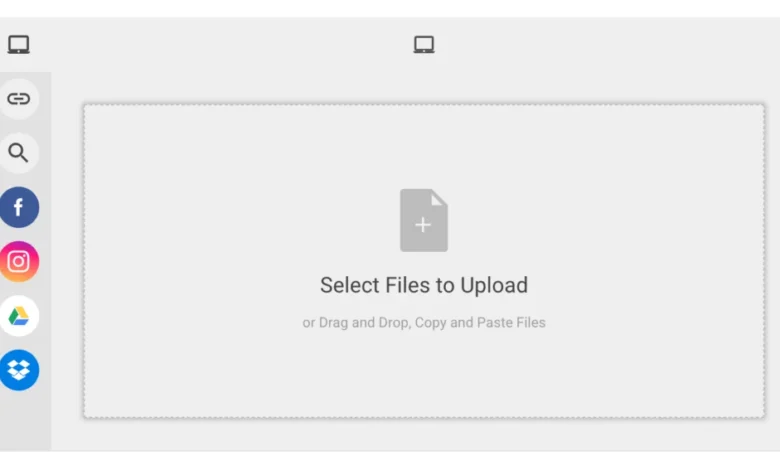
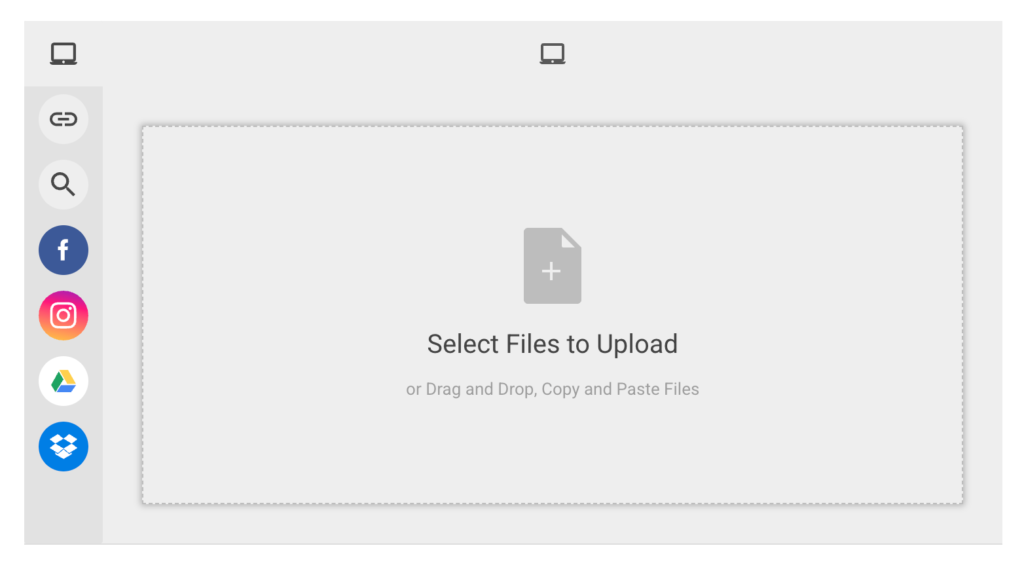
The ingestion phase is the most critical point for data integrity. A well-designed file picker must handle everything from local device uploads to cloud-syncing from services such as Google Drive, Dropbox, and GitHub. Filestack’s approach centers on a highly functional UI component that can be initialized with minimal code.
From a technical perspective, the implementation of such a picker via a simple JavaScript initialization—const client = filestack.init("apikey");—represents a significant reduction in development overhead. By integrating with over 20 third-party services, the tool accounts for the modern user’s fragmented digital life. Furthermore, the inclusion of drag-and-drop capabilities reflects industry standards for high-conversion UX, where the reduction of "clicks to completion" directly correlates to user retention.
For backend-heavy applications, the utility extends into server-side integration. Python libraries allow developers to define storage parameters programmatically, directing files to specific S3 buckets or folders with metadata tags. This level of granular control is essential for enterprise compliance and data organization, ensuring that assets are not just stored, but indexed according to internal taxonomy.
The Transformation Engine
Once a file is ingested, the challenge shifts to optimization. Raw files, particularly high-resolution photos or uncompressed video, are rarely suitable for web delivery due to their impact on page load speeds. Google’s Core Web Vitals, which now serve as a cornerstone of search engine ranking, emphasize the importance of Largest Contentful Paint (LCP). Large, unoptimized images are one of the primary culprits for poor LCP scores.
Filestack’s transformation engine operates on an "on-the-fly" model. Rather than pre-processing every conceivable version of an image (e.g., thumbnail, standard, hero, mobile-optimized), the service generates these variations via URL parameters. By appending commands such as /resize=width:300/ or adding complex filters like /sepia=tone:80/, developers can deliver tailored assets without maintaining a massive storage footprint.
This shift toward "just-in-time" processing has profound implications for cost management. By minimizing the amount of redundant data stored on cloud servers, businesses can significantly reduce their storage and bandwidth expenses. Furthermore, the availability of a Transformation UI allows non-technical stakeholders to manipulate media directly, democratizing a process that was previously reserved for developers or graphic designers.
Delivery and Performance Optimization
The final stage of the media pipeline—delivery—is where user retention is either secured or lost. Even a perfectly optimized file will fail to perform if the underlying delivery mechanism is slow or unreliable. Filestack utilizes a robust CDN architecture to cache content globally. When a file is accessed via a Filestack URL, the system caches the result of that request.
In a globalized digital economy, the latency between a user in Tokyo and a server in Virginia can be the difference between a successful transaction and an abandoned cart. CDN caching mitigates this by placing content on edge servers geographically closer to the end user. Filestack’s 30-day cache policy for unique URLs provides a balance between performance and the need for content updates, ensuring that while files remain accessible at high speeds, developers can still push updates by modifying the underlying source or URL structure.
Broader Industry Impact
The rise of such services reflects a wider industry trend toward "Headless" and "Composable" architecture. By decoupling the media layer from the application layer, developers are creating more resilient systems. If a service provider updates its storage API, the application layer often remains untouched because the media utility acts as a buffer.
Market analysis suggests that the demand for these tools is growing in tandem with the rise of AI-driven applications. As machine learning models require vast, clean datasets for training, the ability to ingest and normalize media at scale—using tools that can automatically tag, resize, and store files—is becoming a vital component of the modern tech stack.
Implementation and Developer Accessibility
For developers, the barrier to entry for these platforms has been intentionally lowered. A 21-day free trial period, combined with extensive documentation, allows teams to perform a proof-of-concept (POC) integration without significant upfront investment. The inclusion of comprehensive code samples in the documentation serves as a standard-bearer for developer relations in the SaaS space.
From a business standpoint, the "buy vs. build" decision regarding media pipelines is increasingly leaning toward "buy." Building a custom, secure, and performant image transformation and delivery pipeline requires ongoing maintenance, security patching, and server monitoring. When accounting for engineering hours, the Total Cost of Ownership (TCO) for an in-house solution often dwarfs the subscription cost of specialized platforms like Filestack.
Conclusion: Future-Proofing Media Workflows
As the internet moves toward richer, more interactive experiences, the complexity of media management will only increase. Whether it is handling 4K video streams, high-resolution document processing, or secure file transfers for enterprise workflows, the tools of tomorrow must be as flexible as the data they handle.
Filestack’s comprehensive approach—covering ingestion, transformation, and delivery—provides a blueprint for how technical teams can mitigate the risks associated with media management. By centralizing these functions, developers can ensure that their applications remain performant, scalable, and resilient, regardless of the volume or variety of the media being processed. As the digital landscape continues to evolve, the ability to automate these workflows will remain a critical competitive advantage for any organization looking to prioritize speed, reliability, and user satisfaction in the modern digital age.