The Evolution of Digital Marketing Analytics Moving from Cost Per Session to Business Accountability and Profitability in the AI Era

Digital marketing strategies within global corporations are undergoing a fundamental transformation as financial scrutiny increases and artificial intelligence alters the search landscape. For decades, marketing departments have relied on "activity-based" metrics to justify expenditures, often focusing on volume over value. However, recent shifts in the industry suggest that traditional Key Performance Indicators (KPIs) such as Cost Per Session (CPS) and Return on Ad Spend (ROAS) are increasingly viewed as insufficient by Chief Financial Officers (CFOs) who demand a clearer link between marketing activity and bottom-line profitability. This transition from "Activity" to "Accountability" represents a critical pivot for the next generation of marketing success.
The Problem with Activity-Based Metrics
The historical reliance on activity metrics stems from the ease of measurement within digital platforms. Metrics such as impressions, views, and sessions provide immediate feedback on reach but offer little insight into business impact. In a recent strategic consulting engagement for a global company operating in 75 countries, analysts discovered that a primary marketing campaign was being optimized for "Cost Per Session." This metric measures the total ad spend divided by the number of site visits generated.
While superficially useful for tracking traffic acquisition costs, CPS fails to account for the quality of the traffic or the eventual outcome of the visit. From a financial perspective, a low CPS can be misleading; if a campaign generates thousands of sessions at a low cost but none of those visitors convert into paying customers, the campaign is a net loss for the organization. Industry experts argue that focusing on CPS encourages a "traffic at any cost" mentality, which prioritizes volume over strategic alignment with business goals.
The Hierarchy of Marketing Measurement
To bridge the gap between marketing efforts and financial results, a three-tiered framework of measurement is emerging: Activity, Outcomes, and Accountability.
1. Activity: This is the baseline level of measurement, encompassing clicks, impressions, and sessions. While these metrics indicate that a campaign is running and reaching an audience, they are often viewed as "vanity metrics" because they do not reflect revenue generation.
2. Outcomes: Moving beyond activity, outcome-based measurement tracks conversions, revenue, and conversion rates. This level provides a clearer picture of whether the traffic generated is performing the desired action, such as a sale or a lead generation form submission. For B2B companies or those with long sales cycles, outcomes may include micro-conversions, which are then weighted by average lead-to-offline conversion rates to estimate value.
3. Accountability: This is the most sophisticated level of measurement, favored by CFOs. It incorporates the cost of marketing and the Cost of Goods Sold (COGS) to determine the actual profit generated by a campaign. Metrics in this category include Return on Investment (ROI), Profit on Ad Spend (POAS), and Profit on Investment (POI).
Comparative Analysis: Google Advantage+ vs. Email Marketing
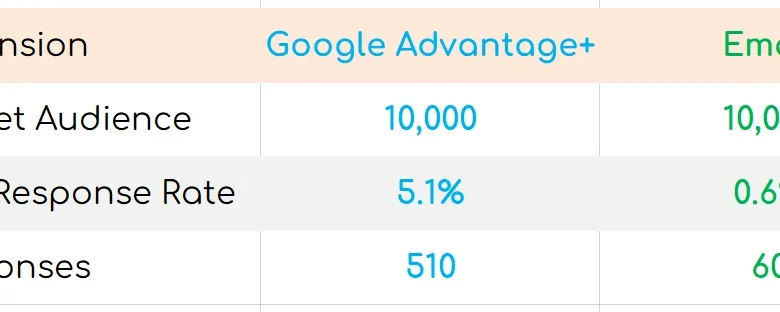
A data-driven comparison between modern AI-powered advertising platforms and traditional channels like email illustrates the necessity of accountability metrics. In a case study involving Google’s Advantage+ (an AI-driven campaign type), the platform delivered significant volume but questionable profitability when held to strict financial standards.
In the study, Google Advantage+ generated $17,000 in revenue from 173 orders, with a campaign cost of $7,200. On the surface, the Return on Ad Spend (ROAS) appeared healthy at 2.4. However, when accounting for the Cost of Goods Sold (COGS) and the campaign spend, the actual Profit on Investment (POI) was negative. For every $1 spent on the platform, the campaign returned only $0.70 in profit, essentially resulting in a $0.30 loss for every dollar invested.
In contrast, an email marketing campaign during the same period generated only $1,400 in revenue from 14 orders. However, the cost of the campaign was a mere $145. The ROAS for email was 9.6, and the POI was 5.7. This means that for every $1 spent on email, the company earned $5.70 in profit. Despite the lower volume, the email channel was exponentially more valuable to the company’s bottom line than the high-volume AI campaign.
The Role of Profit on Investment (POI) in Strategic Planning
The shift toward POI is designed to protect the Chief Marketing Officer (CMO) from budget cuts by providing the CFO with "scrutiny-proof" data. When a marketing department can demonstrate that its activities are producing incremental business impact rather than just traffic, it builds a stronger case for increased budgets.
Calculating POI requires a high degree of transparency regarding internal costs. Organizations must be able to identify or estimate COGS—the direct costs attributable to the production of the goods sold by a company. While some marketers resist this level of accountability due to its complexity, proponents argue that "good enough" data (such as using average percentage margins) is preferable to ignoring costs entirely.
The formula for POI is generally defined as:
(Revenue – COGS – Campaign Spend) / Campaign Spend
By using this formula, companies can identify which platforms are truly driving growth and which are merely "providing employment to the ad platform’s sales team."
Navigating the AI Search Landscape and SEO Implications
The urgency to move away from session-based metrics is further compounded by the evolution of search engines. Google’s transition toward "AI Mode"—incorporating AI Overviews (SGE) and ChatGPT-style interactions—is fundamentally changing how users interact with search results.
In May 2025, Google issued guidance on succeeding in AI search, emphasizing the "full value of visits" over the mere number of clicks. According to Google’s research, clicks originating from AI-enhanced search results are often of higher quality. Users spend more time on sites because the AI has already provided context, ensuring that the visitor is more qualified and engaged before they even arrive.
Consequently, a focus on Cost Per Session becomes even more detrimental in an AI-driven environment. If an organization optimizes for the lowest possible CPS, it may inadvertently filter out the high-quality, high-intent traffic that AI search is designed to deliver. Google’s own recommendations urge businesses to look at indicators of engagement and conversion—such as signups and information lookups—rather than focusing on the "one-night stand" of a single session.
Strategic Recommendations for Marketing Recovery
For organizations finding themselves trapped in unprofitable high-volume campaigns, a structured recovery plan is recommended. This involves a shift from automated spending to strategic intent matching.
Step 1: Financial Auditing and Spend Suspension. If a platform demonstrates a negative POI, the immediate recommendation is to pause or significantly reduce spending. This serves as a "reset" for the internal media team and external agencies, signaling that profit, not volume, is the primary objective.
Step 2: Intent and Creative Alignment. Once spend is paused, teams must re-evaluate the intent available on the platform. This involves analyzing whether the audience, creative assets, and offers are aligned with the high-intent segments that drive profitability.
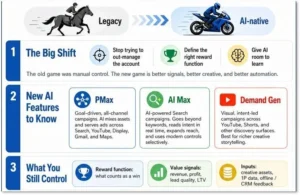
Step 3: Leveraging AI Features for Optimization. Rather than allowing AI platforms to operate with total autonomy, marketers should use AI-powered features to turbocharge specific tactics. This includes using machine learning to optimize for "Profit On Investment" goals rather than "Conversion Volume" or "ROAS" goals.
Step 4: The "Suck Less" Approach to Metrics. If an organization is not yet ready to transition fully to profit-based metrics, an interim step is to measure "Cost Per Non-Bounced Session." By removing "bounced" visits—where a user leaves the site instantly without interaction—the cost per session becomes more reflective of reality. In the case study mentioned previously, the CPS of $14 rose to $27 when accounting for a 52% bounce rate, providing a more sobering and actionable figure for the media team.
Broader Impact and Industry Implications
The broader implication of this shift is a necessary professionalization of the marketing analytics field. As AI continues to automate the tactical aspects of ad buying, the value of a marketing professional will increasingly be found in their ability to perform strategic financial analysis.
Agencies, too, will face pressure to change their compensation models. Many agencies currently charge a percentage of spend, an incentive structure that encourages high-volume, low-profit activity. A shift toward performance-based compensation tied to POI or POAS would align agency interests with the financial health of the client.
Furthermore, the rise of AI search suggests that the era of "cheap traffic" is coming to an end. As search engines become better at answering queries directly on the results page, only the most relevant and valuable traffic will click through to a brand’s website. Organizations that continue to prioritize Cost Per Session will find themselves increasingly marginalized in a landscape where quality of engagement is the only sustainable competitive advantage.
Ultimately, the move from activity to accountability is about business resilience. By focusing on outcomes and profitability, marketing departments can transform themselves from "cost centers" into "profit centers," ensuring their relevance in an increasingly automated and financially disciplined corporate world. The goal is not merely to drive traffic, but to drive sustainable, profitable growth that can withstand the scrutiny of the most rigorous CFO.