Take control of how data is used in Google Analytics to ensure compliance and user privacy in an evolving digital landscape.

As the global regulatory environment surrounding data privacy becomes increasingly stringent, businesses find themselves under mounting pressure to adopt more transparent and controlled data management practices. Legislative frameworks such as the General Data Protection Regulation (GDPR) in the European Union, the California Consumer Privacy Act (CCPA), and the California Privacy Rights Act (CPRA) have fundamentally shifted the expectations consumers have for how their digital footprint is tracked, stored, and utilized. In response to this shifting paradigm, Google has expanded the suite of administrative tools within Google Analytics, providing organizations with granular control over the data lifecycle, from initial collection to permanent deletion.
The Evolution of Privacy-Centric Analytics
The historical reliance on third-party cookies and unrestricted data harvesting is rapidly becoming a relic of the past. Over the last five years, major browser providers have moved to block third-party tracking, and mobile operating systems—most notably Apple’s iOS with its App Tracking Transparency framework—have forced a transition toward privacy-first measurement.
Google’s recent updates to its Analytics platform represent a strategic pivot toward "durable" measurement. This approach emphasizes first-party data and aggregate modeling rather than individualized, cross-site tracking. By offering deeper integration of consent-mode signals and geographic-specific data controls, Google aims to provide businesses with the ability to maintain analytical insights without compromising the privacy of their user base.
Strategic Data Governance: A Three-Pillar Approach
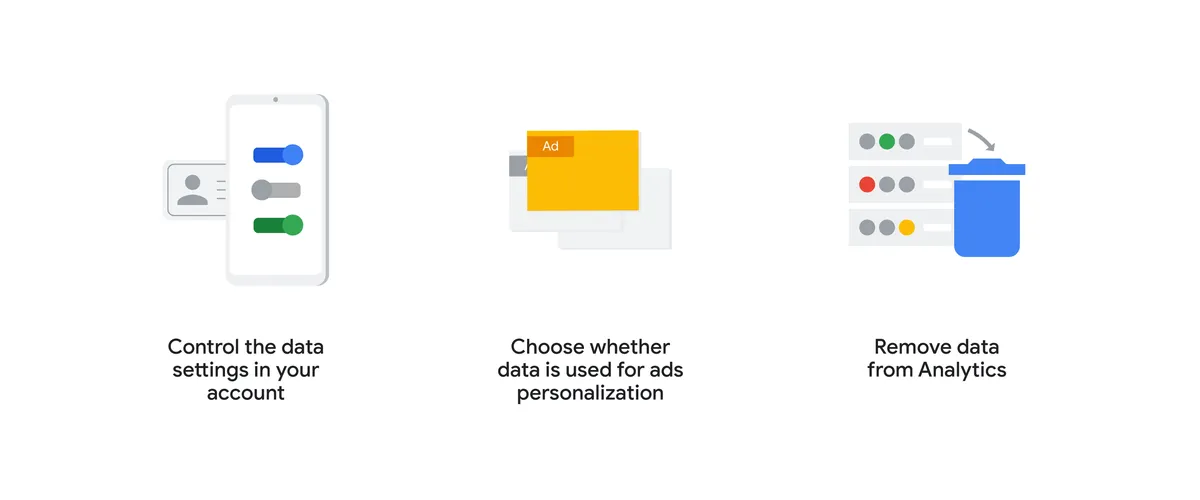
Effective data management in the current ecosystem is generally divided into three operational categories: collection management, personalization control, and data lifecycle management.
1. Managing Data Collection and Storage
Organizations must first define the parameters of their data collection. This involves deciding whether to accept updated Data Processing Terms, which align the business’s use of Google Analytics with current legal standards. Beyond the legal agreements, technical implementation is key. IP anonymization, once an optional configuration, is now a cornerstone of privacy-compliant tracking. By anonymizing IP addresses as close to the source as possible, businesses can mitigate risks associated with the storage of personally identifiable information (PII).

Furthermore, administrators have the ability to manage data retention periods. By default, user-level and event-level data are often subject to expiration policies. Businesses should audit these settings regularly to ensure that data is not being held longer than necessary for legitimate business purposes, a core requirement of many privacy regulations.
2. Fine-Tuning Ads Personalization
The intersection of analytics and digital advertising is where user consent becomes most critical. When businesses enable features such as Google signals, they gain access to cross-device reporting and sophisticated remarketing capabilities. However, these features rely on the collection of data that can be used for personalized advertising.
To maintain control, Google has introduced advanced segmentation for these settings:
- Property-Level Controls: Administrators can disable ads personalization for an entire property, ensuring that incoming events are marked as non-eligible for advertising profiles.
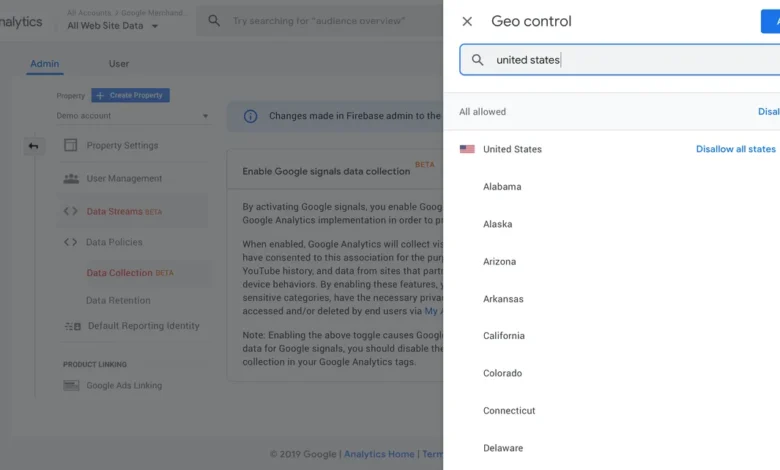
- Geographic Granularity: Recognizing that privacy laws differ significantly by region, Google now allows businesses to toggle ads personalization on or off based on the user’s location. This is particularly relevant for U.S. businesses that must navigate state-level regulations, where a one-size-fits-all approach is no longer legally sufficient.
- Event-Level Precision: For sophisticated users of App + Web properties, the ability to exclude specific events—such as sensitive form completions or health-related inquiries—from being used in advertising profiles allows for a surgical approach to data usage.
3. The Right to Erasure and Data Minimization
Under the "Right to be Forgotten," businesses are often required to delete data associated with specific individuals upon request. Google Analytics provides a clear pathway for these requests. Whether through the User Explorer report or the User Deletion API, administrators can trigger the removal of data for a specific user ID.
This process is not instantaneous, as it requires a verification and processing window to ensure that aggregated reports—which provide the backbone for business intelligence—remain statistically valid while individual identifiers are expunged. Additionally, the ability to delete entire properties provides a "nuclear option" for organizations that need to purge legacy data to meet updated internal compliance standards.
Data Privacy as a Business Imperative: An Analysis
The transition to these advanced controls is not merely a technical task; it is a strategic imperative. Analysts suggest that companies that adopt a "privacy-by-design" approach to their analytics infrastructure are seeing higher levels of customer trust and, consequently, better data quality.
Industry data suggests that when businesses are transparent about data collection, users are more likely to opt into tracking. A 2023 study by a leading marketing research firm indicated that brands perceived as "privacy-friendly" saw a 15% increase in direct traffic and improved engagement metrics compared to competitors with opaque data policies.
However, the complexity of these controls presents a challenge. The burden of configuration rests with the administrator. Without a deep understanding of how settings like "Google signals" interact with regional privacy laws, organizations risk "data leakage," where sensitive information is accidentally processed for advertising purposes. This necessitates a close collaboration between IT departments, marketing teams, and legal counsel.
Official Responses and Future Outlook
Google representatives have consistently emphasized that the platform is designed to be "future-proof." As the company moves toward a cookie-less future, the development of these tools is a clear signal that the platform will rely less on individual user identifiers and more on machine learning and modeling.
"We are committed to providing businesses with the tools they need to succeed in a changing world," a Google product spokesperson stated in a recent briefing. "The focus for the next twelve months is on enabling durable measurement that respects the individual user while providing the high-fidelity insights that businesses depend on for growth."
The Roadmap for Organizations
For businesses currently reviewing their analytics setup, the following timeline is recommended:
- Immediate Audit: Review current data retention settings and ensure IP anonymization is active across all web properties.
- Consent Integration: Implement consent mode to ensure that tags only fire when a user has provided the necessary permissions.
- Quarterly Compliance Review: Establish a quarterly cadence to review data sharing settings with Google and ensure that any changes in regional regulations are reflected in property-level settings.
- Training: Ensure that all staff with "Edit" permissions are trained on the implications of user deletion and ads personalization toggles.
The shift toward user-controlled, transparent, and privacy-compliant analytics is the new standard of the digital economy. While the technical requirements are more demanding than they were a decade ago, the benefits—both in terms of legal risk mitigation and improved user relationships—are substantial. As technology continues to evolve, the capacity for businesses to adapt these controls will remain a critical factor in their long-term digital maturity and market success. The tools are available, and the documentation provided in the Google Analytics Help Center offers a comprehensive guide to navigating these settings, ensuring that data-driven decision-making remains a viable and ethical cornerstone of modern business.