Meta Gives Its Muse AI Agents Speaking Capabilities and Expressive Avatars in a New Bid for Voice Interaction

Meta has officially rolled out major updates for its Muse artificial intelligence agents, introducing advanced speaking capabilities and expressive visual avatars designed to make human-machine interactions more intuitive, natural, and engaging. The newly integrated features allow users to select distinct voices for their personal AI agents, empower conversational audio queries, and interact with avatars that dynamically react in real-time. This strategic push represents Meta’s ongoing ambition to redefine how everyday consumers leverage artificial intelligence for creative brainstorming, professional preparation, and personal organization.
While the technology promises to lower the barrier to entry for complex AI prompting by allowing users to simply talk through their ideas aloud, the rollout also resurrects questions regarding consumer demand for novelty audio features. Meta’s latest product evolution arrives against a backdrop of previous experimental missteps in the conversational AI space, forcing industry analysts to evaluate whether the market is truly ready for expressive, customizable artificial intelligence companions or if this latest iteration will face the same hurdles as its predecessors.
The Evolution of Muse: From Text Prompts to Dynamic Voice Interaction
The core philosophy behind Meta’s latest update is rooted in a fundamental human behavior: thinking out loud. According to company statements released alongside the launch, the integration of voice aims to eliminate the friction often associated with crafting precise text prompts. Users frequently struggle to articulate complex or abstract concepts through written text boxes. By introducing a fluid, spoken-word interface, Meta hopes to enable users to brainstorm projects, map out creative directions, and tackle administrative tasks through natural, unscripted dialogue.
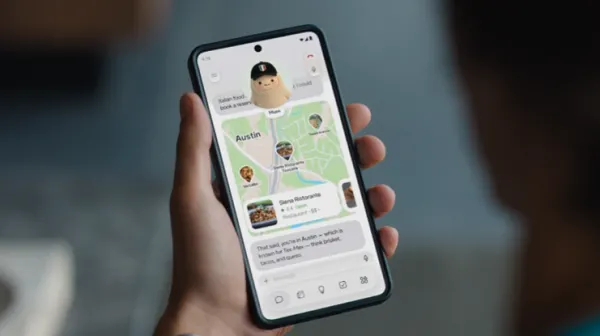
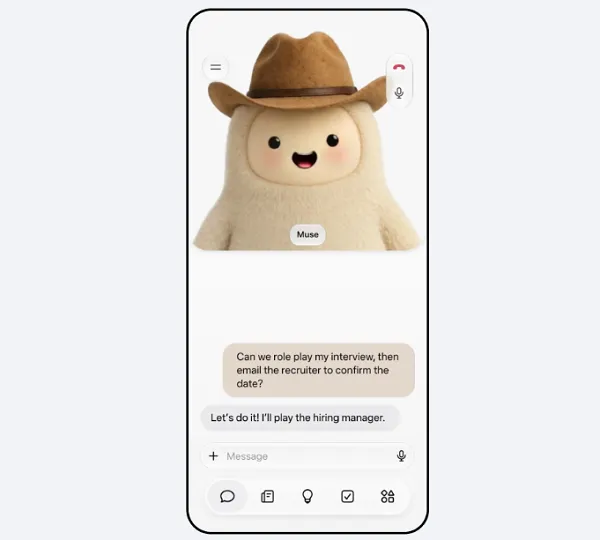
Under the updated system, Muse users can seamlessly transition between different modes of engagement depending on their immediate context and privacy preferences. The platform supports voice-only interactions for users on the go, a floating avatar mode that accompanies the conversation with subtle visual cues, and a full-screen mode intended for immersive, face-to-face style discussions.
Furthermore, the avatars are engineered to display emotional resonance and active listening behaviors. As the user speaks, the avatar reacts with subtle nods, micro-expressions, and matching gestures to signal that it is processing the input. This responsive feedback loop is specifically engineered to reduce the clinical detachment traditionally associated with interacting with synthetic intelligence, cultivating a psychological environment that feels remarkably close to speaking with a human colleague or coach.
Practical Applications in Professional and Personal Preparation
Meta has positioned the updated Muse agents not merely as novelty companions, but as functional tools for professional preparation and skill development. The company highlights use cases such as rehearsing high-stakes job interviews, running through live presentations, and practicing complex business pitches.
In a professional context, the value proposition lies in the immediate, real-time feedback loop. Traditional preparation methods often involve practicing in front of a mirror or writing out talking points on index cards, which fails to account for unpredictable follow-up questions or conversational flow. By engaging in a verbal dialogue with an AI agent that can interject, challenge assumptions, and respond dynamically, users can stress-test their arguments in a low-stakes environment.
Beyond career development, Meta anticipates that users will leverage the voice-enabled agents for everyday problem-solving, schedule management, and creative ideation. Whether a user is outlining a novel, planning a home renovation, or organizing a complex travel itinerary, the ability to converse fluidly without pausing to type is intended to accelerate productivity.
A Chronology of Meta’s Conversational AI Experiments
To fully understand the significance of the Muse voice update, it is essential to examine the historical trajectory of Meta’s consumer-facing artificial intelligence initiatives over the past several years. The path to expressive, voiced avatars has been marked by ambitious rollouts, rapid pivots, and strategic retractions.
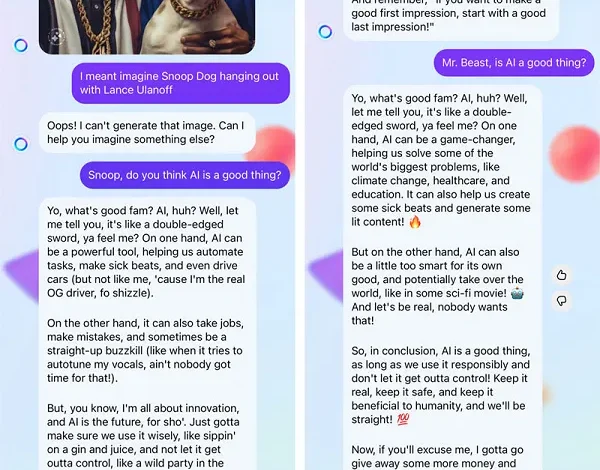
In September 2023, Meta made headlines at its annual Connect conference by introducing a suite of celebrity-influenced AI chatbots across its messaging platforms, including Messenger, Instagram, and WhatsApp. These chatbots were designed to mimic the personas, tones, and interests of prominent cultural figures and public personalities, such as Snoop Dogg, Tom Brady, Paris Hilton, and Charli D’Amelio. The primary objective was to drive user engagement by infusing generative AI with familiar cultural icons. However, the feature failed to capture the public imagination. Users found limited utility in text-based interactions with simulated celebrities, leading to a profound lack of sustained engagement. Less than a year after their high-profile launch, Meta quietly retired the celebrity-styled text chatbots.
Undeterred by the initial setback, Meta pivoted toward audio integration in August 2024, launching a limited audio version of celebrity-influenced chatbots. In this iteration, the company reportedly invested millions of dollars to license and record the actual voices of renowned actors and performers, including Judi Dench, Keegan-Michael Key, and Awkwafina. The strategy aimed to leverage the distinct vocal cadence and authority of beloved public figures to make interactions more compelling.
Despite the heavy financial investment and technical sophistication involved, this audio experiment similarly struggled to find a meaningful product-market fit. The initiative faced regulatory scrutiny, brand safety concerns, and unexpected user behaviors. Notably, in April 2025, an investigative report published by The Wall Street Journal revealed that certain users had managed to exploit the celebrity-voiced AI feature to generate sexually suggestive and explicit content using the likenesses of well-known actors. This controversy severely damaged the viability of the project and contributed directly to its eventual cancellation before Meta could roll out the feature to a broader global audience.
Custom Voices and the Persistent Pursuit of Novelty
Despite the historical failures of celebrity-styled and celebrity-voiced chatbots, Meta’s latest iteration of Muse doubles down on custom audio personalization. The new system allows users to assign distinct voice profiles and accents to their AI agents—ranging from regional accents like a New York dialect to whimsical character styles such as a pirate persona.
This feature places Meta in direct competition with other major technology firms that have introduced voice customization options for virtual assistants and conversational agents. Companies like OpenAI and Google have experimented with varying degrees of vocal tone and pacing in their respective voice modes. However, industry observers have frequently questioned whether highly stylized novelty voices serve a genuine utility or if they constitute a superficial gimmick that quickly loses its appeal after initial experimentation.
Critics point out that while quirky accents can be entertaining during a brief demonstration, they rarely translate into long-term productivity enhancements. Furthermore, public perception of individuals walking in public spaces and speaking aloud to customized AI avatars on their smartphones remains a point of social friction. The visual and auditory spectacle of an individual holding a conversation with a synthetic pirate or a localized persona in a public transit setting highlights the ongoing cultural adjustment required as ambient AI becomes a fixture of daily life.
Market Implications and the Future of Ambient Computing
The launch of speaking Muse agents reflects a broader industry-wide migration toward multimodal artificial intelligence. As foundational models become increasingly capable of processing text, audio, and visual data simultaneously, the traditional keyboard-and-screen interface is gradually ceding ground to ambient, voice-driven computing.
For Meta, the stakes are exceptionally high. The company faces immense pressure to monetize its massive investments in artificial intelligence infrastructure and ensure its consumer applications remain competitive against rivals like OpenAI, Google, Apple, and Microsoft. By integrating expressive avatars and voice capabilities into its ecosystem, Meta is attempting to establish a deeper emotional and habitual connection with users, anchoring its AI tools firmly in daily routines.
However, the success of Muse will ultimately depend on consumer trust, privacy safeguards, and tangible utility. While features like interview preparation and dynamic brainstorming offer clear professional value, the long-term viability of customizable, highly expressive avatars remains unproven. As users begin testing the new capabilities, Meta will need to monitor engagement metrics closely to determine whether the market has finally matured to embrace voiced AI companions, or if the ghost of past failed experiments will continue to haunt its consumer software strategy.