The Evolution of Digital Marketing: Assessing AI Readiness and Maturity in Modern Google Ads Ecosystems

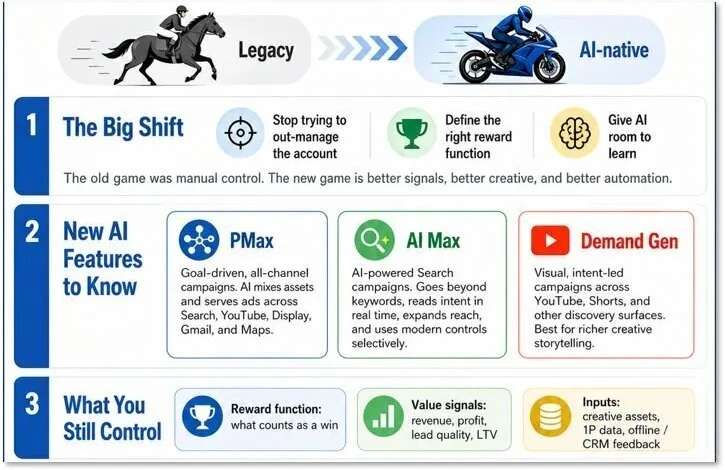
The digital advertising landscape has undergone a profound structural transformation, driven by the rapid integration of artificial intelligence and machine learning algorithms into core bidding, targeting, and campaign architecture. For years, search engine marketing was characterized by manual optimizations, granular keyword strategies, and human-led adjustments to match types, geographical targeting, and dayparting. Today, major platforms—most notably Google Ads and Meta—rely heavily on automated, machine-learning-driven frameworks. This paradigm shift has rendered traditional, manual management techniques increasingly obsolete, forcing enterprises to transition from legacy control models to AI-native operational strategies.
The Shift from Manual Optimization to Automated Intelligence
Historically, the efficacy of a search marketing campaign was determined by a practitioner’s ability to constantly monitor and manipulate account settings. Agencies and in-house marketers frequently proved their value by logging multiple daily changes to keyword bids, negative keyword lists, and device modifiers. However, as search engines have evolved their natural language processing and intent-matching capabilities, human micromanagement has proven less effective than algorithmic bidding and auction-time optimization.
Modern Google Ads ecosystems utilize comprehensive automated campaign types designed to capture consumer intent across multiple touchpoints. Performance Max (PMax) campaigns, for example, allow advertisers to supply a budget, goals, and a repository of creative assets—including text, images, videos, and logos—which the platform’s AI then dynamically combines to serve ads across Search, YouTube, Display, Gmail, and Maps. Similarly, AI Max campaigns handle search-only inventory by analyzing real-time intent signals rather than relying solely on exact-match or phrase-match keywords. Demand Gen campaigns further extend this automation into visual and short-form video environments, assessing consumer intent to distribute media across YouTube Shorts and other immersive channels.
This transition places the modern marketer in a fundamentally different role. Rather than acting as a tactical operator executing micro-adjustments, the marketer’s primary responsibility is defining the "reward function"—establishing clear definitions of business value, profit margins, and customer lifetime value that the artificial intelligence must optimize toward.
Background Context and Industry Resistance
Despite the demonstrable performance gains of automated systems, the advertising industry has been slow to abandon legacy habits. Many agencies and marketing professionals continue to frame search marketing strictly through the outdated dichotomy of brand versus non-brand campaigns, spending disproportionate amounts of time refining match types and adjusting hourly bids.
Industry analysts trace this resistance to a deeply entrenched institutional inertia. For over two decades, the standard playbook for paid search management emphasized tight human control over every variable in the auction. Transitioning to a model where the algorithm dictates ad placement, creative variations, and keyword expansion requires a cultural and structural overhaul within marketing departments. Consequently, many organizations continue to operate with a legacy mindset, inadvertently suppressing campaign efficiency and eroding return on ad spend (ROAS) by failing to grant automated systems the data and autonomy required to function optimally.
The Google Ads Maturity Model: Evaluating Capability and Depth
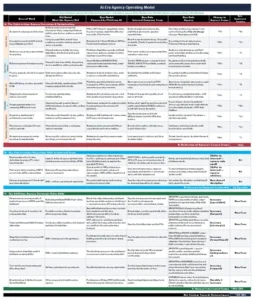
To help organizations objectively evaluate their operational readiness for an AI-driven ecosystem, industry experts have developed comprehensive diagnostic frameworks, such as the Google Ads Maturity Model. This evaluative tool assesses a company’s digital advertising infrastructure across two primary dimensions: capability sophistication and deployment depth.
Capability scoring measures how advanced a company’s processes are on a scale from zero to four, moving from legacy manual management (Score 0) to fully AI-native execution (Score 4). Depth scoring evaluates how widely those advanced capabilities are deployed across the organization’s total ad spend and conversion volume, ensuring that isolated pilot projects do not falsely inflate an enterprise’s overall maturity rating.
The evaluation framework typically encompasses six critical dimensions of modern advertising operations:
- Measurement and Value Architecture: Evaluating whether campaigns are optimized for superficial metrics like pageviews and basic traffic, or sophisticated business outcomes such as predicted customer lifetime value, closed-won revenue, and offline conversion imports.
- Search Operating Model: Assessing the extent to which accounts rely on smart bidding, responsive search ads, and broad-matching logic versus manual cost-per-click (CPC) adjustments and strict keyword segmentation.
- First-Party Data and Audience Intelligence: Measuring how effectively proprietary customer data is integrated into the platform’s machine learning pipelines to identify high-value prospects.
- Surface Breadth and Campaign Mix: Determining whether multi-channel inventory (such as PMax and Demand Gen) is utilized based on comprehensive customer intent rather than isolated channel silos.
- Creative and Landing Page Adaptability: Analyzing the diversity and volume of creative assets provided to the AI to facilitate dynamic, intent-matched user experiences.
- Operating Cadence and Governance: Assessing whether internal teams have shifted from constant manual interventions to establishing strategic guardrails and business-outcome governance.
By weighting these dimensions and calculating an aggregate score—often benchmarked against a target threshold of 85 or higher—enterprises can identify specific operational gaps and receive prioritized recommendations for modernization.
Strategic Implications for Enterprises
The implications of failing to adopt AI-ready advertising practices are both immediate and cumulative. Organizations that persist in manual campaign management face diminishing returns, characterized by higher customer acquisition costs and inefficient budget allocations. Conversely, enterprises that embrace automated systems and focus their efforts on feeding algorithms high-fidelity conversion data and diverse creative assets consistently report significant improvements in revenue and profitability.
Furthermore, moving away from the labor-intensive tasks of manual bid adjustments and keyword sculpting allows marketing teams to redirect their intellectual capital toward higher-level strategic initiatives, brand positioning, and product-market fit analysis.
Broader Impact on the Digital Marketing Industry
As artificial intelligence continues to redefine the boundaries of digital marketing, the relationship between advertisers and platform ecosystems will continue to evolve. The traditional division between technical account management and strategic marketing is rapidly dissolving. Industry observers note that the future belongs to enterprises capable of treating algorithms as strategic partners rather than adversaries. By aligning internal measurement architectures with machine learning requirements, organizations can navigate the ongoing transition from legacy advertising practices to an AI-native operational standard, securing long-term competitive advantages in an increasingly automated marketplace.