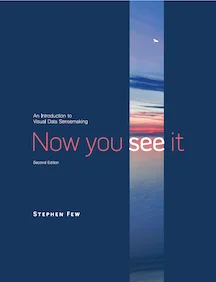
The second edition of this seminal work by Stephen Few, released on April 15, 2021, represents a significant consolidation of foundational knowledge in the field of data analytics and information design. Published by Analytics Press, the updated volume serves as a comprehensive guide for professionals and students seeking to bridge the gap between raw data collection and actionable insight. By integrating the core principles of the original 2009 edition with the advanced methodologies introduced in Few’s 2015 book, Signal: Understanding What Matters in a World of Noise, this release provides a unified framework for what the author terms "visual data sensemaking."
The release comes at a critical juncture in the evolution of the information age. As organizations across the globe continue to invest billions of dollars in business intelligence (BI) software and data warehousing, a persistent "data literacy gap" has emerged. While tools for generating charts and dashboards have become more accessible, the cognitive skills required to interpret these visualizations and extract meaningful conclusions have not kept pace. The second edition of Now You See It aims to address this deficit by focusing on the human element of the analytical equation: the cognitive and perceptual processes that allow an observer to detect patterns, trends, and outliers.
A Chronology of Methodological Evolution
The trajectory of Stephen Few’s work reflects the broader shifts in the data visualization industry over the last two decades. To understand the significance of the 2021 second edition, it is necessary to examine the timeline of its development and the specific intellectual gaps it was designed to fill.
In 2009, the first edition of Now You See It was published as a follow-up to Few’s earlier work, Show Me the Numbers. While the latter focused primarily on the effective presentation of data—ensuring that charts were clear, accurate, and free of "chartjunk"—the former shifted the focus to the exploratory phase of analysis. It introduced readers to the concept of using visual tools not just to communicate findings to others, but to discover those findings in the first place.
By 2015, the volume of data available to the average analyst had increased exponentially, leading to a new challenge: the "noise" problem. In response, Few authored Signal: Understanding What Matters in a World of Noise. This work introduced more rigorous statistical concepts, most notably Statistical Process Control (SPC), into the visual analysis workflow. SPC, a method originally developed for manufacturing quality control, provided a mathematical and visual basis for distinguishing between "common cause variation" (random noise) and "special cause variation" (meaningful signals).
The 2021 second edition represents the synthesis of these two distinct but related phases of analytical thought. By combining the exploratory techniques of the original Now You See It with the signal-detection rigors of Signal, Few has created a single, streamlined resource. This integration is designed to make the learning process more fluid, allowing the reader to transition seamlessly from basic visual exploration to advanced pattern recognition without the need for multiple disparate texts.
Supporting Data: The Growing Need for Data Literacy
The necessity for refined sensemaking skills is supported by recent industry data regarding the efficacy of data-driven initiatives. According to a 2020 study by the Data Literacy Project, only 24% of business decision-makers feel confident in their ability to read, work with, analyze, and argue with data. This lack of confidence persists despite the fact that the global business intelligence and analytics market was valued at approximately $22.26 billion in 2020 and is projected to continue growing.
Furthermore, research by Gartner suggests that by 2023, data literacy will become an explicit and necessary driver of business value, yet many organizations still struggle with the "last mile" of analytics—the human interpretation of the data. The release of the second edition of Now You See It addresses this specific bottleneck. Few’s premise is that while sophisticated algorithms and artificial intelligence have their place, the majority of business questions can be answered through the application of human vision and basic statistical logic.
The Core Philosophy: Vision as an Analytical Tool
At the heart of the updated text is the belief that human vision is the most powerful analytical tool at our disposal. The book posits that because the human brain is wired to recognize patterns—a survival mechanism developed over millennia—it is uniquely suited to detect anomalies and trends in quantitative data when that data is presented visually.
The second edition elaborates on the "pre-attentive attributes" of visual perception, such as length, width, color, and position. By understanding how the brain prioritizes these attributes, analysts can design and use graphs that highlight the most important information almost instantaneously. The book emphasizes that this is not an intuitive skill but a learned discipline. Without a formal understanding of how to "see" data, even the most advanced visualization software can lead to erroneous conclusions or the masking of critical information.
One of the most significant technical additions in the new edition is the refined focus on Statistical Process Control. Few argues that without the ability to distinguish signal from noise, analysts are prone to "overreacting to the ups and downs of data," which leads to wasted resources and poor strategic decisions. By incorporating SPC charts (also known as Shewhart charts) into the visual sensemaking toolkit, the book provides a bridge between pure visual intuition and statistical evidence.
Inferred Industry Reactions and Expert Perspectives
While official reviews from major academic journals often take months to surface following a technical release, the initial reception within the data science and business intelligence communities has been characterized by a recognition of the book’s practical utility. Professional analysts have long cited Few’s work as a necessary counterweight to the "feature-heavy" marketing of software vendors.
Industry experts often point out that software companies frequently prioritize aesthetic appeal over functional clarity, leading to the proliferation of 3D pie charts, gauge metaphors, and other "eye candy" that Few’s methodology explicitly rejects. The consolidation of his two most technical works into a single volume is seen as a move toward a more "pure" form of data science—one that prioritizes the integrity of the information over the complexity of the delivery system.
Education professionals in the field of information design have also noted that the streamlined nature of the second edition—maintaining a manageable size while doubling the depth of content—makes it a more viable candidate for university-level curricula. The integration of Signal’s advanced techniques ensures that students are not just learning to make "pretty charts," but are being trained in the rigorous detection of meaningful change.
Broader Impact and Implications for the Future
The release of Now You See It: An Introduction to Visual Data Sensemaking has implications that extend beyond the desks of individual analysts. For the corporate world, it signals a shift in the perceived value of "soft skills" in technical roles. As the book suggests, the ability to make sense of data is a cognitive skill that transcends specific software platforms. An analyst trained in Few’s methods can apply those principles whether they are using Excel, Tableau, Power BI, or R.
This tool-agnostic approach is increasingly valuable in a volatile tech landscape where software platforms can change or become obsolete within a few years. By focusing on the "science of seeing," Few provides a foundation that remains relevant regardless of the technological medium.
In the broader context of societal data literacy, the book contributes to a more skeptical and rigorous public discourse. In an era of "big data" and frequent misinformation, the ability for individuals to look at a chart and identify whether it represents a true "signal" or merely "noise" is a vital civic skill. Few’s work democratizes this ability, taking techniques that were once the province of specialized statisticians and making them accessible to any "person with eyes to see."
The second edition of Now You See It ultimately stands as a definitive statement on the current state of data analysis. It rejects the notion that more data or more complex algorithms are the sole solutions to our information challenges. Instead, it reaffirms the power of the human mind, when properly trained, to find clarity in complexity and meaning in the noise. As organizations continue to navigate the complexities of the 21st-century economy, the principles outlined in this volume will likely remain a cornerstone of effective, evidence-based decision-making.