Stephen Miller appointed as White House chief of staff following historic midterm electoral losses for the Republican Party

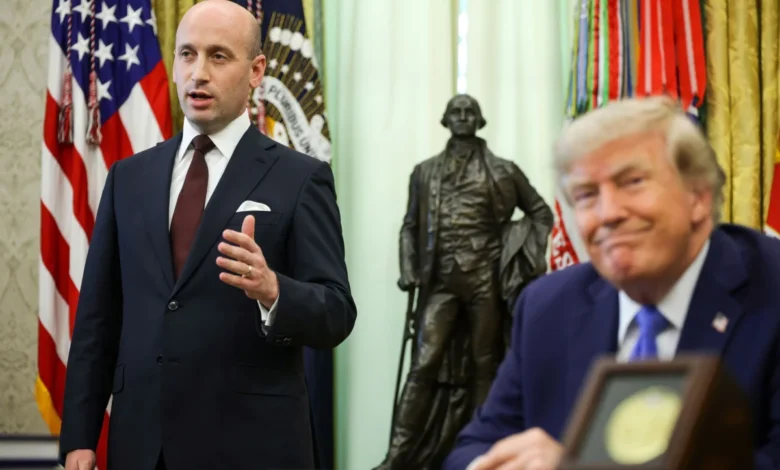
President Donald Trump announced on Friday that Stephen Miller, a long-serving policy advisor and a central figure in the administration’s most contentious initiatives, will assume the role of White House chief of staff. The transition, set to take effect this coming Monday, marks a significant shift in the internal power dynamics of the executive branch. Miller will replace Susie Wiles, who submitted her resignation on Thursday following what sources describe as a period of mounting tension between her office and the president’s inner circle. This leadership overhaul comes in the immediate wake of the recent midterm elections, which saw the Republican Party suffer major setbacks, losing control of both the House of Representatives and the Senate in a result that many analysts are characterizing as a decisive rejection of the current administration’s policy agenda.
The appointment of Miller, who has previously served as deputy chief of staff for policy and homeland security advisor, signals a move toward a more combative and ideologically focused approach as the administration prepares for the challenges of a difficult final term. Miller has long been the primary architect of the administration’s most aggressive immigration enforcement strategies, including policies that have drawn significant domestic and international criticism.
A Period of Internal Turbulence
The resignation of Susie Wiles marks the end of a tenure that was, by many metrics, the most stable of any chief of staff in the Trump era. Unlike his previous terms, where turnover at the highest levels of the White House was frequent, Wiles had managed to retain the president’s confidence since the inception of his 2021 campaign. However, the political environment shifted dramatically in the months leading up to the midterms.
According to multiple sources familiar with the internal operations of the West Wing, President Trump began to express dissatisfaction with Wiles as the polling data for Republican candidates turned increasingly negative. The frustration reportedly culminated in a series of private conversations where the president held Wiles responsible for the party’s poor performance. The friction was exacerbated by a series of high-profile personnel decisions made without Wiles’ direct consultation, including the hiring of press secretary Katie Zacharia. These actions reportedly contributed to a perception among staff that Wiles’ influence was waning long before her official departure.
The Selection Process and Strategic Considerations
The decision to appoint Miller was not immediate; President Trump reportedly weighed several candidates for the position, including special envoy Steve Witkoff and Director of National Intelligence Jay Clayton. Ultimately, the president opted for Miller, a choice that underscores a desire for ideological consistency and unwavering loyalty as the administration faces a period of intense scrutiny.
With a new, opposition-led Congress expected to initiate a series of investigations into the administration’s policies in the coming year, Trump appears to be prioritizing a "bunker mentality." Miller, having been a central figure in the president’s orbit since his initial 2016 campaign and having remained steadfast during the political exile of 2021, is viewed by the president as the most capable strategist to manage these upcoming legislative and legal battles.
Chronology of the Leadership Shift
The transition follows a timeline marked by increasing volatility:
- Mid-2026: Tensions begin to surface within the West Wing as polling numbers for the midterms show the Republican Party losing ground.
- Late 2026: President Trump begins to bypass Wiles on key staffing and policy decisions, creating a sense of instability within the senior staff.
- November 2026 (Election Week): Republicans suffer a historic defeat, losing the House and Senate.
- Thursday, November 2026: Susie Wiles formally submits her resignation to the president.
- Friday, November 2026: President Trump announces on Truth Social that Stephen Miller will serve as the new chief of staff, effective the following Monday.
Implications for Future Policy and Personnel
The arrival of Miller is expected to trigger a significant "changing of the guard" across the executive branch. White House aides are already bracing for further departures, with several of Wiles’ key deputies, including James Blair and Richard Walters, considered likely to be replaced as Miller solidifies his authority.
Furthermore, the shift in leadership is anticipated to alter the power dynamics within the Cabinet. Defense Secretary Pete Hegseth, who has had a strained relationship with the outgoing chief of staff, is expected to see his influence grow. Hegseth and Miller have a documented history of cooperation, most notably in their coordination of military strikes against maritime vessels in Venezuelan waters last year—an operation that Miller managed directly through the Pentagon. This alignment suggests that the administration may continue to pursue a hawkish and interventionist foreign policy under Miller’s guidance.
Broader Impact and Political Context
The departure of Wiles is a significant development in the broader context of the administration’s political health. Despite her recent success in navigating the political landscape, including personal health challenges and public scrutiny regarding her family’s business dealings, she was unable to overcome the fallout from the midterm election results.
In her farewell message posted to X, Wiles maintained a professional tone, highlighting what she described as the administration’s key accomplishments: "Serving President Trump in the White House has been the honor of a lifetime. I’m so proud to have been a part of what we’ve accomplished together from securing our border and cutting taxes to strengthening our economy and putting America First."
The broader political implication of this appointment is clear: the administration is pivoting away from the consensus-building approach that Wiles largely attempted to maintain, toward a more combative, policy-driven strategy. For the opposition, the appointment of Miller is seen as a sign that the president intends to double down on his core ideological platforms, particularly regarding border security and executive authority.
Data and Legislative Outlook
The Republican loss in the midterms represents the most significant electoral defeat for the party in decades. The loss of the House and Senate means that the administration will face a divided government for the remainder of its term. Analysts expect that the primary function of the White House, under Miller’s direction, will be to utilize executive orders and administrative agency actions to bypass legislative gridlock.
The administration’s focus on the "border crackdown" remains a central pillar of its domestic agenda. Data from the Department of Homeland Security and external watchdog reports indicate that these policies have led to significant legal and ethical challenges, including incidents involving the use of force that have resulted in fatalities among U.S. citizens. With Miller at the helm of the Homeland Security Council and the White House staff, it is highly likely that these policies will not only continue but may be intensified.
Conclusion
The promotion of Stephen Miller to chief of staff is more than a routine personnel change; it is a fundamental recalibration of the administration’s strategy. As President Trump navigates the fallout from a devastating midterm loss and prepares for an era of heightened congressional oversight, the elevation of his most trusted and aggressive aide signals an intent to govern through firm, unilateral action. Whether this approach will stabilize a reeling administration or further alienate a political establishment currently in opposition remains to be seen, but the path forward for the White House is now firmly set on a course defined by the ideological vision of Stephen Miller.