The End of the Cybertruck Era Signals a Strategic Shift Toward Compact Electric Mobility

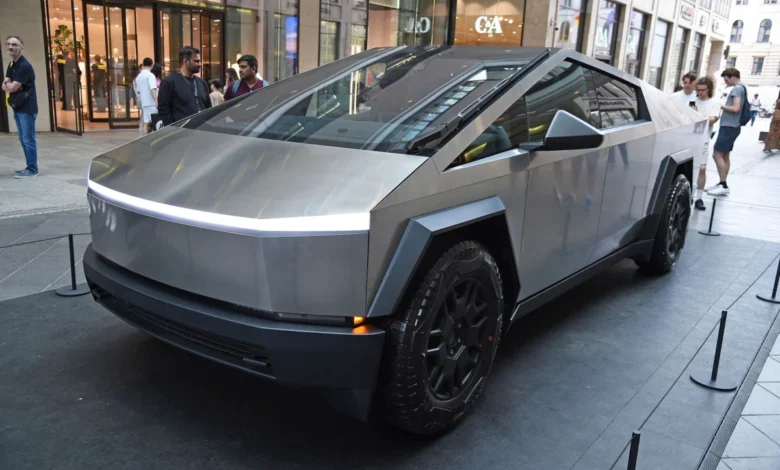
Tesla’s announcement that it will cease production of the Cybertruck at its Texas Gigafactory next year marks a definitive turning point in the electric vehicle industry, signaling a broader retreat from the era of "supersized" battery-electric vehicles. While the Cybertruck was initially framed as a bold, disruptive entry into the North American truck market, its combination of divisive aesthetics, recurring mechanical recalls, and the polarizing public profile of CEO Elon Musk eventually eroded its market viability.
The discontinuation of the Cybertruck is not an isolated incident but part of a wider trend. Within the last eighteen months, the automotive sector has witnessed the cancellation of several high-profile, massive EV projects, including Ford’s decision to pull the plug on its full-sized electric F-150 Lightning and the shelving of planned three-row electric SUVs. As the industry recalibrates, automakers are increasingly pivoting toward smaller, more efficient, and more affordable electric platforms.
A Chronology of the Supersized EV Decline
The trajectory of the oversized EV began with immense hype and heavy capital investment. In 2021 and 2022, manufacturers bet heavily on the "bigger is better" ethos, assuming that American consumers would transition to EVs most readily if they could replicate the size and power of traditional gas-guzzling pickups.
However, the reality of the market proved more complex. By late 2023, the limitations of large-battery architecture—specifically the extreme weight and high production costs—began to drag on profitability. The Ford F-150 Lightning, which utilized massive 98 to 131 kilowatt-hour (kWh) battery packs, faced significant cooling and weight challenges. When Ford announced the cancellation of the electric F-150 in late 2024, it served as a signal that the market for six-figure, heavy-duty electric trucks was thinner than initially projected.
Tesla’s internal timeline mirrors this shift. Following the Cybertruck’s initial production ramp-up, the company faced a series of technical hurdles, including the widely publicized accelerator pad recall and ongoing concerns regarding the stainless steel exoskeleton’s structural integrity. By the time production officially winds down in 2026, the Cybertruck will have served as a high-visibility test case for the challenges of manufacturing vehicles that prioritize raw mass over engineering efficiency.
The Physics and Economics of Battery Sizing
The fundamental issue plaguing the first generation of electric trucks is the physics of weight. The Cybertruck features a 123 kWh battery that weighs approximately 1,600 pounds—roughly one-quarter of the vehicle’s total curb weight. This creates a feedback loop: a heavier vehicle requires a larger battery to maintain a competitive range, which in turn adds more weight, necessitating stronger frames and more robust suspension components.
This "weight-battery-cost" triad is the primary driver behind the current industry pivot. Battery packs remain the most expensive individual component of an electric vehicle. According to data from Cox Automotive, the average transaction price for a new electric vehicle currently sits at $55,800. For many middle-income households, this price point remains inaccessible. By reducing vehicle size and opting for more modest battery capacities, automakers can significantly lower the barrier to entry.
For comparison, a standard-range Hyundai Ioniq 5 provides a similar utility for daily commuting and family transport as a Cybertruck, yet it does so with a battery approximately half the size of the Tesla’s. This efficiency allows for a lower retail price and puts significantly less strain on the domestic battery supply chain, which is currently struggling to keep pace with the demand for minerals like lithium, cobalt, and nickel.
Emerging Alternatives: The Rise of the Compact Segment
As the giants of the industry retreat from the oversized truck segment, a wave of new, smaller offerings is preparing to enter the market. Ford is expected to launch the "Fathom" next year, a sub-$30,000 electric pickup designed to occupy a footprint similar to the company’s popular compact Maverick model. This vehicle represents a return to the "utility first" philosophy, prioritizing affordability and practicality over raw towing capacity or off-road posturing.
Similarly, startup companies like Slate are gaining traction with modular, compact electric trucks that offer entry-level pricing under $25,000. While these startups face their own production risks, the surge in preorders indicates a deep-seated demand for vehicles that are functional without the excess of massive battery packs.
Rivian is also recalibrating its strategy. While its flagship R1S SUV and R1T truck helped define the premium EV segment, the recent launch of the R2 platform—which features a more manageable 88 kWh battery and a reduced weight profile—suggests a pivot toward mass-market adoption. The company’s teased R3 model, an even smaller crossover, further underscores the industry-wide trend toward slimming down.
Policy and Market Conditions
The landscape for electric vehicles has been fundamentally altered by the policy environment. The removal of federal EV incentives during the previous administration created a vacuum that led to a sharp, albeit temporary, decline in sales. Simultaneously, global economic instability and fluctuating fuel prices have created a volatile environment for new car sales.
While sales have struggled to meet the optimistic projections of 2020, there remains a persistent demand for electrified transit. However, the current consumer is more price-sensitive and less motivated by the novelty of a "technological status symbol." With the potential for renewed policy support in future legislative cycles, the industry is positioning itself to be more resilient. By focusing on smaller, more affordable, and more practical vehicles, manufacturers are preparing to meet a wider demographic of buyers rather than relying on a narrow slice of early adopters.
Implications for Infrastructure and Safety
The retreat from oversized EVs is also a quiet win for urban planning and public safety. The "supersizing" of the American fleet has long been a point of contention for safety advocates, who note that the increased mass of large EVs poses a significantly higher risk to pedestrians and cyclists in the event of a collision. Smaller, lighter vehicles require shorter braking distances and exert less force on impact, which is expected to mitigate some of the safety concerns currently associated with the surge of heavy electric trucks on public roads.
Furthermore, the transition to smaller batteries eases the pressure on the national electrical grid and the charging infrastructure. A fleet of vehicles with 50 kWh batteries is far more manageable for existing residential and public charging networks than a fleet composed of 130 kWh behemoths, which require significantly higher power throughput for equivalent charging speeds.
Looking Ahead: The Cybercab and Beyond
Elon Musk’s stated justification for the termination of the Cybertruck program—to repurpose factory floor space for the production of the Cybercab—is perhaps the clearest indicator of where Tesla believes the market is headed. The Cybercab, which is expected to operate with a 48 kWh battery, represents a shift from personal ownership of massive, underutilized assets to a model of high-efficiency, purpose-built transportation.
Whether the Cybercab succeeds where the Cybertruck struggled remains to be seen. However, the broader trend is undeniable. The era of the bloated, hyper-expensive, and inefficient electric truck is reaching its conclusion. In its place, the automotive industry is entering a phase of rationalization, where the focus is shifting back to the fundamentals: affordability, energy efficiency, and the practical needs of the average driver. As manufacturers align their production lines with these realities, the transition to a fully electric future may prove to be more sustainable, both economically and environmentally, than the high-octane, oversized experiment of the last few years.