The Death of Professional Courtesy: Why B2B Ghosting Is Threatening Modern Industry Relationships

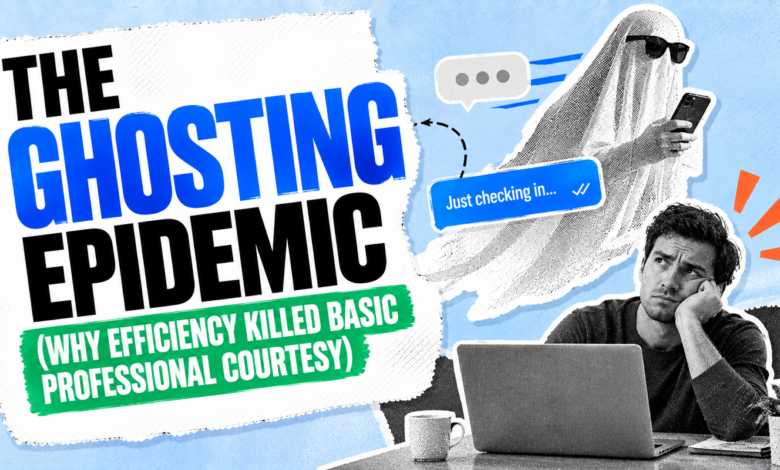
The modern corporate landscape is undergoing a rapid, technology-driven evolution characterized by automation, algorithmic decision-making, and an increasing reliance on artificial intelligence platforms. While these innovations promise unprecedented levels of efficiency, they have simultaneously catalyzed a troubling cultural shift in professional communication: the normalization of corporate ghosting. Industry experts, independent consultants, and job applicants alike are reporting a steep rise in unilateral communication blackouts, where prospective employers, clients, and partners simply vanish after initiating dialogues, requesting proposals, or establishing strict interview pipelines. This phenomenon extends far beyond traditional recruitment rudeness, affecting vendors, strategic partners, and fractional service providers who invest valuable time and resources into corporate inquiries only to be met with total silence.
The Chronology of Broken Commitments: Two Case Studies in Industry Silence
Recent accounts from independent marketing and search engine optimization (SEO) consultants illuminate the widespread nature of this issue. In the first instance, an industry practitioner was connected to a chief marketing officer via a warm referral from a trusted former colleague. Following an initial introductory call, both parties acknowledged a slight strategic misalignment—a common and acceptable occurrence in standard business development where timelines or scopes do not immediately match. However, before concluding the conference, both the CMO and the referring colleague explicitly promised to provide a definitive status update by the following Tuesday.

Despite the implementation of automated call transcription and action-item tracking software designed to streamline accountability, the promised deadline passed without communication. No email, no status update, and no acknowledgment of the prior commitment materialized. While the consultant did not expect a signed contract or a forced business partnership, the unfulfilled promise violated the foundational rules of professional engagement, particularly given that the introduction relied upon and potentially compromised a mutual professional contact’s reputation.
A second, more egregious example involves a mid-sized brand initiating contact with a consultant regarding fractional SEO services. Following an exploratory discussion concerning business challenges and strategic objectives, the prospective client requested that the consultant draft and sign a non-disclosure agreement (NDA) to facilitate the sharing of proprietary data. To expedite the administrative process, the consultant provided a tailored, ready-to-execute agreement.
Subsequent to this submission, the communication channel abruptly closed. Despite multiple good-faith follow-up communications dispatched over a multi-week period—spanning approximately one month—the corporate entity offered no response. The irregularity of this occurrence lies in the trajectory of the origin: the brand initiated the outreach, requested the meeting, demanded the legal paperwork, and assigned the immediate next steps to the service provider, only to vanish entirely from the engagement pipeline.
Broader Industry Impact and Statistical Context

While anecdotal accounts highlight individual frustrations, broader labor and B2B market data indicate that communication blackouts have become a systemic issue. Human resources studies and recruitment platform analytics consistently show that over 70% of job applicants and independent contractors experience post-interview or post-proposal ghosting annually. This trend has expanded outward from the entry-level hiring market into executive recruitment, vendor selection, and agency-client procurement processes.
The implications of this behavior extend to economic efficiency and resource allocation. When a company requests a tailored proposal, custom legal documentation, or a multi-round interview process, it implicitly consumes the finite working hours of the responding party. In professional services, time is the primary inventory. Unilateral withdrawals without notification force external practitioners to carry the administrative and financial cost of corporate indecision, shifting the burden of closure onto the party that did not initiate the breakdown.
The Paradox of Efficiency and Dehumanization
Industry analysts note a distinct irony in the current professional climate: the tools designed to eliminate friction in business operations are increasingly used to justify a lack of basic human courtesy. Modern communication stacks—including enterprise collaboration tools, applicant tracking systems, automated calendar schedulers, and artificial intelligence-driven note-taking assistants—make sending a status update simpler and faster than at any point in corporate history.

Drafting a polite declination, a postponement notice, or a standard rejection email requires minimal time investment. Yet, the proliferation of digital buffers has created an environment where corporate entities treat external stakeholders as anonymous data points rather than human professionals. This cultural shift mirrors broader concerns regarding the dehumanization of business communication, where complex technological solutions are prioritized over fundamental accountability and interpersonal respect.
Implications for Corporate Reputation and Future Business
The long-term implications of habitual ghosting present tangible risks to brand equity and market reputation. In interconnected professional ecosystems—particularly within specialized niches like digital marketing, technology development, and executive consulting—word travels quickly. Agencies and consultants who consistently fail to close communication loops risk damaging their employer brand and corporate reputation among top-tier talent and specialized service providers.
Furthermore, industry leaders emphasize that the problem is not a negative outcome, such as a rejected proposal or a lost contract. Rejection, budget constraints, pivots in strategic direction, and corporate restructuring are standard facets of commerce. The grievance lies entirely in the avoidance of communication. When organizations hide behind silence to circumvent difficult conversations or internal administrative delays, they sacrifice trust and erode the collaborative relationships upon which modern industry relies.

As businesses continue to integrate automated systems and artificial intelligence frameworks into their operations, experts argue that the ultimate measure of organizational maturity will remain rooted in human communication standards. Efficiency should serve to liberate time for higher-level strategic thinking and relationship management, rather than acting as a mechanism for behavioral deflection. Ultimately, as the professional consensus solidifies, organizations that fail to maintain basic communicative decency may find themselves increasingly isolated in an economy that still fundamentally relies on human trust.