Signal Tightens Screenshot Restrictions Across Mobile Platforms to Counter Operating System AI Surveillance

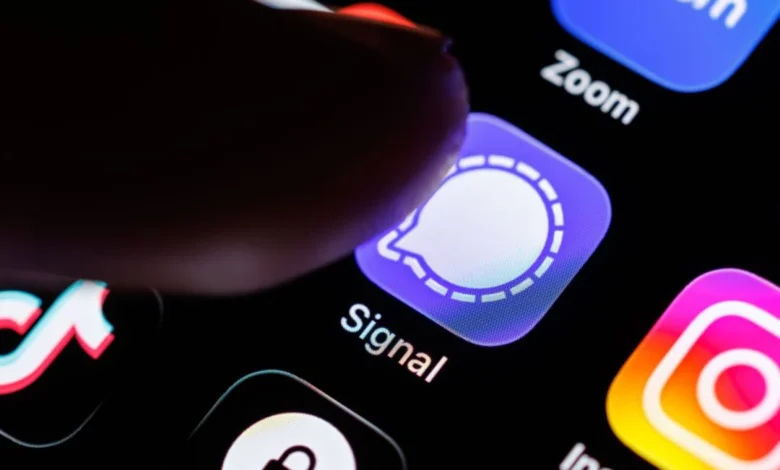
The landscape of digital privacy is undergoing a profound structural shift as operating system developers increasingly integrate ambient artificial intelligence into the core architecture of consumer devices. In response to this evolving technological paradigm, the encrypted messaging platform Signal announced a significant update designed to limit users’ ability to take screenshots within the application across both mobile and desktop environments. This strategic move, detailed in a public advisory published on Friday, November 21, 2026, represents a direct countermeasure against what Signal President Meredith Whittaker characterizes as an existential threat to end-to-end encryption: the proliferation of agentic AI assistants embedded deeply into mainstream operating systems such as Windows, Android, macOS, and iOS.
For years, the gold standard of digital confidentiality has relied on cryptographic protocols ensuring that messages remain private between the sender and the recipient, rendering intermediaries—including telecommunications providers, server hosts, and application developers—incapable of reading the plaintext content. However, the emergence of operating-system-level AI agents, which continuously monitor, index, and analyze screen contents to provide proactive assistance, introduces a new vulnerability vector that bypasses application-layer encryption entirely. By capturing visual data at the display level before or after it is rendered, these system-level tools can harvest sensitive conversations, media, and metadata without breaking the underlying cryptographic keys, rendering traditional privacy safeguards ineffective once the data reaches the user’s screen.
The Mechanics of the Operating System Threat
To understand the gravity of Signal’s recent policy and software update, one must examine how modern operating systems interact with third-party applications. Historically, privacy-focused applications relied on localized settings—such as disabling screen captures or view-once media configurations—to prevent human users from saving or sharing ephemeral conversations. These measures were designed with human actors in mind, assuming that an active, intentional keystroke or gesture was required to capture a visual record of a chat.
The integration of agentic AI fundamentally alters this threat model. Unlike human users who must manually snap and save a screenshot, operating-system-level AI agents operate continuously in the background. They have programmatic access to the display buffer, enabling them to ingest, categorize, and store everything visible on the screen to feed local databases or remote cloud servers managed by platform giants like Microsoft, Apple, and Google.
According to Whittaker, this capability completely undermines Signal’s independent privacy guarantees. When sensitive data is captured by an OS-level agent, it enters an ecosystem entirely outside of Signal’s control. Once ingested into a local vector database or transmitted to a remote server for model training or inference, the data is susceptible to unauthorized access, third-party data requests, and secondary exploitation. This reality transforms the user’s own device from a secure vault into an unwitting surveillance relay, imperiling the privacy of all participants in an encrypted conversation, regardless of how robust the underlying cryptographic algorithms might be.
Chronology of Escalating Privacy Tensions
The implementation of these new mobile restrictions is part of an ongoing, multi-year effort by Signal to harden its application against platform-level data harvesting. The timeline of this defensive posture illustrates a steady escalation as operating system developers accelerate their AI integration strategies:

- Early Iterations: Signal initially introduced measures to block screenshots of its desktop application on Windows by default, recognizing that desktop operating systems were among the earliest to experiment with continuous screen-indexing tools.
- Mid-2026: Public discourse intensified regarding the nature of consumer AI. In June 2026, Meredith Whittaker publicly cautioned the tech community during industry panels that AI chatbots and OS-level agents should not be viewed as neutral tools or friends, but rather as data-hungry mechanisms designed to aggregate personal context.
- November 21, 2026: Signal officially announced the expansion of screenshot limitations to its Android and iOS mobile applications. This update forces users to confront the trade-off between operating system convenience and foundational communication privacy.
Balancing User Choice and Security Guarantees
In deploying these expanded restrictions, Signal has walked a fine line between enforcing uncompromising privacy standards and maintaining application usability. The platform has engineered the update so that the screenshot blocking feature is enabled by default, serving as a protective shield against automated AI ingestion.
However, recognizing that some workflows legitimately require screenshot functionality for documentation or accessibility purposes, Signal has retained a user-configurable override. Users who choose to disable the restriction can manually permit screenshots within the app. Whittaker was candid about the implications of this design choice, noting that disabling the feature effectively breaks Signal’s rigorous privacy guarantees.
Furthermore, Whittaker acknowledged that this software adjustment is ultimately an incomplete solution. While blocking screen captures curtails the most direct visual harvesting methods employed by OS-level agents, it does not address more sophisticated or stealthy vectors through which aggressive AI agents might attempt to access application data in the future. The cat-and-mouse dynamic between privacy-centric application developers and operating system gatekeepers is expected to intensify as AI capabilities mature.
Industry Implications and the Future of Encrypted Communications
The friction between Signal and major operating system developers highlights a broader philosophical schism in the modern technology sector. On one side are platform operators—companies that control the underlying operating systems of smartphones and personal computers—who view ambient, proactive AI as the definitive future of human-computer interaction. These firms argue that deep system integration is essential for delivering seamless, personalized, and context-aware assistance.
On the other side stand privacy advocates and independent developers who argue that this level of omnipresent monitoring is fundamentally incompatible with confidential communication. When an operating system continuously records and analyzes every pixel displayed on a screen, the concept of localized digital sovereignty becomes an illusion. Encrypted messaging apps can no longer assume that a device’s display environment is a trusted space.
This development raises difficult regulatory and competitive questions. Antitrust authorities and privacy regulators have increasingly scrutinized how dominant platform operators leverage their control over operating systems to favor their own proprietary services and AI features at the expense of third-party competitors. By restricting application-level controls, platform holders can inadvertently or intentionally diminish the efficacy of competing privacy tools.
As the industry moves forward, Signal’s decisive action serves as a warning flare for the entire encrypted communications sector. Protecting user privacy in the age of ambient artificial intelligence will require much more than traditional end-to-end encryption. It will demand continuous innovation in hardware-software trust boundaries, aggressive policy advocacy, and a willingness to challenge platform architectures that treat user displays as raw material for AI consumption. For now, Signal’s latest update draws a hard line in the sand, reminding users that true privacy requires active defense against the very systems designed to manage their digital lives.