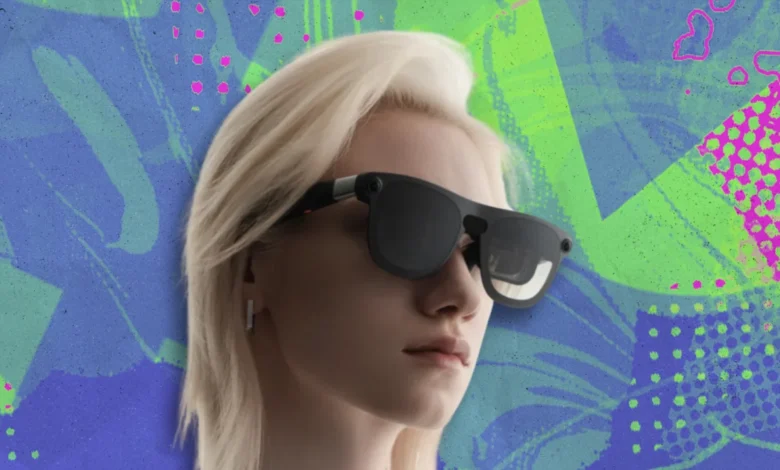
The landscape of consumer technology is undergoing a profound paradigm shift as spatial computing transitions from bulky, isolated headsets to lightweight, everyday eyewear. Leading this charge is Xreal, a pioneer in augmented reality (AR) hardware, which has officially opened preorders for the Xreal Aura. Developed in close strategic partnership with Google and Qualcomm, these futuristic glasses represent a major milestone: they are the very first wired smart glasses powered by Google’s dedicated Android XR operating system.
First teased earlier this year at Google I/O 2026, the Xreal Aura bridges the long-standing divide between augmented reality and virtual reality. While traditional VR headsets completely envelop the user’s field of view—often isolating them from their physical environment—and heavy AR headsets can be cumbersome, the Aura offers a lightweight, transparent form factor. This design philosophy aims to deliver immersive spatial computing without severing the user’s connection to the physical world.

As preorders officially go live on the official Xreal website, early adopters can secure the device ahead of its scheduled mid-November shipping date. To incentivize early investment, Xreal is offering a limited-time promotional discount, dropping the retail price from $1,279 down to $1,099—a savings of $180.
Bridging Augmented and Virtual Realities Through Advanced Hardware
At the heart of the Xreal Aura’s optical system are dual Sony Micro-OLED displays. These high-resolution screens project a crisp, vivid virtual canvas directly into the user’s field of view, boasting a generous 70-degree field of view (FOV). Visual fidelity is further enhanced by a peak brightness of up to 1,050 nits, ensuring that virtual elements remain clear even in brightly lit environments, alongside a smooth 120Hz refresh rate that minimizes motion blur and reduces the likelihood of digital eye strain or motion sickness during extended use.
Unlike simpler smart glasses that merely act as an external monitor for a smartphone or laptop, the Xreal Aura is a fully capable spatial computing device. This computational heavy lifting is made possible by Qualcomm’s advanced Snapdragon Reality Elite Platform, which works in tandem with the Android XR operating system.

Because high-performance processing demands robust hardware, the Aura departs from an all-in-one glasses frame design by utilizing a companion "puck." This external module houses the primary battery and the core computing architecture, keeping the actual glasses remarkably lightweight and balanced on the user’s face. Control mechanisms are similarly futuristic, supporting natural voice commands and precise hand-tracking gestures captured by a suite of onboard sensors and outward-facing cameras.
Integration with the Google Ecosystem and Gemini AI
A cornerstone of the Xreal Aura’s value proposition is its native integration with the expansive Google ecosystem from day one. Users will have immediate access to a wide array of familiar tools and services reimagined for three-dimensional space.
Through a deep integration with Google Photos, users can transform their standard 2D photo and video libraries into immersive 3D memories. Panoramic images, for instance, expand into full 360-degree environments that envelop the user. Similarly, Google Maps has been adapted for spatial computing, allowing explorers to virtually visit global destinations in detailed 3D via aerial overviews or immersive Street View perspectives. Entertainment enthusiasts can also stream 360-degree and VR180 video content directly through platforms like YouTube.

Furthermore, the Xreal Aura integrates Google’s Gemini artificial intelligence assistant. Users can summon Gemini hands-free to contextualize their physical surroundings, answer complex queries in real time, or streamline productivity workflows across multiple open virtual applications. At launch, the device will support a curated library of more than 150 dedicated XR experiences, with additional software and application updates slated to roll out in the subsequent months.
Market Positioning and Competitive Landscape
The launch of the Xreal Aura arrives at a critical juncture for the spatial computing industry. Ever since Apple introduced the Vision Pro, consumer electronics giants have been racing to find the optimal form factor for augmented and mixed reality. However, the market remains sharply divided between ultra-powerful, high-cost headsets and minimalist smart glasses that lack true spatial computing capabilities.
The Xreal Aura directly challenges competitors in the emerging high-end smart glasses sector. Snap recently introduced its own iteration of augmented reality eyewear, the Specs AR glasses, which boast a fully wireless design but carry a steep $2,195 price tag and a noticeably chunky aesthetic. Meanwhile, Meta has announced its own line of upcoming VR glasses priced at $1,299, though those devices will not reach consumer markets until the spring of 2027.

By positioning the Aura at a competitive preorder price of $1,099 (scaling up to $1,279 post-launch) and ensuring they ship well ahead of competing spring product cycles, Xreal and Google are aggressively targeting early adopters, enterprise professionals, and tech enthusiasts looking for an immediate entry point into the Android XR ecosystem.
Industry Implications and the Road Ahead
Industry analysts are closely monitoring the rollout of Android XR hardware. For Google, the platform represents a concerted effort to establish a unified operating system standard for spatial computing, much like Android did for smartphones. By partnering with established hardware manufacturers like Xreal, Google can iterate rapidly across different form factors without bearing the sole burden of device manufacturing.
For Xreal, the Aura represents an evolutionary leap. While the company built its reputation on tethered AR glasses designed primarily for media consumption and portable gaming, the Aura vaults the brand into full-fledged spatial computing.

"This is a defining moment for XR," stated Chi Xu, co-founder and CEO of Xreal, during the product unveiling. "We built AURA for people who want the power of spatial computing without being removed from the world around them. With transparent lenses, a category-leading lightweight design, Gemini by your side, and access to the Android ecosystem from day one, the promise of XR is more approachable than ever."
As preorders continue and the mid-November shipping date approaches, the performance of the Xreal Aura in real-world conditions will serve as an essential litmus test for the viability of tethered Android XR glasses. If the device successfully delivers on its promise of ergonomic comfort, seamless gesture control, and deep software integration, it could very well accelerate the mass adoption of spatial computing wearables, steering the tech industry firmly away from isolated headsets and toward everyday augmented eyewear.