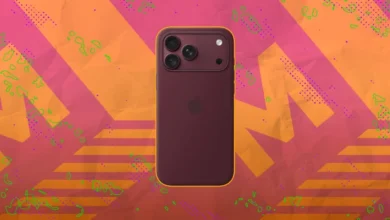
Popular digital creator and streaming personality Kai Cenat recently found himself at the center of an unexpected tech revelation during a live broadcast from Japan. While interacting with a fan, Cenat caught sight of a folding smartphone and, mistaking it for Apple’s recently released iPhone Duo, asked if it was Apple’s latest device. Upon learning that the hardware in question was actually a Samsung Galaxy Z Fold device, the streamer expressed genuine shock, uttering a viral response that quickly traversed social media platforms: "Wait, they been had this? I might have to switch to Samsung."
The moment captured a wider cultural phenomenon regarding consumer awareness, the historical timeline of mobile hardware development, and the unique marketing halo effect that major tech product launches inadvertently create for rival manufacturers. While Apple enthusiasts and long-time Android users alike weighed in on the interaction, the incident underscored a persistent gap in mainstream consumer familiarity regarding the evolution of mobile form factors.
A History of Innovation: Tracing the Foldable Phone Timeline
To understand the irony of Cenat’s public realization, one must look back nearly a decade into the competitive landscape of the smartphone industry. Samsung Electronics officially unveiled its inaugural commercial foldable device, the original Galaxy Fold, in February 2019, bringing the device to retail markets later that year in September.

That initial hardware introduction established a brand-new product category. The design philosophy relied on an outer cover screen that allowed the device to function like a traditional smartphone, which could then be unfolded like a book to reveal an expansive, tablet-sized inner display capable of multitasking with multiple running applications. Over the subsequent seven years, Samsung systematically refined this concept across multiple generations of hardware, culminating in its current lineup featuring the Galaxy Z Fold 8 and the Galaxy Z Fold 8 Ultra.
In stark contrast, Apple delayed its entry into the foldable hardware segment for years, maintaining traditional slab smartphone designs while optimizing durability, software integration, and supply chain reliability. It was not until the arrival of Apple’s long-awaited iPhone Duo that the Cupertino-based tech giant introduced its first folding device to the global market. Despite entering the arena years later, Apple’s brand power instantly mainstreamed the folding form factor for millions of consumers who had previously ignored or remained entirely unaware of Android alternatives.
Public Reactions and Social Media Discourse
The viral clip of Cenat’s on-stream realization instantly ignited widespread discussion across social media networks, including X (formerly Twitter) and TikTok. Commentators split into distinct camps, with Android loyalists expressing amusement and exasperation at how dominant Apple’s marketing ecosystem can be in shielding its user base from competitor advancements.
Several tech commentators pointed out that mainstream cultural figures often act as bellwethers for wider demographic awareness. When high-profile streamers or creators discover baseline technologies that have existed for half a decade, it highlights a disconnect between tech-enthusiast circles and the general public. Social media users flooded the digital space with commentary noting that Apple’s delayed entry into foldables effectively served as free market validation for a concept Samsung pioneered years prior, prompting everyday consumers to reevaluate the value proposition of rival ecosystems.

Comparative Analysis: Apple’s iPhone Duo Versus Samsung’s Galaxy Z Fold 8
The timing of Cenat’s discovery coincides with intense industry analysis comparing Apple’s debut foldable, the iPhone Duo, directly against Samsung’s established seventh- and eighth-generation hardware. Industry experts and tech reviewers have extensively evaluated the ergonomic and functional differences between the two competing ecosystems.
According to technical reviews conducted by major consumer technology publications, Samsung’s hardware engineering maintains distinct advantages in physical dimensions. The Galaxy Z Fold 8 generally measures thinner and lighter than Apple’s introductory folding device, while often debuting at a slightly more competitive retail price point—frequently coming in roughly $100 cheaper at its base configuration compared to Apple’s equivalent offerings.
However, historical criticisms of Samsung’s foldable line have largely centered around peripheral features, such as under-display camera performance and selfie sensor specifications. Reviewers evaluating Samsung’s hardware have frequently noted that its secondary cameras lagged behind traditional flagship standards. Yet, parallel testing of Apple’s iPhone Duo revealed that its own under-display FaceTime camera implementation also produced heavily processed and digitally softened imagery, proving that perfecting hidden camera hardware beneath a flexible display remains a universal engineering hurdle for all manufacturers.
Market Implications and the Halo Effect

Paradoxically, Apple’s entry into the folding phone market has not hurt Samsung; rather, industry data suggests it has supercharged consumer interest across the entire foldable category. Market research indicates that the introduction of high-profile folding devices stimulates broader consumer curiosity, directly benefiting legacy pioneers who already have mature product lines available on store shelves.
Recent sales metrics from European markets highlighted a notable surge in demand for Samsung’s latest foldable iterations following competing product cycles. Regional sales for the Galaxy Z Fold 8 and Z Fold 8 Ultra experienced double-digit year-over-year increases, while global search engine metrics demonstrated massive spikes in consumer inquiries regarding Samsung’s folding and trifold concepts during weeks when rival hardware announcements dominated news cycles.
Whether Kai Cenat ultimately transitions his daily driver device from Apple to Samsung remains uncertain. Nonetheless, his spontaneous on-air reaction provided the tech industry with a potent reminder of how cultural visibility works. By introducing a new segment of consumers to advanced hardware capabilities, high-profile media events continue to drive organic discovery, leaving industry giants to compete not just on specifications, but on capturing the attention of a perpetually distracted digital audience.