IDScan Confirms Major Data Breach Exposing Driver Licenses and Government Documents for Over 150 Million Individuals

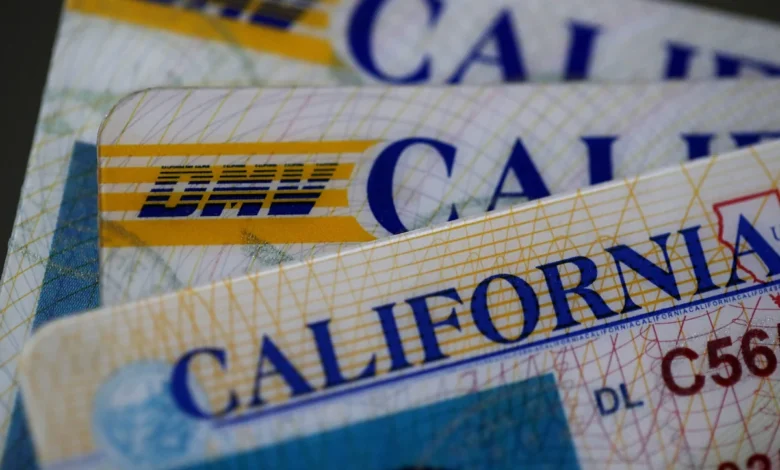
The landscape of digital security and personal privacy suffered a monumental blow as Louisiana-based identity verification provider IDScan officially confirmed that a catastrophic cyberattack compromised its cloud infrastructure, resulting in the theft of sensitive driver’s licenses and government-issued identification records. The confirmation arrives precisely one week after independent cybersecurity researchers and journalists first exposed vulnerabilities indicating that a massive, year-long security lapse had left millions of citizens exposed.
According to the official security notice published by the company, unauthorized malicious actors successfully infiltrated its cloud environment and exfiltrated a vast repository of personal data. The compromised records include full legal names, unique driver’s license numbers, and identity credentials from alternative government-issued documentation, including passports. While IDScan has refrained from explicitly stating the exact aggregate volume of impacted individuals in its public advisory, internal company metrics and marketing archives indicate that the firm maintains a database holding over 150 million driver’s license records spanning the United States and Canada.
The confirmation marks a definitive turning point in an unfolding crisis that has drawn the attention of top-tier federal law enforcement agencies and defense officials. It underscores systemic vulnerabilities within the third-party verification vendor ecosystem, a sector that handles immense volumes of sensitive consumer data on behalf of commercial and institutional clients.
Anatomy of the Breach and the Dark Web Exposure
The scale of the breach first came to light on September 1, 2026, when prominent cybersecurity journalist Brian Krebs published an investigative report detailing the existence of a specialized dark web portal. This illicit website functioned as a searchable database allowing anonymous users to query and retrieve detailed driver’s license information—complete with high-resolution photographs—for more than 150 million people across North America.
To validate the legitimacy of the exposed cache, Krebs examined his own personal records and independently verified their accuracy. Furthermore, the leaked repository was found to contain sensitive credentials belonging to high-profile public figures, including U.S. Secretary of Defense Pete Hegseth, alongside numerous security researchers who confirmed the authenticity of their published data.
The mechanism of the intrusion points to a sophisticated, prolonged compromise of IDScan’s cloud architecture. Although the company’s initial public posture following the September 1 disclosures was cautious—stating only that an internal investigation was underway without confirming an active breach—the subsequent disclosure reveals that unauthorized actors maintained covert access over an extended period. IDScan noted in its updated statement that while full access to the granular database required financial remuneration—strongly indicating an extortion or ransom scheme orchestrated by the threat actors—the corporation felt compelled to issue a broad public warning to mitigate potential downstream harms.
Chronology of Events
The unfolding timeline highlights a troubling delay between the initial detection of external threats and public transparency:
- September 2025 – August 2026: Analysts suggest that unauthorized third-party access to IDScan’s cloud storage environment may have persisted for a prolonged duration, potentially spanning up to a year before discovery.
- On or Around September 1, 2026: IDScan management formally receives external intelligence regarding a major data breach claim circulating within hacker forums. Simultaneously, independent journalist Brian Krebs releases his investigative expose highlighting the dark web lookup service containing over 150 million North American identities.
- September 2, 2026: Federal law enforcement, including the Federal Bureau of Investigation (FBI), confirms it has opened an active investigation into the suspected breach. Representatives for the Pentagon acknowledge awareness of the compromise following revelations regarding high-profile military and civilian defense personnel.
- September 10, 2026: IDScan updates its corporate communications channels, issuing its first official confirmation that a cyberattack successfully extracted driver’s licenses and government identification documents from its cloud architecture.
Corporate Profile and Downstream Ecosystem Risk
To understand the far-reaching implications of the IDScan breach, one must examine the critical role the company plays in modern commerce and regulation. Headquartered in Louisiana, IDScan operates as a premier provider of automated identity document authentication solutions. Its client roster spans a diverse and sensitive array of industries, including heavily regulated sectors such as financial services, hospitality, entertainment venues, and licensed cannabis dispensaries.
Businesses utilize IDScan’s hardware and software suites to scan, parse, and verify physical identification cards presented by patrons at points of entry or during digital onboarding. Consequently, the organization serves as an unwitting honeypot, accumulating colossal amounts of Personally Identifiable Information (PII) submitted by everyday consumers seeking routine access to commercial establishments.
Because these corporate clients rely on third-party verification to satisfy compliance, age-verification, and anti-fraud mandates, the compromise of IDScan’s centralized cloud repositories effectively bypasses the localized security perimeters of hundreds of downstream businesses. A consumer who merely handed their driver’s license to a nightclub bouncer or a cannabis dispensary clerk months prior now faces systemic exposure on illicit marketplaces.
Federal and Institutional Response
The involvement of high-ranking government officials in the leaked dataset has exponentially elevated the urgency of the federal response. Following the initial reporting, representatives for the Pentagon confirmed that defense leadership was actively monitoring the situation to determine whether the exposure of military officials’ credentials posed operational security risks.
Concurrently, the Federal Bureau of Investigation initiated a formal probe into the identity of the threat actors operating the dark web portal. Federal cybercrime divisions are currently analyzing the exfiltrated data structures, tracing cryptocurrency wallets associated with potential ransom demands, and evaluating the infrastructure used to host the searchable lookup service.
Despite repeated inquiries from technology publications, IDScan has declined to clarify whether its executives directly engaged with the hackers, whether a ransom was paid to prevent further dissemination, or what specific vector enabled the initial cloud compromise.
Broader Implications for Digital Identity and Cybersecurity
The IDScan incident serves as a stark reminder of the inherent vulnerabilities associated with centralized identity aggregation. In an era where digital verification is mandatory for nearly every facet of modern life—from opening bank accounts to entering restricted venues—corporations amass unprecedented troves of immutable data. Unlike a compromised password, which can be easily changed, a compromised driver’s license number, legal name, and facial photograph represent permanent biographical markers that cannot be reset.
Security analysts emphasize several key systemic takeaways from the breach:
- The Third-Party Risk Paradox: Enterprises often invest heavily in securing their own internal networks while outsourcing critical verification tasks to specialized vendors. If those vendors maintain lax cloud security configurations, they become high-value single points of failure for entire industries.
- The Danger of Data Hoarding: The aggregation of 150 million distinct identity profiles creates an irresistible target for financially motivated cybercriminal syndicates. Privacy advocates argue that verification services must adopt rigorous data minimization practices, retaining raw PII only for the strict duration required by operational or regulatory frameworks.
- Extortion as a Business Model: Modern cyberattacks have largely shifted from simple data exfiltration to aggressive monetization schemes combining dark web searchable portals with direct corporate extortion. This pressures companies into ethical dilemmas regarding ransom payments while leaving victims exposed indefinitely.
As the Federal Bureau of Investigation continues its active inquiry and affected individuals grapple with the long-term threat of identity theft, the IDScan breach will likely serve as a watershed moment for legislative scrutiny surrounding cloud data retention policies, vendor accountability, and the fundamental protection of biometric and government-issued credentials in the digital age.