What is Important Edition 18 brings a comprehensive look at the latest advancements in CSS development and web platform evolution.

The rapid evolution of Cascading Style Sheets (CSS) and browser-native APIs has accelerated significantly over the past several weeks, introducing a suite of features designed to enhance developer productivity and user interface interactivity. From refined hover mechanics and geolocation handling to experimental selectors and layout balancing, the web platform is currently undergoing a structural transformation that seeks to standardize behaviors previously requiring complex JavaScript workarounds.
Enhancing User Interactivity: The Evolution of Tooltips
One of the most persistent challenges in web UI design involves the management of tooltips. For years, developers have struggled to balance accessibility with usability, specifically concerning trigger delays. Recent research by Abhishek Jakhar has highlighted the necessity of a "delayed-then-instant" mechanism. By implementing a slight pause before a tooltip appears, developers can prevent accidental triggers caused by rapid cursor movement. Conversely, once a tooltip is active, immediate dismissal is required to maintain a seamless experience.
Adding to this, Chris Coyier has demonstrated how modern browser capabilities—specifically the proposed "interest invokers"—could simplify this logic. By utilizing the CSS properties interest-delay-start and interest-delay-end, developers can define the life cycle of a UI element declaratively. While current support is limited to Chromium-based engines, the industry sees this as a pivotal move toward reducing reliance on custom JavaScript event listeners, which are often heavier and more prone to performance bottlenecks.
Standardizing Geolocation Permissions and HTML Elements
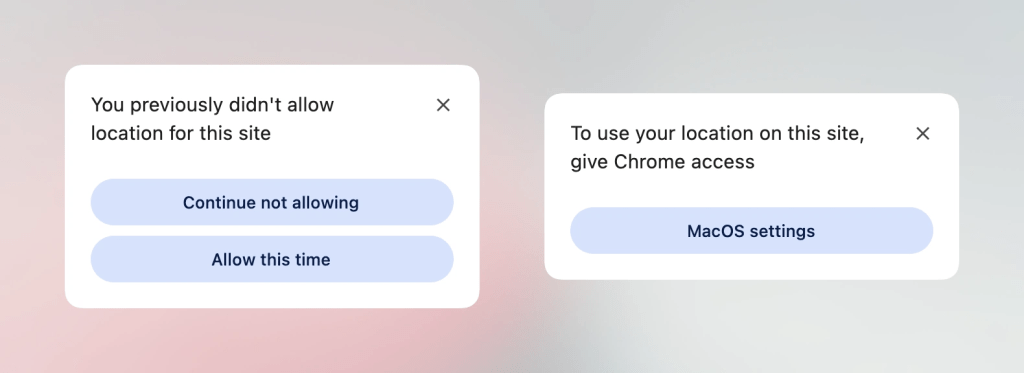
The handling of sensitive user data, such as geolocation, has historically been one of the most fragmented areas of web development. The complexity stems from the interplay between diverse hardware—including GPS satellites, Wi-Fi triangulation, and cellular network mapping—and the strict, often opaque, permission policies enforced by browsers.
The introduction of the <geolocation> element aims to rectify these inconsistencies by providing a standardized native component. However, the transition is not without its hurdles. Initial implementations have revealed specific styling restrictions that limit how developers can customize these permission dialogs. Industry experts suggest that while the <geolocation> element simplifies the request flow, it necessitates a dual-approach strategy. By combining the new HTML element with the legacy Geolocation API, developers can achieve broad browser compatibility while preparing their codebases for future-proof standards.
Syntax Highlighting via the Custom Highlight API
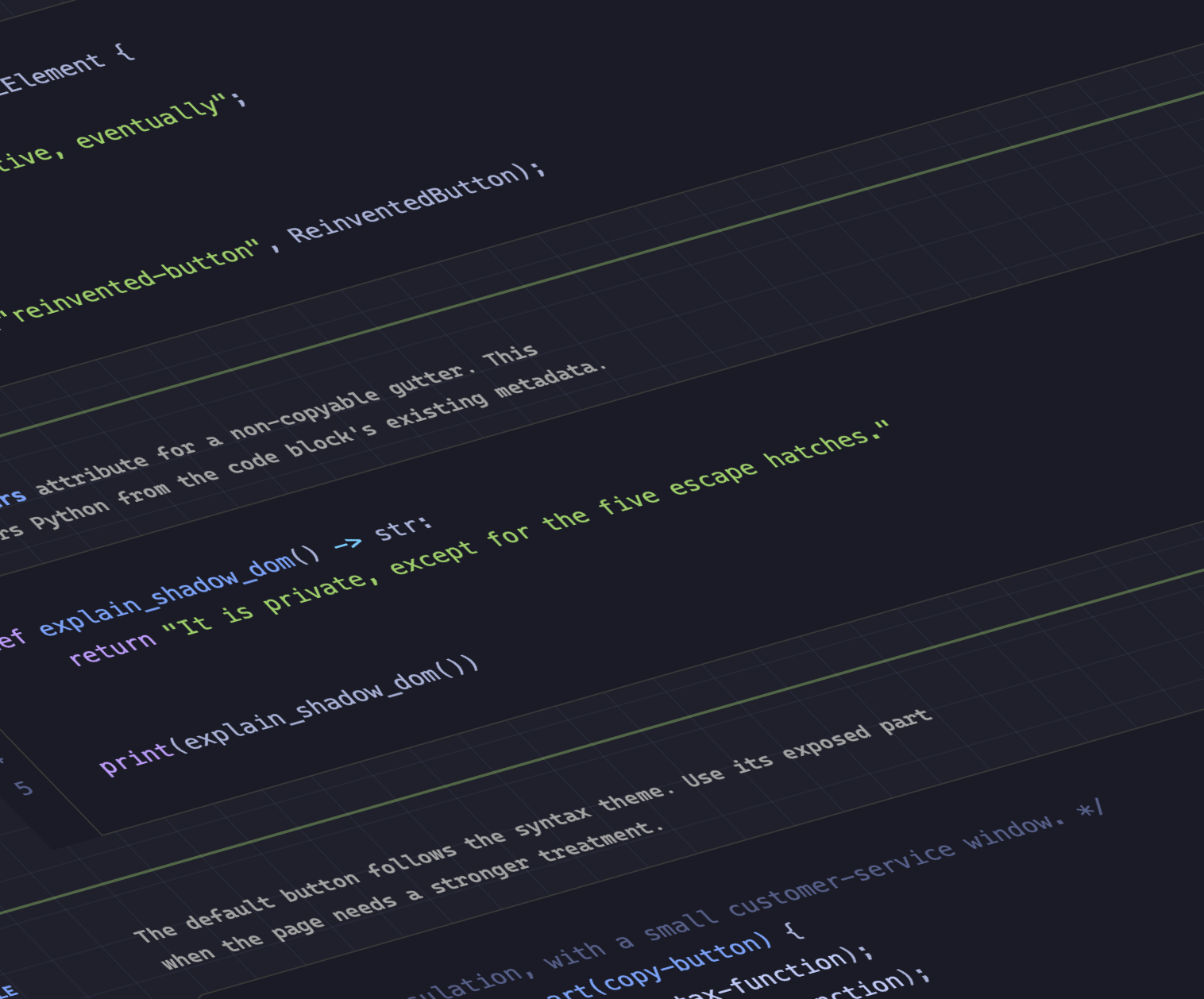
Performance optimization in syntax highlighting has shifted from DOM-heavy solutions to native browser features. Dave Rupert’s development of "MicroLighter" serves as a benchmark for this transition. By leveraging the ::highlight() pseudo-element and the underlying Custom Highlight API, developers can now style arbitrary ranges of text without injecting numerous <span> tags or complex nested nodes into the Document Object Model.
This approach significantly reduces memory overhead and improves rendering speed, particularly on pages with large volumes of code. Analysis suggests that as this API matures, it will likely become the standard for text editors, documentation sites, and developer-focused platforms that prioritize performance and accessibility.
Advanced Grid Data and Custom Properties
The integration of CSS Grid with custom properties has opened new doors for responsive design. Temani Afif has recently demonstrated methods to expose internal grid state information—such as row counts, column counts, and specific cell coordinates—directly into CSS variables.
This development is particularly notable for its implications in proximity-based styling. By tracking the X and Y indices of grid items, developers can now create hover effects that respond to the spatial relationship between elements, rather than just the target element itself. While current iterations require columns of equal width, the underlying logic is being adapted to support more complex, fluid grid structures, signaling a move toward more intelligent, context-aware CSS.
The Debate Over Dark Mode States
As browser-native dark mode support becomes ubiquitous, a debate has emerged regarding the optimal user interface state for theme toggles. Lea Verou advocates for a two-state approach, maintaining that user experience is best served by a binary choice. In contrast, figures such as Bramus Van Damme have championed a tri-state model, which allows users to explicitly toggle between light, dark, and system-default modes.
This discussion is rooted in the "auto-until-overridden" philosophy, which seeks to respect system settings while providing manual overrides. The industry consensus is leaning toward a model that prioritizes user autonomy, ensuring that site-wide theme preferences are both discoverable and easily reversible.
Future Selectors and Feature Detection
The CSS Working Group continues to explore ways to simplify selectors, with the proposed "class prefix selector" (.something-*) garnering significant attention. This syntax aims to replace current attribute-based selector workarounds, such as [class^="something-"], which are not only verbose but often suffer from poor performance during the style-recalculation phase of browser rendering. By providing a native, optimized way to target classes with specific prefixes, the proposal promises cleaner stylesheets and improved developer experience.
Furthermore, the introduction of the @supports named-feature() function marks a breakthrough in browser feature detection. Previously, developers were often forced to rely on user-agent sniffing or broad @supports queries that could not distinguish between specific sub-features. The named-feature() function allows for granular queries, such as verifying whether a browser supports specific transform behaviors during anchor positioning. This capability is expected to significantly reduce the need for "hacky" CSS fixes, allowing for more robust progressive enhancement strategies.
Balancing Layouts with Flexbox
The introduction of flex-wrap: balance in Chromium represents a major milestone in automated typography and layout control. Similar to the text-wrap: balance feature that revolutionized paragraph layout, this property allows the browser to distribute flex items across multiple lines to achieve a visually balanced distribution.
Ahmad Shadeed’s analysis of this feature highlights its potential for container-driven design, where flex items can automatically adjust their distribution to avoid "widows" or awkward single-item rows. As this feature gains broader browser support, it will likely replace manual media query adjustments for flex containers, allowing for more fluid and responsive component design.
Broader Implications and Outlook
The cumulative effect of these updates points toward a more declarative, less imperative future for the web. By offloading complex tasks—such as layout balancing, syntax highlighting, and state management—to the browser engine, the industry is reducing the reliance on third-party JavaScript libraries.
This trend toward "native-first" development not only improves site performance and security but also ensures that the web remains a resilient, accessible platform. As autumn approaches, the focus remains on the standardization of these experimental features, ensuring they are adopted with cross-browser compatibility in mind. The rapid pace of these updates suggests that the next generation of web development will be defined by a shift away from brittle, library-heavy codebases toward lean, native, and highly performant standard implementations.