Huawei’s US racketeering trial opens with prosecutors calling it a criminal enterprise

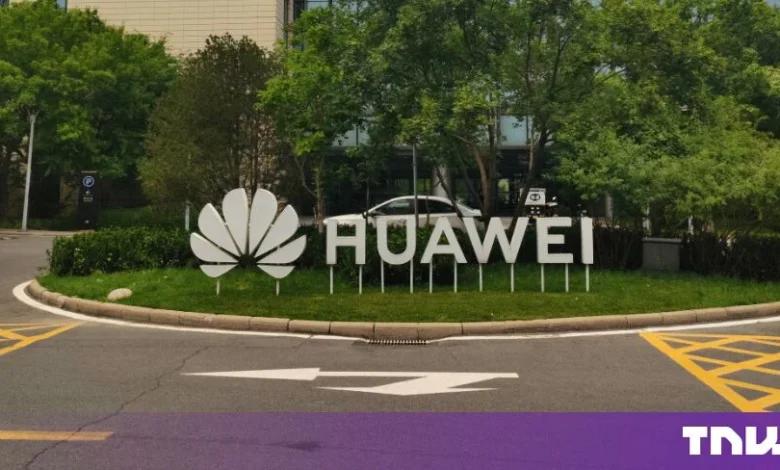
This high-stakes trial, unfolding in the U.S. District Court for the Eastern District of New York, represents the culmination of a decade-long geopolitical and legal struggle between the United States government and the Chinese telecommunications giant. The proceedings address a sweeping indictment that includes charges of bank fraud, violations of international sanctions, and racketeering, alongside persistent allegations of systematic intellectual property theft from American technology firms.
The Opening Salvos: A Clash of Narratives
The courtroom atmosphere was charged as Taylor Stout, a trial attorney for the U.S. Department of Justice, set the tone for the government’s case. "Theft, lies, cover-up. For 20 years, that’s how Huawei victimized American companies," Stout declared to the jury. The prosecution’s opening statement sought to frame Huawei not as a standard, competitive global firm, but as a criminal enterprise that allegedly weaponized the theft of trade secrets to fuel its rapid global expansion.
In stark contrast, defense attorney Brian Heberlig offered the jury a completely different interpretation of the events. Heberlig urged the jurors to view the allegations through the lens of aggressive global business rather than criminal intent. "This case is about competition, not conspiracy," Heberlig argued. "Innovation, not theft. Ordinary business dealings, not criminal conduct." The defense strategy appears centered on decoupling the actions of individual employees from the strategic mandates of Huawei’s corporate leadership, suggesting that any misconduct was the work of rogue actors rather than institutional policy.
Chronology of the Conflict
The legal path to this trial has been long and complex, characterized by escalating tensions between Washington and Beijing. The following timeline provides the necessary context for the current proceedings:
- 2012-2017: U.S. federal investigators begin scrutinizing Huawei’s business practices, focusing on allegations of intellectual property theft involving Cisco Systems and T-Mobile.
- January 2019: The U.S. Department of Justice unseals a multi-count indictment against Huawei, its affiliates, and CFO Meng Wanzhou, accusing them of bank fraud and sanctions violations.
- December 2018: Meng Wanzhou is arrested in Vancouver at the request of the United States, sparking a major diplomatic crisis between China and Canada.
- September 2022: Meng Wanzhou reaches a deferred prosecution agreement with the U.S. government, leading to the dismissal of charges against her personally. Crucially, the agreement allowed her to avoid an admission of guilt while providing the government with significant evidence and admissions that are now being utilized in the ongoing trial against the corporation.
- 2023-2024: Following a rigorous jury selection process, the trial officially commences in Brooklyn, focusing on the broader racketeering charges and the alleged systemic nature of the company’s internal operations.
Intellectual Property and the "Tappy" Dispute
A central component of the government’s case involves specific trade secret theft allegations. Prosecutors have pointed to two key instances: the misappropriation of proprietary operating system source code from Cisco routers and the illicit acquisition of a robotic device from T-Mobile, known internally as "Tappy."
While "Tappy" may seem mundane—it was a machine designed to mechanically tap phone screens to test durability—the government argues that its theft highlights a recurring pattern of behavior. For the defense, these incidents are proof of isolated misconduct that the company addressed internally. However, for the prosecution, these represent a deliberate effort to bypass R&D costs and accelerate the development of Huawei’s own product lines by leveraging the proprietary engineering of U.S. rivals.
The lack of "glamorous" high-tech breakthroughs in the evidence is, in itself, a point of analysis. Industrial espionage, as evidenced here, is rarely about stealing a "silver bullet" technology. Instead, it involves the systematic collection of incremental engineering advantages that, when aggregated, allow a company to achieve parity or dominance in a competitive market.
Sanctions and the Banking Nexus
The charges concerning bank fraud and sanctions violations add a layer of international complexity to the trial. Prosecutors allege that Huawei concealed its business dealings in Iran to facilitate the movement of U.S. dollars through the American financial system, effectively circumventing economic sanctions designed to restrict the Iranian government’s activities.
Huawei’s defense on this front is technical and narrow. The company maintains that it did not knowingly violate sanctions law and that the financial transactions in question were not intentionally designed to mislead banking institutions. The outcome of the trial may well hinge on this point: Did Huawei act with "willful blindness," or were these clerical errors in a complex global supply chain?
The Burden of Racketeering
The racketeering charge is perhaps the most ambitious part of the government’s indictment. To secure a conviction under the Racketeer Influenced and Corrupt Organizations (RICO) Act, the prosecution must demonstrate a pattern of criminal activity rather than a series of disparate, unrelated incidents. This is why the government’s opening statement spanned two decades; they are attempting to paint a portrait of a corporation whose core business model is built on an organized, multi-year strategy of illicit acquisition and deception.
The defense, conversely, aims to convince the jury that they are looking at a massive, decentralized global entity where individual employees may have acted unethically, but where the institution itself remained within the bounds of standard, albeit aggressive, commercial practices.
Global Implications and Geopolitical Context
The trial takes place against a backdrop of a fundamentally altered global telecommunications landscape. When the initial charges were filed, Huawei was a major supplier for Western carriers. Today, after years of security warnings and government-led "rip-and-replace" initiatives, Huawei has been largely removed from the core infrastructure of the United States and several European nations.
The European Commission’s ongoing warnings to member states regarding "high-risk vendors" illustrate that the security policy debate has largely moved beyond the courtroom. For European policymakers, the verdict may not change network procurement rules, which are already heavily tilted toward excluding Chinese vendors. However, a conviction would provide something that has been missing from the public discourse: a formal, legally verified record of facts.
For years, the security argument against Huawei has relied on intelligence assessments that are often classified and unavailable for public scrutiny. A trial in an open court, subject to cross-examination and the rigorous standards of the American legal system, offers a different level of accountability.
Conversely, an acquittal or a hung jury would provide significant ammunition for Huawei’s long-standing argument that the U.S. government’s campaign against the company is, in reality, a form of industrial policy masquerading as law enforcement. By framing the trial as a public examination of evidence, both the U.S. Department of Justice and Huawei are subjecting their competing narratives to the ultimate test of transparency.
As the trial is expected to span three months, the legal and geopolitical communities will be watching closely. Whether the jury views Huawei as an innovative titan of industry or a criminal enterprise will not only affect the company’s future in Western markets but will also serve as a definitive marker in the broader, ongoing competition for technological supremacy between the world’s two largest economies.