How Spirit Halloween Rose from a Sleepy Women’s Clothing Store to a Seasonal Retail Empire

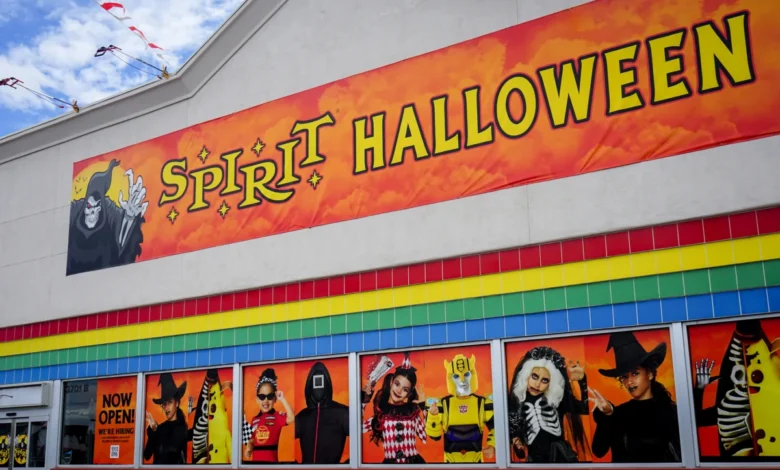
Every autumn, as the weather cools and leaves begin to turn, a familiar retail phenomenon transforms the suburban landscape across North America. Seemingly overnight, vacant big-box retail spaces, former bookstores, and empty strip-mall corners sprout bright orange banners emblazoned with the iconic black script of Spirit Halloween. For millions of consumers, the sudden appearance of these pop-up emporiums has become as definitive a sign of the changing season as pumpkin spice lattes and falling leaves. Yet, the ubiquitous ghouls, animatronic monsters, and vast seas of costumes that define the modern Halloween shopping experience trace their origins back to a remarkably modest source: a struggling women’s apparel shop in Northern California facing a severe slump in October sales.
The Genesis of a Retail Innovation
The story of Spirit Halloween begins in the early 1980s, an era when the commercialization of Halloween was drastically different from the multi-billion-dollar juggernaut it is today. Back then, retail leases were rigid, long-term commitments, and the idea of opening a brick-and-mortar storefront for just a few weeks of the year was practically unheard of. Shopping malls and strip centers operated on decade-long contracts designed to foster permanent, steady businesses. Seasonal commerce was largely confined to Christmas tree lots or temporary fireworks stands on the Fourth of July; Halloween, as a major retail event, was still in its infancy.
At the center of this impending retail revolution was Joseph Marver, an entrepreneur who owned and operated Spirit Women’s Discount Apparel in Castro Valley, California. By all accounts, Marver’s shop was a standard, albeit unremarkable, neighborhood clothing store. However, as autumn rolled around, Marver noticed a troubling trend that would ultimately alter the trajectory of his professional life. While his own cash registers remained frustratingly quiet throughout the month of October, a small, independent costume shop situated directly across the street was experiencing a massive, seemingly endless boom.
Intrigued and desperate to revitalize his lagging revenues, Marver decided to investigate. He observed long lines of eager customers waiting to purchase masks, theatrical makeup, and theatrical garb. Recognizing that women’s discount apparel was failing to capture consumer interest during that specific window, Marver made a bold and calculated gamble. In 1983, he made the radical decision to pack up his entire inventory of women’s clothing, placing the unsold garments into storage. He then traveled to a major merchandise trade show in Chicago, where he sourced a diverse array of wholesale Halloween costumes, decorations, and novelty items. Transforming the interior of his Castro Valley storefront, he reopened as a dedicated Halloween retailer.
The risk paid off in spectacular fashion. According to Halloween historian Lisa Morton, Marver’s sales went through the roof, instantly eclipsing the modest margins he had previously achieved with his clothing store. The sheer consumer appetite for a centralized, dedicated Halloween shopping destination was immense, proving that Marver had tapped into an underserved market segment.
Pioneering the Modern Pop-Up Model
Buoyed by the unexpected success of his 1983 experiment, Marver realized that his temporary pivot could become a repeatable business model. However, operating out of his permanent Castro Valley location year-round was inefficient if the business truly thrived for only a fraction of the year. The next logical step was to harness the power of temporary real estate.
In 1984, Marver took a monumental leap by renting temporary retail space in a shopping mall for a duration of just eight to ten weeks. At the time, securing a short-term commercial lease required considerable negotiation, as landlords were unaccustomed to tenants who wished to vacate the premises before the holiday shopping season even peaked. Nevertheless, Marver successfully negotiated the terms, proving that vacant or transitional retail spaces could be monetized effectively during lulls in standard commercial leasing cycles.
Over the next sixteen years, Marver systematically expanded upon this foundation. What began as a single improvised pivot in Castro Valley gradually evolved into a regional chain of seasonal outlets. By the close of the 1990s, Marver had successfully scaled his enterprise to roughly 60 seasonal locations. Along the way, he officially christened the growing business Spirit Halloween, establishing a recognizable brand identity centered entirely around the immersive thrills of the autumn holiday.
The Acquisition and Scaling Under Spencer Gifts
As the brand grew, its operational footprint caught the attention of larger retail entities seeking to diversify their portfolios. In 1999, the trajectory of Spirit Halloween shifted once again when Spencer Gifts, a novelty and lifestyle retailer long known for its presence in shopping malls across the country, acquired the company.
The acquisition provided Spirit Halloween with the corporate backing, logistical muscle, and established real estate relationships necessary to scale on a national and international level. Spencer Gifts possessed deep expertise in novelty items, gag gifts, and youth-culture retail, making them the ideal parent company to supercharge Marver’s seasonal concept. Under corporate stewardship, the brand began to aggressively target vacant anchor stores—such as former Circuit City, Toys "R" Us, and Borders bookstore locations—whose sheer square footage allowed Spirit Halloween to construct massive, labyrinthine showrooms filled with towering animatronics, fog machines, and thousands of specialized costumes.
Today, the scale of Spirit Halloween is staggering. The enterprise operates approximately 1,500 seasonal storefronts across the United States and Canada every year. What started as a desperate workaround by a single California merchant has transformed into a seasonal retail empire that dictates cultural trends, generates billions of dollars in economic activity, and employs tens of thousands of temporary workers each autumn.
Reflections on a Legacy
Joseph Marver remained a towering figure in the lore of modern retail, even as his creation far outgrew its humble beginnings. Reflecting on his accidental invention in a 2022 interview with the Seattle Times, Marver encapsulated his unique contribution to modern commerce with characteristic humility: "I didn’t invent temporary sales, but I feel like I invented temporary Halloween."
Marver passed away in 2025, leaving behind a legacy that fundamentally reshaped how landlords, commercial real estate developers, and consumers view seasonal retail. His ability to identify a dormant market gap and pivot away from traditional, rigid business models demonstrated the vital importance of adaptability in commerce.
The Economic and Cultural Impact of Spirit Halloween
The implications of Spirit Halloween’s ascent extend far beyond the realm of novelty costumes. The brand has single-handedly revolutionized the commercial utilization of commercial real estate. In an era plagued by the "retail apocalypse"—characterized by the constant closure of brick-and-mortar storefronts due to the rise of e-commerce—Spirit Halloween offers a temporary yet highly lucrative lifeline to commercial landlords. By stepping into vacant spaces for a guaranteed two-to-three-month lease, the company generates revenue for property owners who would otherwise collect zero income from empty real estate. Furthermore, these pop-up stores drive foot traffic to surrounding strip-mall businesses, providing a much-needed boost to neighboring restaurants, service providers, and retailers during the autumn shoulder season.
From a cultural standpoint, Spirit Halloween has evolved from a simple retail destination into a pervasive internet meme and a genuine seasonal tradition. The brand’s sudden emergence each August and September triggers widespread social media commentary, with users jokingly predicting the conversion of every abandoned building in America into a Spirit Halloween store. This organic digital engagement has turned the brand into a pop-culture touchstone, cementing its status as an inescapable feature of contemporary autumn culture.
As the retail landscape continues to evolve in the face of digital disruption, the enduring success of Spirit Halloween stands as a testament to the power of physical, immersive shopping experiences. By turning a seasonal hurdle into a pioneering retail model, Joseph Marver ensured that every October would forever be haunted by the spirit of entrepreneurial innovation.
Related posts: