Fourthwall vs Gelato: A Comprehensive Analysis of Modern Print-on-Demand and E-commerce Solutions

The rapid expansion of the creator economy has necessitated a shift in how independent merchants and influencers approach product manufacturing and digital storefront management. Two primary contenders in this space, Gelato and Fourthwall, offer divergent pathways for scaling a brand. While Gelato positions itself as a robust, global production network focused on logistics and sustainability, Fourthwall operates as an all-in-one ecosystem designed to simplify the complexities of online retail. Understanding the fundamental operational differences between these two platforms is essential for entrepreneurs navigating the transition from a design concept to a global storefront.
The Evolution of Fulfillment and Storefront Architecture
The print-on-demand (POD) industry has undergone significant transformation over the last decade. Historically, merchants were required to manually manage production, quality control, and shipping logistics. The emergence of platforms like Gelato, founded in 2019, fundamentally altered this landscape by creating a localized production model. By utilizing a vast network of 140+ production hubs, Gelato minimizes transit times and carbon footprints, prioritizing a "produce locally, deliver locally" strategy. This model appeals primarily to established businesses using platforms like Shopify, Wix, or Squarespace that require a high-capacity fulfillment engine without the burden of inventory management.
Conversely, Fourthwall entered the market with a focus on the "creator-first" philosophy. Rather than acting strictly as a fulfillment partner, Fourthwall provides a comprehensive suite that includes a customizable website builder, an integrated POD catalog, and tools for selling digital assets and memberships. By acting as the Merchant of Record (MoR), Fourthwall assumes the legal and financial responsibility for sales tax and customer service related to its catalog, a significant departure from the traditional merchant-managed model.
Comparative Operational Frameworks
| Feature | Gelato | Fourthwall |
|---|---|---|
| Primary Focus | Fulfillment & Production Network | Integrated Brand Building |
| Merchant of Record | No (Merchant retains responsibility) | Yes |
| Sales Channels | Integrates with external stores | In-house storefront + social integrations |
| Digital Products | Not natively supported | Supported (Downloads/Memberships) |
| Production Model | 140+ global, localized hubs | Centralized high-quality POD catalog |
| Customer Support | Backend fulfillment support | Full support for catalog items |
Strategic Implications for Scaling Brands
The choice between these platforms depends largely on the merchant’s existing digital infrastructure. For businesses that have already invested in a bespoke Shopify store or a complex Etsy integration, Gelato offers a seamless "plug-and-play" experience. Its primary value proposition is the ability to maintain the independence of one’s own website while leveraging a sophisticated, global supply chain. Gelato’s Personalization Studio, which allows customers to modify designs in real-time, serves as a high-value tool for increasing profit margins, particularly for bespoke gift retailers.
In contrast, Fourthwall is engineered for creators who wish to avoid the technical debt associated with managing multiple plugins and separate payment gateways. Because the platform includes a native storefront, a merchant can launch a store, manage memberships, and sell physical goods through a single dashboard. This consolidated approach reduces the administrative overhead that often hinders small-to-medium enterprises. By managing the Merchant of Record status, Fourthwall alleviates the burden of global tax compliance—a common friction point for cross-border e-commerce sellers.
Sustainability and Fulfillment Logistics
A critical differentiator for Gelato is its aggressive commitment to environmental sustainability. The company’s operational model is predicated on reducing the physical distance between the point of manufacture and the point of delivery. By producing roughly 90% of orders locally, Gelato reduces shipping times and the carbon impact of long-haul logistics. This focus on "eco-conscious" commerce is a core component of their value proposition, attracting brands that prioritize environmental, social, and governance (ESG) metrics in their supply chain.
Fourthwall, while offering sustainable and eco-friendly product options, does not center its brand identity on the logistics of the supply chain in the same manner. Its fulfillment network is highly efficient, consistently delivering products in 5–8 days, but its strengths lie more in the breadth of its monetization tools—such as its donation feature and its native integration with platforms like RSS.com for podcasters—rather than the granular environmental impact of its shipping nodes.
Financial Models and Cost Structures
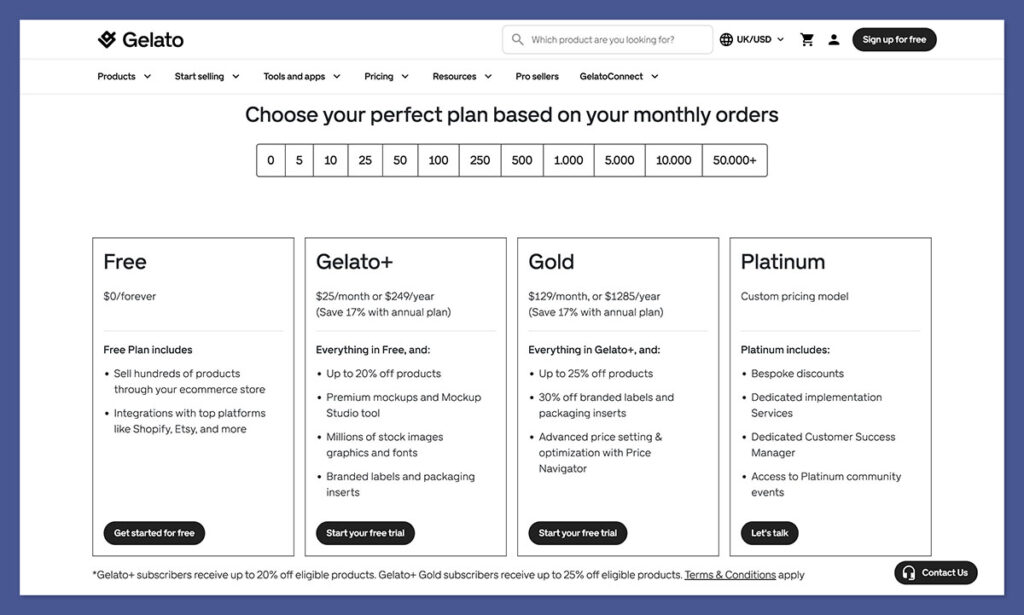
Analyzing the cost-effectiveness of these platforms requires a distinction between subscription fees and operational overhead. Both platforms offer free entry tiers, allowing new entrepreneurs to launch without significant upfront investment.
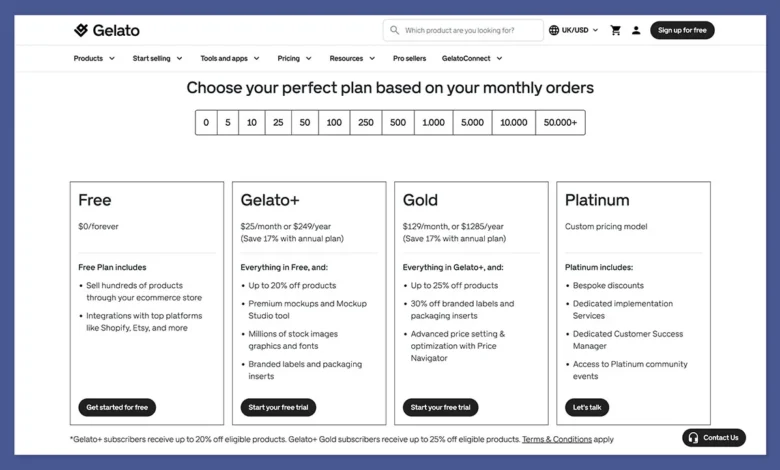
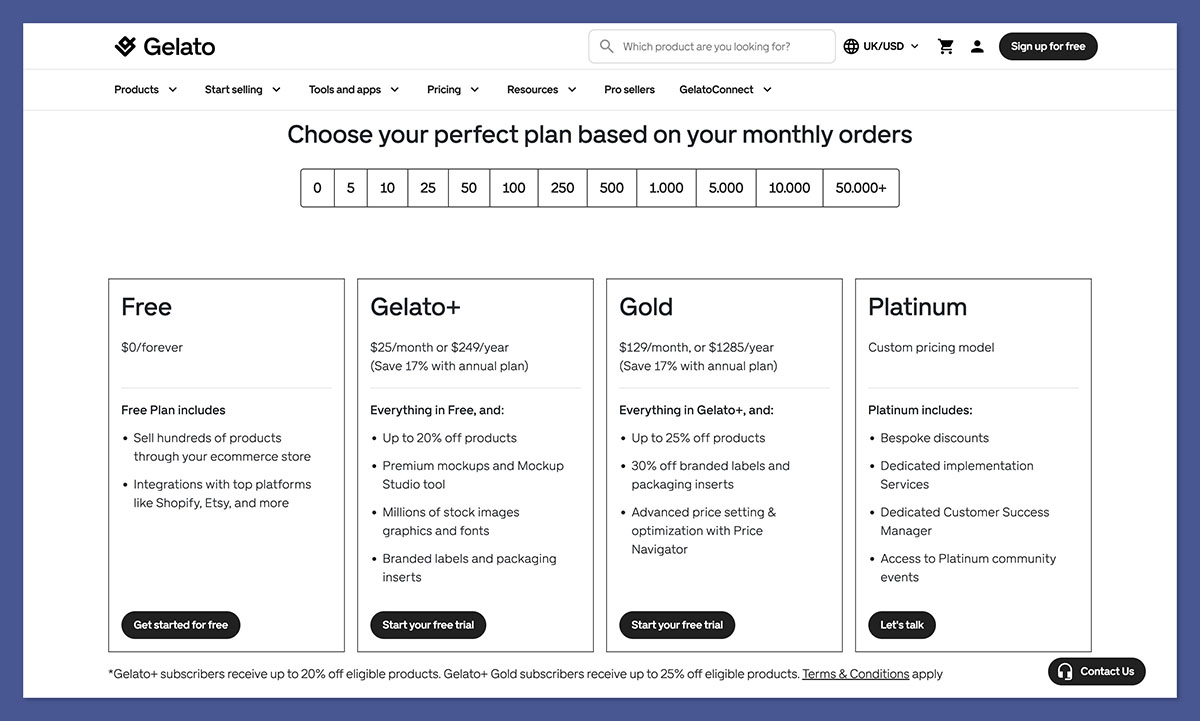
Gelato provides a robust free plan, but the real financial benefit for high-volume sellers is found in its $29.99/month Gelato+ subscription. This tier offers discounts of up to 33% on base product costs, which significantly improves margins as scale increases. However, users must account for the additional costs of their external website hosting and marketing applications.
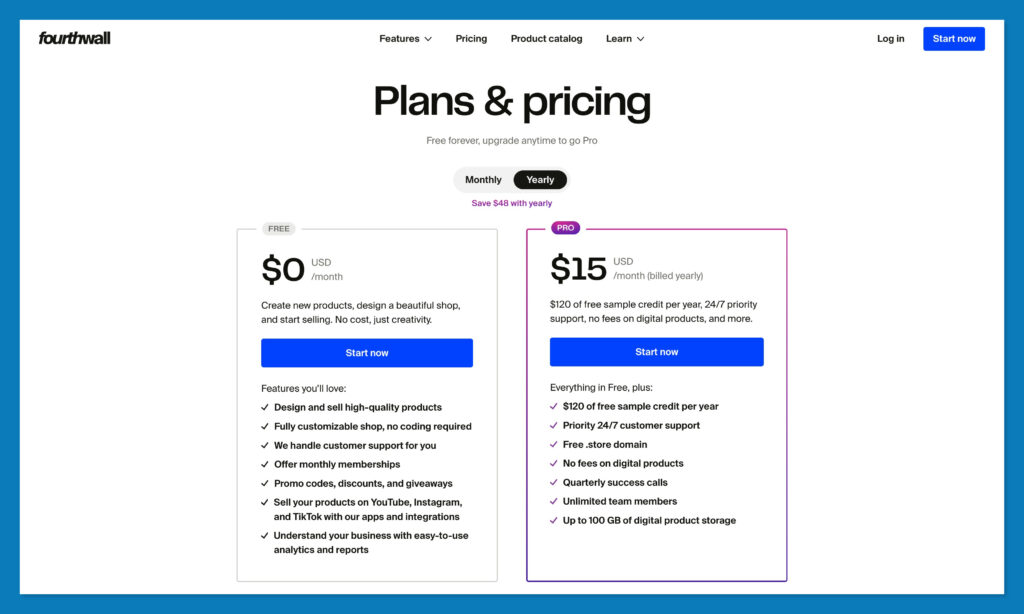
Fourthwall’s free tier is arguably more comprehensive for beginners, as it includes the storefront and the ability to sell non-POD products. While it charges a 5% fee on digital transactions for users on the free plan, this fee is waived for those who upgrade to the $19/month Pro plan. The Pro plan also grants access to priority support, advanced analytics, and $10 in monthly sample credits, making it a compelling alternative to paying for multiple disparate e-commerce services.
Technological Integration and Future-Proofing
Both companies have integrated advanced technology to assist in product creation. Gelato has pioneered the use of AI-driven mockup tools and "creator insight" widgets that analyze sales data to predict product success. These tools are designed to optimize the workflow for designers who are already comfortable with existing e-commerce platforms.
Fourthwall, however, has leaned into automation with "Eli," an AI-driven assistant designed to handle store management tasks such as price adjustments, promotional creation, and customer inquiry triage. Furthermore, Fourthwall’s decision to build a designer marketplace directly into the platform addresses one of the most common hurdles for creators: the lack of original, high-quality artwork.
Final Assessment: Determining the Best Path Forward
The decision to adopt either Gelato or Fourthwall is a strategic one, dictated by the desired level of control and the current maturity of the business.
Gelato represents the "best-in-class" choice for the power user. It is the ideal partner for the merchant who views their website as their primary asset and requires a high-performance fulfillment engine that can scale globally while maintaining strict quality and environmental standards. It provides the infrastructure necessary to support high-growth businesses that demand flexibility in their choice of sales channels and marketing tech stacks.
Fourthwall is the optimal choice for the "brand-focused" entrepreneur. It is particularly well-suited for creators, influencers, and artists who want to focus on content production rather than back-end store management. By consolidating the storefront, the catalog, the digital product management, and the financial compliance into one platform, Fourthwall provides a lower barrier to entry and a faster path to revenue generation.

In the broader context of the digital economy, these two platforms represent the maturation of the e-commerce sector—moving away from generic, one-size-fits-all solutions toward specialized ecosystems that empower creators at every stage of their professional development. Whether the priority is supply chain logistics or the holistic management of a digital brand, both providers offer the tools necessary to compete in an increasingly crowded global marketplace.