Testing the Promise: Investigating the Gap Between Secure WordPress Hosting Marketing and Real-World Protection

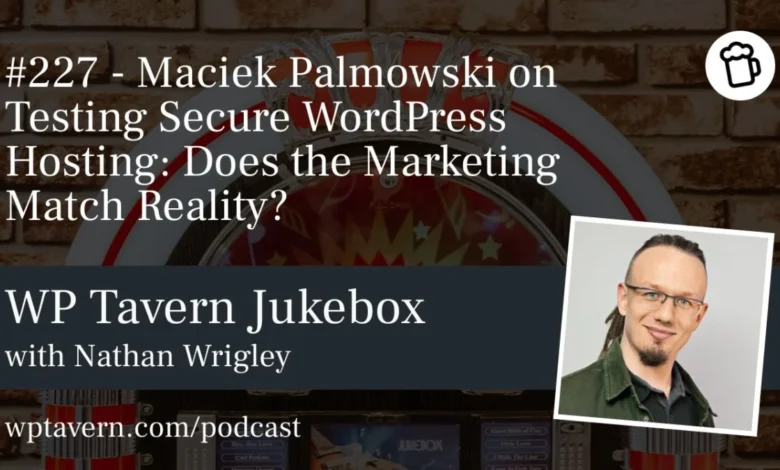
The rapid evolution of the digital landscape has transformed WordPress from a simple blogging platform into the backbone of nearly 43% of the internet. As businesses increasingly rely on the ecosystem for e-commerce and enterprise-grade applications, the promise of secure hosting has become a primary marketing pillar for hosting providers. However, recent findings presented at WordCamp Europe in Krakow suggest that the marketing narrative surrounding managed security often diverges significantly from technical reality. Maciek Palmowski, a security engineer at Patchstack, conducted a rigorous penetration testing study involving 30 known plugin vulnerabilities across multiple hosting environments, revealing that many providers are struggling to deliver the protection they advertise.
The investigation, titled Testing the Promise: Does Secure Hosting Deliver?, sought to move beyond anecdotal evidence and establish a standardized, data-driven assessment of how hosting companies handle common WordPress attack vectors. The results highlight a critical disconnect, suggesting that while hosts provide robust infrastructure, their specific application-level security measures often fail to neutralize well-documented vulnerabilities.
The Methodology of the Study
The research was initiated following an inquiry from WordPress co-founder Matt Mullenweg regarding the role of hosting providers in mitigating security risks. To address this, the Patchstack team designed a controlled experiment. Rather than theoretical analysis, the team employed active penetration testing. They deployed 30 known vulnerable plugins—each with a documented proof-of-concept (PoC) sourced from Patchstack’s own bug bounty program—across various hosting environments.
The researchers maintained a standardized testing methodology for each host, ensuring that all available built-in security features were activated. By utilizing identical plugin sets and testing conditions, the team aimed to isolate the efficacy of the hosts’ security stacks. The results were sobering: approximately 80% of the simulated attacks successfully bypassed the hosting providers’ security layers. This high failure rate persisted even among hosts that prominently feature "secure hosting" as a core value proposition in their marketing collateral.
The Swiss Cheese Model of Security
The study introduces the "Swiss cheese model" of security to explain why current hosting defenses are falling short. In this model, security is viewed as a series of overlapping layers. Each layer, whether it be a Web Application Firewall (WAF), server-side hardening, or code-level patching, inherently contains holes. The goal is to stack these layers so that the holes do not align, thereby preventing an exploit from reaching the core of the system.
According to the research, hosting providers excel at stopping generic, low-level PHP attacks, such as basic file upload manipulations or path traversal attempts. However, they frequently fail when confronted with WordPress-specific vulnerabilities that require a deep understanding of the application’s unique architecture. When an attack is tailored to a specific plugin or a niche WordPress function, generic security tools often lack the context to differentiate between legitimate traffic and malicious exploitation.
The Role of Artificial Intelligence in Exploitation
The timeline for vulnerability exploitation has compressed drastically in recent years, a trend largely driven by the adoption of artificial intelligence in cyberattacks. Historical data indicates that the window between the disclosure of a vulnerability and the commencement of active exploitation has narrowed to approximately five hours. This leaves system administrators and site owners with an incredibly tight response window to apply patches.
The study further highlights a systemic issue regarding patch management: approximately 50% of the vulnerabilities discovered and reported by the Patchstack bug bounty program remain unpatched by plugin vendors even after the 30-day disclosure window has passed. When a site owner relies entirely on the hosting provider for security, they are often left exposed, as the provider cannot always remediate code-level flaws inherent to a third-party plugin. This reality complicates the "managed" promise, as technical debt and developer responsiveness create vulnerabilities that infrastructure-level security cannot solve.
Industry Implications and the Credibility Gap
The findings pose a significant challenge to the current state of WordPress marketing. The term "secure hosting" is frequently used as a blanket assurance, similar to labels like "healthy" or "all-natural" in the food industry, which often lack standardized regulatory definitions. This creates a false sense of security for end-users, who may neglect basic hygiene practices—such as maintaining strong passwords, keeping plugins updated, or managing admin access—under the impression that their host has mitigated all possible threats.
The research suggests that there is no single industry-wide badge or accreditation that currently guarantees comprehensive protection. While being a partner of established security firms like Patchstack is a positive indicator, it is not a panacea. The study found that even among hosts utilizing identical security toolsets, the outcomes varied significantly. This suggests that the effectiveness of security tools is highly dependent on how they are configured and managed by the hosting provider’s internal engineering teams. A highly restrictive configuration might provide superior security but lead to compatibility issues, while a more permissive setup may prioritize user experience at the expense of protection.
Toward a More Transparent Future
For business owners and agencies navigating the hosting market, the study recommends shifting from passive trust to active questioning. Rather than accepting high-level marketing claims, users should ask prospective hosts specific questions about their security stack:
- WordPress-Awareness: Does the hosting security stack specifically monitor for WordPress-centric threats, or does it rely solely on generic WAF rules?
- Tooling Transparency: What specific solutions are being employed, and how are they configured to handle plugin-level vulnerabilities?
- Incident Response: How does the host manage vulnerabilities that occur within the plugin ecosystem, and what are their procedures for notifying clients?
The shift toward a more transparent dialogue is necessary for the long-term health of the WordPress ecosystem. As AI-powered attacks become more sophisticated, the "set it and forget it" approach to hosting security is becoming obsolete. The responsibility for security must be shared between the hosting provider, the plugin developer, and the site owner.
Conclusion
The research presented at WordCamp Europe serves as a wake-up call for the WordPress community. It underscores the necessity of moving beyond the marketing veneer to understand the technical limitations of current hosting environments. Security is not a product to be purchased; it is a continuous process that requires vigilance, multiple layers of defense, and, above all, clear communication between service providers and their clients.
As the industry moves toward 2026, the reliance on AI will continue to accelerate both the discovery of vulnerabilities and the speed of attacks. Consequently, the reliance on automated infrastructure security will need to be supplemented by proactive site management. While WordPress remains a robust and highly capable platform, its popularity makes it a high-value target. Acknowledging the "grey zone" of security—where no solution is perfect and every layer has vulnerabilities—is the first step toward building a more resilient and truly secure digital presence. Moving forward, the focus must shift from the absolute promises of marketing to the measurable, granular realities of technical protection.