Beyond the Prompt: How AI-Driven Development is Transforming Agency Workloads and Long-Term Maintenance


By the end of a single afternoon, a developer utilizing modern generative artificial intelligence can craft a fully functional WordPress plugin. With minimal prompt engineering and automated code generation, the newly minted software can route form submissions directly into a corporate customer relationship management (CRM) platform while simultaneously dispatching a confirmation email to the end user. When presented to the client, the reaction is overwhelmingly positive, often prompting an immediate inquiry: Can the feature go live by Friday?
However, this rapid velocity masks a complex web of downstream engineering challenges. The developer still needs to determine how the system behaves when a user submits the identical form twice, or how it handles a scenario where the CRM API becomes unresponsive. Questions regarding user permissions, credential security, and administrative access often remain unaddressed because testing has been restricted exclusively to a single internal administrator account. Before the project can safely transition to production, a colleague must be equipped with enough context to troubleshoot the codebase during the original author’s absence.
While an afternoon of AI-assisted coding yields immediate time savings, it simultaneously introduces a new piece of software that the agency is now obligated to support and maintain. As artificial intelligence lowers the barrier to entry for building digital products, code review, integration testing, and long-term maintenance are consuming a significantly larger share of agency schedules than previously anticipated. Industry analysts, software architects, and managed hosting providers are increasingly focusing on where this operational burden lands, how it impacts project estimates, and what procedural adjustments agencies must make to preserve their operational margins.
The Evolution of Production Speed and Developer Workloads
The utility of artificial intelligence in software engineering extends far beyond writing raw syntax; some of the most impactful assistance occurs during the exploratory phase before a developer has substantial code to exhibit. A vague business requirement can be translated into a draft function, a UI/UX designer can explore multiple layout variations without manually building each iteration, and a copywriter can bypass the friction of the blank page.
This acceleration frees up meaningful blocks of time. Developers who spend less of their morning writing generic boilerplate or documentation have more capacity to investigate complex, legacy compatibility issues—provided that project managers leave room for this exploratory work in the schedule.
Data from recent industry studies highlights the dual-edged nature of this technological shift. According to Google’s 2025 DORA (DevOps Research and Assessment) report, more than 80% of respondents believed that artificial intelligence increased their personal productivity, and a positive correlation between AI adoption and delivery velocity was documented. Intriguingly, this same research noted an inverse relationship between high AI adoption and delivery stability. While these findings represent statistical associations rather than direct causal mandates, they underscore why measuring success purely by output speed yields an incomplete evaluation of software delivery.
Consider the CRM plugin scenario: getting an initial form submission to register inside a client dashboard can be accomplished swiftly. However, complications arise immediately when testing edge cases. For instance, if a user submits information using an email address that already exists within the CRM, should the plugin update the existing contact record, ignore the submission, or generate a duplicate entry? The underlying code must align directly with the operational workflows of the client’s sales team. Addressing these logical nuances requires direct consultation with stakeholders and rigorous, methodical testing. If management responds to AI coding efficiencies by continually moving deadlines forward, they inadvertently squeeze out the rigorous review processes required to verify system readiness.
Shifting Operational Burdens to Review and Integration
When tracing a form submission from the perspective of a sales representative, structural gaps often become apparent. While a new contact may successfully populate the CRM database, the integration might fail to log whether that individual opted into marketing communications or consented to follow-up correspondence. The plugin executes its primary function without throwing a visible error, yet omits critical compliance data that the sales team requires.

To prevent these oversights, agencies must establish comprehensive definitions of success that span both the WordPress environment and the connected third-party platform. Code implementations should be audited against established agency conventions regarding configuration storage, credential management, hook utilization, and error logging. Adhering to these internal standards ensures that subsequent developers can easily parse and maintain the codebase.
Security reviews must also extend beyond surface-level user interfaces. A subscriber who lacks dashboard visibility may still possess the capability to dispatch HTTP requests that alter plugin configurations. Comprehensive security audits must evaluate WordPress user roles not merely by what information is visible on the screen, but by verifying that the backend code actively validates user permissions during data retrieval and modification. Furthermore, data hygiene protocols must be enforced to ensure that sensitive personally identifiable information (PII) is not inadvertently exposed in server or application logs.
Integrating third-party forms requires examining the broader workflow surrounding the application. Artificial intelligence can assist in identifying potential architectural gaps and generating draft unit tests based on provided parameters. Nevertheless, engineering teams must independently verify these behaviors. A test suite that merely mirrors the assumptions embedded within the initial AI-generated code provides a false sense of security. Prior to feature handover, teams should conduct internal code reviews where a secondary engineer explains the architecture and outlines their strategy for diagnosing a hypothetical failure, ensuring the software is genuinely understood and owned by the broader team.
The Hidden Accumulation of Long-Term Maintenance Commitments
The ease of creating digital assets introduces long-term maintenance liabilities that frequently catch agencies off guard. Suppose a client requests the implementation of an identical inquiry form on a secondary location’s website. On the surface, this appears to be a straightforward copy-and-paste task, with the sole modification being the routing of leads to a regional sales representative. The developer duplicates the custom plugin, adjusts the identification parameters, and confirms that both forms function correctly.
Months later, when a bug involving duplicate contacts is discovered in the original codebase, the developer must remember to patch the duplicated script residing on the second site. Unmanaged internal scripts can similarly transform into permanent maintenance obligations. For instance, an account manager might rely on a custom CSV export script written by a developer to compile weekly unanswered inquiries from the CRM. Because the script executes locally or under specific developer credentials, an expired API token can abruptly halt the reporting pipeline, leaving non-technical staff stranded immediately prior to critical client meetings.
To mitigate this architectural sprawl, agencies managing multiple WordPress sites must maintain rigorous asset inventories. This includes recording specific plugin versions mapped to individual site URLs, linking directly to the source repository, and designating a primary maintainer. For the dual inquiry form scenario, adopting a modular approach—such as utilizing a single, parameterized plugin with a configurable sales-rep identifier—centralizes bug fixes and simplifies deployment cycles. Additionally, operational experiments should be audited periodically; scripts or internal tools that no longer serve an active business purpose should be systematically retired rather than carried forward through perpetual software update cycles.
Establishing a Repeatable Release and Recovery Process
A working demonstration of a CRM integration in an isolated staging environment offers valuable feedback, but it does not account for complex production anomalies, such as concurrent form submissions, expired API credentials, or high-volume traffic spikes. Establishing a formalized, repeatable release process ensures that these variables are systematically tested before exposing features to end users.
Recovery planning must also account for the bidirectional nature of modern API integrations. While traditional web development allows administrators to restore a WordPress site from a static database backup, external platforms maintain independent records. If a synchronization error occurs, rolling back the WordPress environment does not automatically reverse outgoing confirmation emails or purge newly created records from a third-party CRM. Consequently, incident response documentation must explicitly detail procedures for auditing and reconciling asynchronous data states across distributed systems.
Post-Launch Operations and Ongoing Monitoring
Post-launch monitoring is critical for identifying failures that evade standard uptime checkers. If a client’s sales manager modifies CRM validation rules—such as making the "Company Name" field mandatory—a standard WordPress contact form may still load correctly and display a success message to the visitor while silently failing at the API level. Because the HTTP request to the web server returns a standard 200 OK status, basic uptime monitors register no anomaly, yet sales leads are entirely lost.
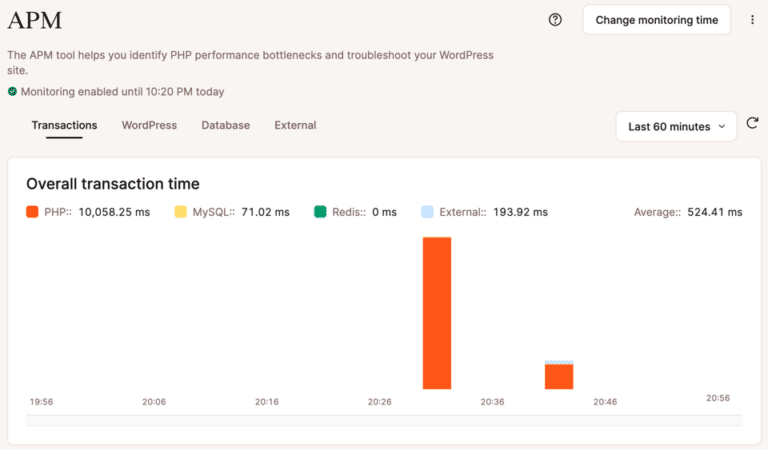
Custom integrations must incorporate robust error-reporting mechanisms that log specific payloads and rejection reasons, allowing developers to quickly identify schema mismatches and update data mapping configurations. Furthermore, performance tracking tools such as Application Performance Monitoring (APM) are essential for diagnosing latency regressions. If a form submission response time jumps from under a second to several seconds following an update, APM telemetry can isolate whether an external CRM API call is the primary bottleneck.
Agencies must also maintain clarity regarding where artificial intelligence is deployed within their technical stack. Utilizing AI as a drafting assistant during the coding phase does not inherently mean that artificial intelligence operates within the live runtime workflow. However, if a plugin integrates a live machine learning model to automatically classify incoming sales leads based on content sentiment, operational complexity multiplies exponentially. Teams must manage usage costs, establish testing frameworks to catch inaccurate classifications, and monitor third-party model deprecations.
Rescoping and Pricing Agency Services in the Era of AI
As artificial intelligence compresses implementation timeframes, client expectations regarding project pricing and timelines inevitably shift. Agencies are expected to pass down efficiency gains, meaning that initial estimates should reflect reduced coding effort. However, challenges arise when the narrative shifts from "we can build this feature quickly" to an assumption that "all associated work should be instantaneous." Demos that highlight rapid code generation often obscure the labor-intensive realities of review, integration, security auditing, and ongoing support.
To protect agency profitability, proposals must explicitly delineate these operational responsibilities. Scoping documents should separate core feature development from ancillary services, such as ongoing API maintenance, security monitoring, and third-party credential management. If an AI-powered model is embedded within the live application to process data, the associated API token costs and usage thresholds must be transparently addressed within the retainer agreement. Clearly defining these parameters prevents minor feature adjustments from devolving into scope creep and ensures that long-term maintenance commitments remain financially viable.
Standardizing Operational Environments for Efficiency
When technical issues arise, developers require familiar, standardized operational environments to accelerate troubleshooting. Relearning disparate hosting panels, custom backup procedures, and fragmented logging infrastructures across multiple client sites introduces unnecessary friction and delays resolution times.
Utilizing centralized management platforms, such as Kinsta’s MyKinsta dashboard, provides agencies with a unified operational environment that streamlines everyday tasks. Developers can leverage isolated staging environments to test plugin patches away from live production traffic, ensuring that functional checks and resource-intensive load tests do not impact end-user experience. Comprehensive backup and restore utilities provide clear recovery checkpoints, while integrated APM tools allow engineers to pinpoint slow PHP execution paths, inefficient database queries, and external API latency without needing to parse raw server logs manually.
Furthermore, granular user permission controls enable agencies to provision appropriate access levels for team members without sharing master credentials, ensuring accountability and adherence to internal security policies. A standardized hosting and management platform empowers agencies to scale their output without compounding administrative overhead.
Questions to Address Prior to AI-Assisted Builds
Before committing to accelerated development timelines, agency teams should evaluate several critical operational factors and document the answers alongside the project codebase:
- What specific edge cases (such as duplicate submissions or API timeouts) must the code handle?
- How are user permissions validated beyond basic interface visibility?
- What precise error-reporting mechanism alerts developers to silent API failures?
- Where are credentials and configuration settings securely stored?
- Who within the agency is designated as the primary maintainer for this script or plugin?
- What is the explicit scope of ongoing maintenance covered under the client’s support retainer?
By addressing these inquiries proactively, teams ensure that the velocity gained through artificial intelligence does not result in unmanageable technical debt. Treating faster builds as an opportunity to deliver resilient, thoroughly tested software allows agencies to scale their operations sustainably while maintaining long-term service quality.