Republicans face unexpected midterm struggles as defensive spending surges in reliably red Senate strongholds

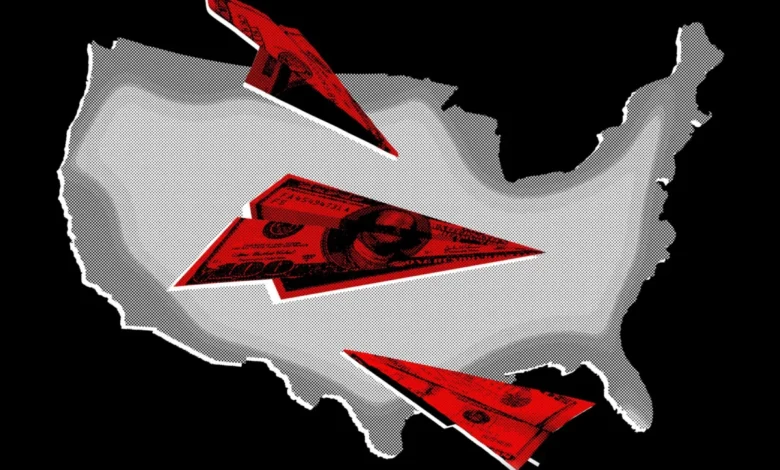
The landscape of the upcoming midterm elections has shifted into a defensive posture for the Republican Party, as once-secure Senate seats in traditionally deep-red states have suddenly emerged as competitive battlegrounds. Federal campaign finance filings and reports from political operatives confirm that the Senate Leadership Fund (SLF), a primary vehicle for Republican campaign spending, has been forced to commit an additional $14 million in the final weeks of the cycle to defend incumbents in Kansas, South Carolina, Nebraska, and Mississippi. This unexpected allocation of resources, in states that were widely considered safe just months ago, signals a precarious turn for the GOP as it struggles to maintain its control of the upper chamber.
The Erosion of Republican Certainty
The political calculus for the 2026 midterms was initially predicated on a comfortable path to maintaining a Senate majority. However, the emergence of unexpected volatility in states where Donald Trump won by double digits in 2024 has disrupted the party’s strategy. Operatives within the Trump orbit, while publicly dismissing the likelihood of Democratic upsets in these states, privately acknowledge that the necessity of diverting tens of millions of dollars to these regions has constrained the party’s ability to aggressively pursue seats in true battleground states.
The financial pivot is most visible in Kansas, where the SLF has directed more than $5 million in late-stage funding. The state, historically a GOP stronghold, has become a source of significant concern since early October. Public polling, including data from the Republican-affiliated Trafalgar Group, indicated that Democratic challenger Adam Hamilton had pulled ahead of incumbent Senator Roger Marshall by a one-point margin.
A Chronology of Vulnerability
The challenges facing the Republican incumbents appear to be a mixture of localized controversies and a broader failure to galvanize the party’s base. In Kansas, Senator Roger Marshall’s reelection campaign has been marred by a series of negative headlines. Reports detailing his aggressive legal pursuit of patients over unpaid medical bills have been compounded by allegations of absenteeism, with critics claiming he spends a disproportionate amount of time in Florida. These factors have led some party insiders to suggest that the campaign has suffered from a lack of focus and urgency.
Similar patterns have emerged in South Carolina and Nebraska. In South Carolina, Senator Darline Graham, despite securing the endorsement of the former president during the primary, has struggled to maintain the necessary enthusiasm among the Trump-aligned base. The SLF’s $5 million investment there is a clear attempt to stabilize a campaign that, by all traditional metrics, should not require such substantial late-game support. Nebraska’s Senator Pete Ricketts has faced a similarly difficult trajectory, with recent polling placing him in a statistical dead heat or trailing his opponent, prompting an emergency infusion of nearly $3 million. Mississippi’s Senator Cindy Hyde-Smith has also required support, with roughly $1 million in SLF funds deployed to bolster her standing.
Strategic Implications and Resource Allocation
The necessity of defending these four states has created a resource gap that threatens to undermine broader GOP objectives. The "final sprint" of the campaign has highlighted a systemic vulnerability: the party is currently forced to act as a fire brigade, patching holes in its firewall rather than expanding its reach. This trend is further underscored by the travel schedule of Donald Trump, who has been forced to make appearances in states that should have been ignored in favor of swing-state campaigning. Trump’s recent visits to Kansas, South Carolina, and Mississippi demonstrate the level of alarm within the national party apparatus.
However, the political environment remains fluid. While Republican operatives are anxious, they have noted with some relief that Democratic candidates in other key races have not been able to capitalize on their momentum as effectively as initially feared. This creates a complex, fractured map where both parties are dealing with unexpected internal hurdles.
The Michigan Conundrum: A Critical Case Study
While the GOP focuses on defense, the Democrats are facing their own strategic challenges in Michigan, a state viewed as the most promising pickup opportunity for Republicans. The path to a Democratic Senate majority heavily relies on holding this seat, yet the campaign of candidate Abdul El-Sayed has struggled to consolidate the necessary coalition.
The demographic challenge in Michigan is profound. The coalition that enabled Barack Obama to carry the state in 2008 and 2012 relied on strong turnout from Black voters. Currently, that support is not guaranteed. Political analysts point to a long-standing tension between Arab and Black communities in the region, which has been exacerbated by internal party friction. During the primary season, supporters of primary challenger Haley Stevens utilized messaging featuring Barack Obama, which inadvertently deepened fractures within the Democratic base.
In a desperate bid to mend these fences, Barack Obama conducted a joint rally with El-Sayed in Detroit over the weekend. The intervention was designed to signal unity and mobilize the base, yet insiders remain skeptical. The lingering issues with key voting blocs illustrate that even in states where the national environment might favor a party, local dynamics and historical animosities can create insurmountable hurdles.
Broader Analysis: The Impact of Midterm Volatility
The current state of the 2026 midterms suggests a cycle defined by hyper-locality. When incumbents in states like Kansas and South Carolina—districts that have been firmly in the GOP column for decades—require multi-million dollar interventions, it suggests a national mood that is increasingly volatile and less predictable than polling models typically assume.
For the Republican Party, the immediate implication is a diminished ability to contest truly competitive seats. When resources are diverted to shore up "safe" seats, opportunities in states like Michigan or Pennsylvania are left with less funding for advertising, ground operations, and voter mobilization. This "defensive tax" effectively limits the ceiling of the GOP’s potential majority.
For the Democratic Party, the struggle in Michigan highlights the danger of relying on legacy coalitions without addressing evolving internal tensions. The need for high-profile interventions from party elders like Obama demonstrates that the traditional coalition is not functioning with its historical efficiency.
As the campaign enters its final days, the focus will remain on whether the late-stage cash injections from the Senate Leadership Fund can sufficiently boost turnout in red states, or if the underlying dissatisfaction with the incumbents will prove too significant to overcome. The outcome of these races will not only determine the composition of the Senate but will also serve as a referendum on the efficacy of modern campaign spending in an era where national brand loyalty is increasingly being challenged by local candidate performance. With both parties facing significant, and largely unexpected, hurdles, the final results in these contested regions will likely determine the balance of power in Washington for the remainder of the presidential term.