Demystifying Information Entropy and Cross-Entropy Loss in Large Language Model Training

The operational success of modern artificial intelligence, specifically the class of systems known as Large Language Models (LLMs) such as GPT-4, Llama, and Gemini, relies on a foundational mathematical framework that traces its lineage back to the mid-20th century. At the heart of these sophisticated architectures lies the interplay between information entropy and cross-entropy loss, two pillars of classical information theory that dictate how machines "learn" to process, interpret, and generate human language. By quantifying uncertainty and penalizing predictive error, developers have created a robust optimization mechanism that allows models to transform from randomized statistical engines into coherent, context-aware conversational partners.
The Historical Genesis of Information Theory
The mathematical study of information began in 1948 with the publication of "A Mathematical Theory of Communication" by Claude Shannon. Working at Bell Labs, Shannon sought to quantify the fundamental limits of signal processing and communication. His seminal contribution was the concept of "information entropy," a measure of the average uncertainty or "surprise" inherent in a variable’s possible outcomes.
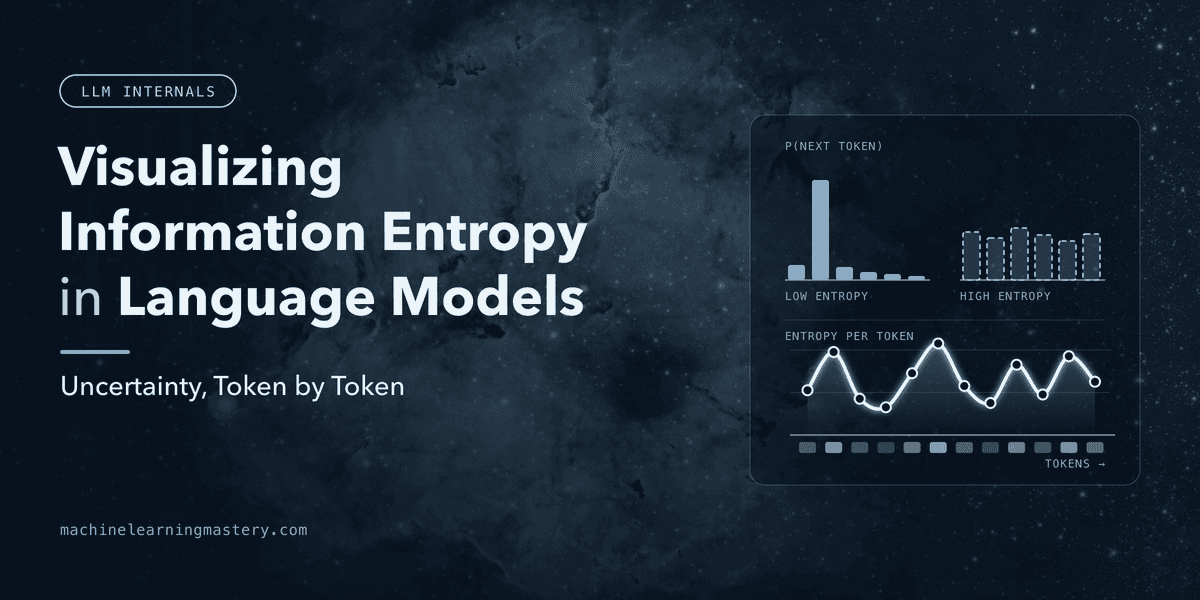
In Shannon’s framework, entropy is maximized when an event is perfectly random—a state of high uncertainty. Conversely, when an outcome is highly predictable, the entropy of the system is low. For decades, this remained a theoretical cornerstone for electrical engineering and cryptography. It was not until the emergence of deep learning that researchers realized Shannon’s metrics were the perfect tools for training neural networks. In the context of LLMs, the "information" is language itself, and the "entropy" is the degree of ambiguity the model faces when attempting to predict the next token in a sequence.
Bridging Shannon to Deep Learning
When an LLM is in the process of generating text, it operates by calculating a probability distribution across its entire vocabulary. For every word currently being generated, the model assigns a likelihood to every potential follow-up word. This is effectively a high-dimensional probability space. If the model is well-trained, it will assign a high probability to the most contextually appropriate word and a near-zero probability to nonsensical ones.
The training process is, in essence, a massive, iterative exercise in reducing this probability-based uncertainty. This is where cross-entropy loss enters the architecture. While information entropy measures the inherent uncertainty of a system, cross-entropy measures the "distance" or divergence between two probability distributions: the actual, ground-truth distribution (the correct next word) and the model’s predicted distribution.
The Mechanics of Model Optimization
In a supervised training scenario, the "ground truth" is typically a one-hot vector where the correct word has a probability of 1.0 and all other words have a probability of 0.0. The model’s goal during training is to adjust its internal weights—a process governed by backpropagation—to shift its predicted distribution as close as possible to that ground-truth vector.
When a model predicts a word that deviates from the target, the cross-entropy loss function produces a high numerical value. This value acts as an error signal. Through gradient descent, the model updates its internal parameters to lower that loss in future iterations. Over billions of training tokens, this mathematical pressure forces the model to move from a state of high entropy—where it makes largely random guesses—to a state of low cross-entropy, where its predictions mirror the structure, grammar, and semantic logic of the training data.
Chronology of Architectural Refinement
The adoption of these principles did not happen overnight. The evolution of language modeling can be categorized into several key phases:
- The Statistical Era (1990s–2010s): Early models, such as N-grams, relied on basic frequency counting. While they utilized concepts of probability, they lacked the architectural depth to handle long-range dependencies, leading to high-entropy outputs that quickly devolved into gibberish.
- The Recurrent Neural Network (RNN) Era (2010s): RNNs and LSTMs began to use cross-entropy as a standard loss function, allowing for better sequence modeling. However, these models were limited by "vanishing gradient" problems, which hampered their ability to minimize loss over long contexts.
- The Transformer Revolution (2017–Present): The introduction of the Transformer architecture by Google researchers marked a paradigm shift. By utilizing self-attention mechanisms, Transformers allowed for more efficient optimization of cross-entropy loss, enabling the training of models on massive, diverse datasets. This scalability is the direct reason modern LLMs possess such nuanced capabilities.
Visualizing the Mathematical Landscape
To understand the efficacy of this training, one can examine the performance of a model using a simplified vocabulary. Consider a model tasked with predicting the word "cat" in the sequence "the cat sat on the…"
- Confident and Correct: The model assigns 90% probability to "cat." The cross-entropy is extremely low, reflecting a highly optimized state.
- Confident and Wrong: The model assigns 80% probability to "apple." This generates a massive cross-entropy loss, signaling the model that its internal representation of the context "the cat sat on the" is factually or logically flawed.
- Uncertain/Flat: The model assigns 20% to every word in a five-word vocabulary. This reflects high entropy and high cross-entropy, indicating that the model has failed to learn any meaningful pattern from the training data.
The objective of the training pipeline is to mathematically penalize the latter two scenarios until the model consistently produces outputs resembling the first.
Data-Driven Implications for AI Development
The reliance on cross-entropy has significant implications for how we define "intelligence" in machines. Because LLMs are explicitly optimized to minimize the statistical distance between their output and human-generated text, their primary "goal" is to be as predictable as possible within the constraints of the provided prompt.
Data scientists often observe that as models scale, their cross-entropy loss tends to follow a "power law" of improvement. This observation, popularized by researchers at OpenAI and DeepMind, suggests that simply increasing the amount of data and compute (while maintaining the integrity of the cross-entropy loss function) leads to predictable gains in performance. However, this also highlights a limitation: the model is optimizing for the average human output. If the training data contains biases or inaccuracies, the model will faithfully reproduce them because they represent the "ground truth" to the loss function.
Official Perspectives and Academic Consensus
Industry experts from institutions like Meta’s AI Research (FAIR) and Google DeepMind frequently emphasize that while cross-entropy is a "blunt instrument," it is remarkably effective. Dr. Yann LeCun, Chief AI Scientist at Meta, has often noted that while current predictive models are powerful, they lack a true model of the world. He suggests that while cross-entropy loss is sufficient for language, the next generation of AI may require more complex energy-based models to achieve true reasoning capabilities.
Nevertheless, for the current generation of generative AI, the math remains ironclad. By treating language as a series of probability distributions to be reconciled, developers have turned the abstract, philosophical concept of "entropy"—the measure of disorder—into the very engine of order that powers the modern digital economy.
Broader Impact and Future Outlook
The ability to quantify uncertainty has moved beyond simple text prediction. Today, techniques derived from information entropy are being used to detect "hallucinations" in LLMs. By monitoring the entropy of a model’s output, developers can flag responses where the model’s internal probability distribution is too "flat," signaling that the model is effectively guessing rather than drawing on learned knowledge.
As we look toward the future, the refinement of these loss functions will likely continue to be a primary area of research. Whether through the integration of reinforcement learning from human feedback (RLHF) or the development of non-probabilistic architectures, the legacy of Claude Shannon’s 1948 breakthrough remains the essential bedrock of artificial intelligence. It serves as a reminder that even the most complex digital intelligence is, at its core, a reflection of fundamental mathematical truths regarding the nature of information, surprise, and the relentless pursuit of certainty.