How to track and analyze ChatGPT referral traffic in Google Analytics 4 for e-commerce performance optimization

The rise of generative artificial intelligence has fundamentally altered the consumer search journey, shifting from traditional keyword-based engine queries to conversational, intent-driven interactions. As platforms like ChatGPT evolve into sophisticated shopping assistants, they are increasingly serving as high-intent referral sources for e-commerce businesses. Because ChatGPT now routinely provides specific product recommendations, price comparisons, and direct purchasing links—often tagged with the UTM parameter "utm_source=chatgpt.com&utm_medium=feed"—marketers have a newfound ability to quantify and optimize their presence within AI-generated responses. This data is critical for brands aiming to understand how their products are perceived and surfaced by large language models (LLMs) in the current digital ecosystem.

The Shift Toward Conversational Commerce
In previous years, digital marketing strategies were almost exclusively dominated by search engine optimization (SEO) and paid search advertisements. However, as of late 2026, the landscape has bifurcated. Consumers are no longer just searching for a product name; they are asking complex questions, such as “Best headphones for running in 2026,” and expecting curated, comparative results. ChatGPT, by synthesizing information from across the web, now acts as an arbiter of consumer choice.
When a user prompts the model for recommendations, the response typically includes key features, pricing, and external links. For retailers, these links represent a "warm" lead—a user who has already qualified their interest through a specific query. By capturing this data, businesses can transition from passive observation to active optimization of their product descriptions and metadata, ensuring that the information the AI pulls is both accurate and persuasive.

Chronology of AI-Referral Tracking
The integration of specific UTM parameters for AI referrals did not happen overnight. Early in the adoption of generative AI, traffic originating from chat interfaces was often aggregated under "Direct" or "Organic Social" categories in Google Analytics, making it invisible to performance marketers.
As the volume of traffic from platforms like ChatGPT grew throughout 2025 and 2026, the need for granular attribution became apparent. The introduction of standardized referral tags—specifically the utm_source=chatgpt.com string—marked a pivotal moment. This allowed site administrators to isolate AI traffic from other referral sources, enabling them to map exactly which product pages are being served to users. This development has turned the "black box" of AI discovery into a measurable funnel, allowing for the analysis of conversion rates, engagement metrics, and bounce rates specifically associated with AI-referred sessions.

Technical Implementation: Analyzing Referral Data
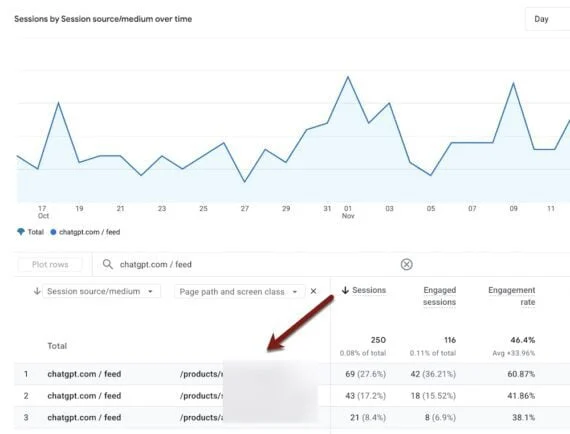
To extract actionable insights from this traffic, digital analysts must navigate Google Analytics 4 (GA4) with precision. The primary objective is to isolate sessions where the source is identified as "chatgpt.com" and the medium is "feed."
- Isolation: Access the "Traffic acquisition" report within the GA4 dashboard. By utilizing the search box to filter for "chatgpt.com / feed," users can isolate these specific sessions from the noise of organic search and direct traffic.
- Dimension Expansion: To understand which specific items are driving interest, add "Page path and screen class" as a secondary dimension. This reveals exactly which product detail pages (PDPs) are being linked by the AI.
- Platform Segmentation: Because a significant portion of ChatGPT interactions occur on mobile devices, comparing mobile versus desktop performance is essential. By adding "Device category" as a dimension, analysts can determine if their mobile conversion rates are suffering, which might indicate a need for better mobile-responsive product page design.
Data-Driven Implications for Retailers
Early analysis of referral data suggests that products appearing in ChatGPT recommendations often share common characteristics: high organic search rankings, robust customer reviews, and clearly structured schema markup. The implication is that the AI does not choose products at random; it mirrors the authority and trust signals established in traditional search environments.

For instance, if a company notices that a specific model of headphones is consistently recommended by ChatGPT, they can work backward to identify why. Is it the depth of the technical specifications provided in the page metadata? Is it the sentiment found in user-generated reviews? By aligning content strategy with the requirements of LLMs, retailers can effectively perform "AI-Optimization" (AIO), a burgeoning field that complements traditional SEO.
Official Perspectives and Market Impact
While OpenAI has not released granular data regarding the impact of their recommendations on specific retail sectors, the industry response has been one of tactical adjustment. E-commerce platforms are increasingly prioritizing "AI-friendly" content. This involves ensuring that product descriptions are not just keyword-stuffed, but are written to provide clear, concise answers to comparative questions.

"We are seeing a clear correlation between the quality of structured data on our product pages and the frequency with which they appear in AI-driven responses," says one senior e-commerce analyst. "The platforms are essentially acting as an automated editorial team. If you provide the right data, they will use it to sell your product."
Strategic Recommendations
To leverage this data effectively, businesses should focus on three core areas:

- Content Audit: Review top-performing pages identified through GA4. Analyze why these pages were chosen by the AI. Are the price points competitive? Is the feature list easy to parse?
- Structured Data Optimization: Use schema markup to provide search engines and AI crawlers with explicit details about product prices, availability, and user ratings. This reduces the "hallucination" risk where an AI might misrepresent a product’s specifications.
- Refining the Funnel: Once traffic reaches the site, monitor the user journey. If ChatGPT users have a higher bounce rate than organic users, it may indicate a mismatch between the AI’s promise and the actual product page content.
Broader Implications for the Future of E-Commerce
The ability to track ChatGPT traffic is more than a technical convenience; it is a fundamental shift in how businesses relate to their customers. As search evolves from a list of links to a conversational experience, the "top of the funnel" is being moved inside the chat interface. Brands that fail to analyze this traffic will be flying blind, unable to understand why their products are being excluded from AI recommendations while their competitors are being promoted.
By consistently monitoring the utm_source=chatgpt.com parameter, companies can build a longitudinal study of their brand’s reputation in the AI era. They can observe how changes in their product pricing or feature updates correlate with shifts in AI recommendation frequency. Ultimately, the data gleaned from these reports will define the winners in the next generation of retail. The goal is no longer just to be found by a search engine, but to be recommended by an assistant. Companies that master this distinction will hold a significant competitive advantage as the digital marketplace continues to integrate AI-first discovery.
Related posts: