AI-Powered Breakthrough at MIT Makes mRNA Vaccines Heat-Resistant and Ready for Global Distribution

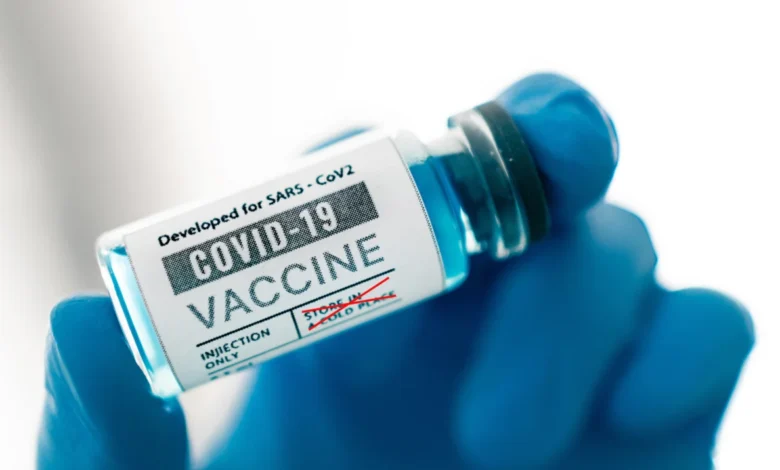
The rapid deployment of messenger RNA (mRNA) vaccines during the global pandemic marked a monumental milestone in modern medicine, proving the platform’s unprecedented efficacy and adaptability. However, this revolutionary technology has long faced a formidable logistical hurdle: the requirement for ultracold storage chains. Traditional mRNA vaccines, encased in fragile lipid nanoparticles (LNPs), quickly degrade at ambient temperatures, necessitating specialized freezers ranging from negative 20 to negative 80 degrees Celsius. This cold-chain requirement has complicated distribution efforts, particularly in developing nations lacking robust medical infrastructure.
Addressing this critical bottleneck, a team of researchers at the Massachusetts Institute of Technology (MIT) has successfully engineered a breakthrough method to formulate heat-resistant mRNA vaccines. By leveraging an advanced artificial intelligence algorithm to optimize lipid nanoparticle formulations, the MIT team has developed vaccines capable of maintaining stability at room temperature for up to a full year, or at nearly 100 degrees Fahrenheit for two months. Published in the prestigious journal Nature Biotechnology, the discovery not only promises to simplify global vaccine logistics but also opens the door to next-generation delivery methods, such as dissolvable microneedle skin patches.
The Chronology of an Innovation: From Laboratory Frustration to AI Breakthrough
The path to temperature-stable mRNA formulations was fraught with experimental roadblocks. For months, the MIT research team—led by principal investigator Ana Jaklenec and Institute Professor Robert Langer, alongside lead authors graduate student Jinbi Tian and postdoc Khanh Tran—attempted to stabilize FDA-approved LNP architectures by manually screening a wide array of excipients, including various sugars, salts, and polymers.
Despite their extensive prior experience with drug delivery systems, standard trial-and-error methodologies proved insufficient. The team found themselves stuck, unable to achieve the elusive 100 percent stability threshold necessary to protect the fragile RNA molecules under thermal stress without deviating from clinically approved chemical structures.
Recognizing the limitations of exhaustive manual screening, the researchers turned to computational power. They partnered with specialists at MIT’s Computer Science and Artificial Intelligence Laboratory (CSAIL), including assistant professor Mina Konaković Luković, to deploy a machine-learning algorithm specifically designed to operate efficiently on very small datasets.
Instead of requiring thousands of grueling laboratory experiments, the algorithm rapidly analyzed the interactions of nearly 50 FDA-approved excipients. By iteratively predicting the optimal chemical ratios based on minimal feedback from cell-based luminescence assays, the AI system converged on a viable, heat-resistant formulation in just a matter of weeks. This computational leap drastically compressed a research timeline that otherwise would have spanned many months or even years.
Unpacking the Science: How the Technology Works
At the heart of mRNA technology lies a delicate paradox. While messenger RNA instructs human cells to manufacture specific viral antigens to train the immune system, the molecule itself is inherently unstable. Unprotected mRNA breaks down rapidly upon exposure to enzymes, pH changes, and thermal fluctuations. To shield the molecule, scientists encapsulate it within lipid nanoparticles—tiny fat bubbles that both protect the payload and facilitate its entry into host cells.
To confer heat tolerance without reinventing the underlying medical chemistry, the MIT team focused on modifying the internal and external environment of LNPs mirroring those utilized in commercially available vaccines, such as the Moderna and Pfizer-BioNTech formulations.
To measure the efficacy of each iteration during the AI-guided development phase, the researchers utilized mRNA encoding firefly luciferase, an enzyme that generates bioluminescence. By introducing these modified LNPs into cells and measuring the resulting light emission, the team quantified precisely how well each excipient formulation protected the mRNA from degradation.
The selected formulation underwent rigorous animal testing. When dehydrated using a vacuum-drying process and subsequently stored at 37 degrees Celsius (98.6 degrees Fahrenheit) for two months—or at standard room temperature for a full year—the heat-resistant mRNA particles performed remarkably well. When administered to mice, these thermally stressed vaccines generated immune responses statistically equivalent to those triggered by standard, freshly thawed commercial vaccines.
Expert Perspectives and Institutional Insights
The implications of integrating machine learning into biological formulation design have drawn enthusiastic responses from the academic and scientific communities involved in the project.
"The real beauty of this algorithm is that we can use it with small data sets," noted Ana Jaklenec, principal investigator at MIT’s Koch Institute for Integrative Cancer Research. "It’s really hard to run thousands of experiments, so this algorithm allows us to more easily achieve formulations with features that we want—in this case, stability."
Mina Konaković Luković of MIT CSAIL highlighted the novelty of applying automated experimental design to vaccine stabilization. "We’d used our algorithms for various automated experimental design applications before, but never on a biological problem like vaccine stability," she observed. "It was surprising to see how quickly the algorithm converged on a stable formulation—getting there in just a handful of iterations, rather than the exhaustive search that would normally be required."
From a translational standpoint, the team emphasizes that their algorithmic framework is not limited to a single vaccine design. Postdoctoral researcher Khanh Tran pointed out that the methodology successfully stabilized LNP architectures resembling both Moderna and Pfizer formulations simply by adjusting the ratios of identical, pre-approved excipients. Once a heat-resistant matrix is optimized for a specific LNP class, it can theoretically be adapted to deliver any genetic payload.
Broader Implications for Global Health and Advanced Therapeutics
The successful removal of cold-chain dependencies carries profound economic, logistical, and humanitarian implications. Without the burden of ultracold freezers, dry ice shipments, and complex refrigeration chains, global health organizations can drastically reduce the cost and complexity of mass immunization campaigns in remote, tropical, or economically disadvantaged regions.
Furthermore, the physical stabilization of mRNA in a solid state paves the way for alternative, needle-free administration techniques. Jinbi Tian emphasized that the team’s approach directly supports advanced drug-delivery platforms, such as solid microneedle patches. These microscopic patches contain hundreds of dissolvable projections filled with the vaccine. When applied gently to the skin, the needles dissolve harmlessly, releasing the vaccine payload directly into superficial tissue layers. In preliminary evaluations, the MIT team demonstrated that their heat-resistant formulations could be successfully integrated into microneedle patches, eliciting robust immune responses comparable to conventional intramuscular injections.
Beyond infectious disease mitigation, the maturation of temperature-stable, AI-optimized RNA platforms accelerates the clinical pipeline for personalized cancer vaccines, autoimmune disease therapies, and protein-replacement treatments. As research continues—partially supported by philanthropic grants from organizations such as the Gates Foundation—the convergence of artificial intelligence and nanoscale drug delivery stands poised to redefine the boundaries of modern pharmacology and global public health.