Google to Sunset Website Translator Widget on October 1 2026 Marking the End of a Legacy Web Tool

The landscape of web accessibility and international user experience is set for a significant transition as Google prepares to officially discontinue its long-standing Website Translator Widget. Announced through updates to its developer documentation, the search giant has confirmed that the widget, a staple for web developers since the mid-2000s, will lose all support on October 1, 2026. This decision effectively ends an era for millions of WordPress sites, small business portals, and hobbyist blogs that relied on the simple, code-and-paste solution to provide instantaneous language switching for global visitors.
For many developers and site administrators, the Google Website Translator was the path of least resistance. It required minimal technical overhead: a simple JavaScript snippet embedded into a theme’s footer or header, and suddenly, a site could offer machine-translated content in dozens of languages. However, as the web has evolved toward more complex SEO requirements and dynamic content structures, this static, browser-side solution has become increasingly outmoded.
A Chronology of the Widget’s Lifecycle
The Website Translator Widget was introduced during a period when the internet was rapidly globalizing, but the tools for creating truly multilingual websites were cumbersome, expensive, and often required specialized development skills. Google’s tool acted as a bridge, democratizing access to content for non-native speakers.
- Circa 2008–2010: Google launches the Website Translator as part of its growing Translate ecosystem, encouraging widespread adoption to help organize and make information accessible globally.
- May 2020: In a subtle shift, Google updates its developer blog, signalling a pivot toward the Cloud Translation API for enterprise and professional applications, hinting at the eventual deprecation of the free widget.
- September 2026: As the final month of support begins, administrators are being urged to audit their site architectures to avoid broken layouts or missing functionality once the October 1 deadline arrives.
The Shift Toward Cloud-Based Translation
The transition away from the free widget is not merely a service termination; it represents a fundamental shift in how Google expects developers to handle translation. The company is actively steering users toward the Google Cloud Translation API. Unlike the legacy widget, which relied on the client-side browser to process translations, the API is a robust, server-side integration.

From a technical perspective, the API offers far greater stability, higher quality machine translation through Google’s Neural Machine Translation (NMT) technology, and the ability to integrate translation directly into a content management system’s workflow. However, this shift introduces costs that were previously absent. The Cloud Translation API operates on a usage-based pricing model, which, while beneficial for scaling applications, represents a hurdle for small-scale site owners who previously enjoyed a cost-free solution.
The Market Response: GTranslate and Alternatives
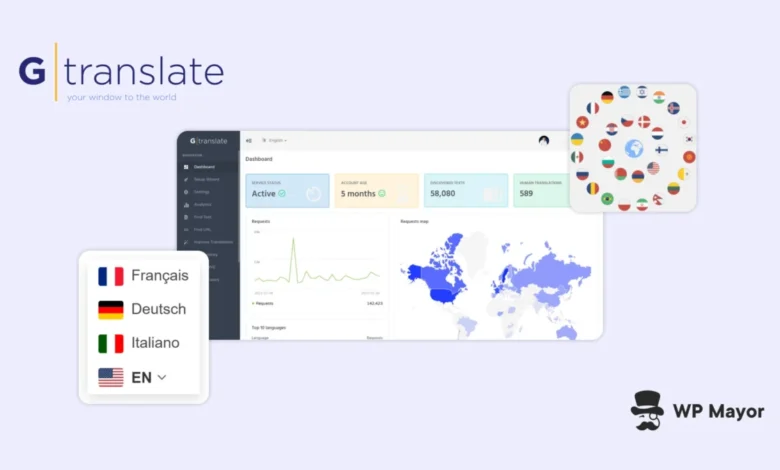
As the October 2026 deadline approaches, the ecosystem of third-party plugins has begun to fill the void left by Google’s impending withdrawal. Among the most prominent solutions is GTranslate, which has positioned itself as the primary alternative for WordPress and non-WordPress users alike.
GTranslate offers a tiered approach that mirrors the accessibility of the original Google widget while providing the necessary infrastructure for commercial growth. Its free tier, designed for non-commercial entities such as educational institutions and non-profits, retains the "plug-and-play" simplicity that characterized the original Google tool. Conversely, its paid architecture is built to address the primary failure point of simple translation widgets: Search Engine Optimization (SEO).
Technical Implications: Why Widgets Fail at SEO
A critical distinction that site owners must understand is the difference between "browser-side" translation and "server-side" indexing. The Google Website Translator—and many simple, free widgets—functions entirely in the visitor’s browser. When a user selects a language, the browser dynamically replaces the text on the screen.
Crucially, this means the translated content never exists on the server. Because the content is not rendered until the user initiates the request, search engine crawlers like Googlebot do not "see" the translated versions of the pages. Consequently, a site using only a simple translation widget will never rank in search results for queries in languages other than the original site language.

For businesses aiming for international growth, the deprecation of the widget serves as a necessary catalyst to upgrade to a true multilingual SEO strategy. Solutions that offer translated subdirectories (e.g., example.com/fr/) or subdomains (e.g., fr.example.com) allow search engines to index translated content, effectively doubling or tripling the potential search traffic for a website.
Managing the Transition: Practical Steps for Developers
For those currently running the Google snippet, the process of removal and replacement is straightforward. The first step for developers is to audit their codebase. A simple search for google_translate_element or translate_a/element.js within a theme’s files will identify where the script is currently active.
Once located, administrators have three primary paths:
- Direct Replacement: Use a tool like GTranslate or similar plugins that allow for a "wrapper" approach. By keeping the same
divcontainer and modifying the initialization script, developers can maintain the original design layout without having to rebuild their headers or footers. - Native CMS Integration: For WordPress users, shifting to a dedicated plugin is the most stable path. Modern plugins offer granular control, allowing site owners to exclude specific elements from being translated, manage manual translations for key phrases, and handle the technical nuances of
hreflangtags, which inform search engines about the relationship between different language versions of a page. - Cloud API Migration: For developers with custom-built applications, integrating the Google Cloud Translation API (or competitors like DeepL or Microsoft Translator) is the recommended route. While this requires more effort, it provides the highest level of control over the user experience and the most accurate translation quality.
Industry Analysis and Broader Context
The decision to sunset the widget reflects a broader trend in the tech industry: the consolidation of free, "utility-grade" services into professional, high-performance APIs. Over the last decade, Google has systematically deprecated tools that do not provide direct data or platform engagement, opting instead to focus on its cloud infrastructure.
For the average site owner, this transition is a reminder of the "platform risk" inherent in relying on free, third-party JavaScript snippets. When a tool is provided for free, the longevity of that tool is entirely dependent on the provider’s shifting strategic priorities.

As of late 2026, the industry is seeing a consolidation of multilingual web tools. Market analysts suggest that the demand for automated translation is at an all-time high, fueled by the global nature of e-commerce. As such, the replacement of the Google widget is not a contraction of the market, but a maturation. The tools replacing the legacy widget are, by and large, more sophisticated, offering features like in-context editing, WooCommerce compatibility, and automated URL slug translation that the original widget never possessed.
Preparing for October 1, 2026
With less than a week remaining until the deadline, the primary risk for site owners is not just a loss of functionality, but the potential for broken UI elements or console errors that could degrade the user experience. If a site is hard-coded to look for a Google script that no longer returns a valid response, the result could be a "hiccup" in the page rendering process.
Industry experts recommend that all site owners perform a final audit of their active sites. Even if a site is currently dormant, if it features a language switcher in the footer, it should be updated or removed. For those who rely on these tools for revenue, this is an opportune moment to evaluate whether the site’s current multilingual strategy is truly serving its international audience or if a more robust, SEO-friendly approach is required.
In summary, the end of the Google Website Translator Widget marks the end of an era of low-friction, low-utility translation. While it may require a small amount of technical work to migrate, the available alternatives provide a significantly higher ceiling for performance, user experience, and global reach. Whether opting for a free plugin or a professional enterprise translation suite, site owners are being pushed toward a more sustainable and effective way of communicating with a global audience.