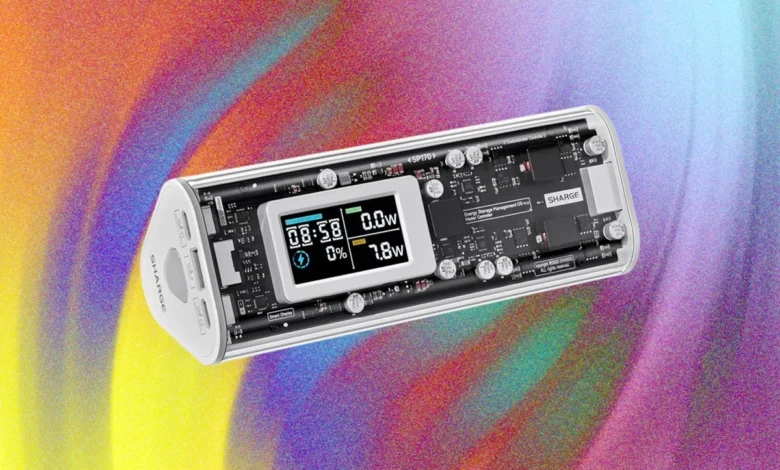
In an era where our smartphones, tablets, and laptops serve as the primary conduits for both professional output and personal connectivity, the portable power bank has transitioned from a niche accessory to an absolute necessity. Modern lithium-ion battery technology has evolved rapidly, allowing for increasingly compact form factors that boast higher energy densities. However, the sheer volume of options—ranging from ultra-thin magnetic attachments to massive, high-output power stations—has made selecting the right device a daunting task for the average consumer. To navigate this saturated market, we have conducted extensive, multi-week evaluations of the latest power banks, measuring real-world capacity, charging protocols, and safety compliance.
The Evolution of Portable Charging Technology
The portable charger market has undergone a significant transformation over the past decade. Historically, power banks were bulky, inefficient, and prone to significant energy loss during the conversion process. Today, the integration of Power Delivery (PD) and Programmable Power Supply (PPS) protocols allows for intelligent communication between the charger and the device. This ensures that the optimal amount of power is delivered safely and efficiently. The shift toward Qi2 wireless charging standards has further simplified the user experience, enabling magnetic alignment that maximizes efficiency for compatible smartphones.
Despite these advancements, consumers must remain vigilant. The proliferation of inexpensive, uncertified batteries on global e-commerce platforms has raised concerns regarding safety. Lithium-ion batteries, when manufactured without rigorous quality control or adequate heat dissipation systems, pose a legitimate risk of thermal runaway. Regulatory bodies worldwide, including the Federal Aviation Administration (FAA) in the United States, have implemented strict guidelines for air travel, limiting the capacity of lithium-ion batteries in carry-on luggage to 100 watt-hours, with exceptions generally requiring airline approval up to 160 watt-hours.
Small-Capacity Power Banks: Convenience for the Daily Commuter
For the average user, a 5,000 mAh power bank offers the perfect balance of weight and utility. These devices are typically designed to provide a single full charge for most modern smartphones. The Peak Design Kickstand Travel Battery, for instance, represents a design-forward approach to this category. Featuring a textured finish and a robust aluminum kickstand, it provides a stable viewing angle for media consumption while charging wirelessly at 15 watts. While it lacks an included power adapter, its support for 25-watt pass-through charging makes it a premium choice for travelers.
Conversely, the Anker Nano Power Bank series targets the user who prioritizes minimalism. By integrating a foldable USB-C connector directly into the chassis, it eliminates the need for external cables, allowing the battery to slot seamlessly into the base of a phone. This design philosophy reduces the "clutter factor" that often plagues mobile power solutions. Similarly, the Clutch Pro offers a credit-card-sized profile, proving that high-density cells can be packed into remarkably thin enclosures.

Mid-Range Solutions: The Versatile Workhorse
The 10,000 mAh to 20,000 mAh segment is widely considered the "sweet spot" for most users. These devices offer enough capacity to charge a phone multiple times or provide a significant boost to a laptop or tablet. The Cuktech 15 Air stands out in this category by incorporating a high-resolution display that provides real-time data on power output and battery health. Its ability to deliver 65 watts across multiple ports makes it a formidable tool for remote workers who need to keep a laptop and a phone simultaneously powered.
In the ruggedized sector, the Iniu Outdoor Rugged Power Bank has gained traction among hikers and outdoor enthusiasts. With an IP67 rating, it is engineered to withstand water, dust, and significant physical impact. The inclusion of a 1/4-inch mounting thread and a built-in flashlight demonstrates a shift toward multi-functionality, where the power bank serves as both a power source and a utility tool.
High-Capacity and Professional-Grade Power Stations
For power users, photographers, and frequent long-haul travelers, power banks exceeding 20,000 mAh are essential. The Anker Prime Power Bank (26,250 mAh) represents the current pinnacle of this category. Supporting up to 300 watts of total output, it can effectively charge multiple high-drain devices, such as a MacBook Pro and an iPad, without sacrificing speed. The integration of proprietary app control allows users to monitor battery cycles and optimize charging modes, a level of granularity previously unavailable in consumer-grade portable chargers.
The Ecoflow Rapid Pro further pushes these boundaries. Capable of delivering up to 300 watts, it sits near the legal limit for air travel. Its design is tailored for users who require enterprise-grade charging capabilities in a portable form factor, effectively bridging the gap between a standard power bank and a stationary power station.
Critical Analysis: Safety and Reliability Protocols
When evaluating power banks, technical specifications such as "capacity" often invite confusion. A power bank rated at 20,000 mAh rarely provides that full amount to the end device. Energy is inevitably lost as heat during the conversion from the battery’s internal voltage (typically 3.7V) to the output voltage required by USB devices (5V to 20V). Consumers should focus on the "rated capacity," which is a more accurate reflection of the energy that can actually be delivered to a smartphone or laptop.

The importance of brand reputation cannot be overstated. Industry-leading manufacturers invest heavily in thermal management and overcharge protection circuits. In our testing, lower-cost, generic brands frequently failed to maintain steady output voltages under load, leading to inconsistent charging speeds and, in some instances, significant overheating. Our testing criteria for safety includes a strict policy: if a device exhibits excessive heat or inconsistent charging behavior during a 14-day stress test, it is disqualified from our recommendations.
The Future of Portable Power
The industry is currently moving toward a more unified charging landscape. The widespread adoption of the USB-C standard has been the most significant driver of consumer satisfaction, as it allows a single cable to charge the power bank, the smartphone, and the laptop. Innovations in semi-solid-state battery technology, such as those featured in the BMX SolidSafe Air, promise to reduce the overall physical footprint of power banks while simultaneously increasing safety by reducing the risk of fire during puncture or high-heat scenarios.
Looking forward, we anticipate that "smart" features—such as Bluetooth-enabled monitoring and firmware-upgradable charging protocols—will become standard. These features allow manufacturers to adjust how the device handles power delivery as new device standards emerge, effectively increasing the lifespan of the hardware.
Summary of Best Practices for Consumers
To ensure both the longevity of your devices and your personal safety, we recommend the following practices:
- Prioritize Established Brands: Always opt for manufacturers with a proven track record of safety compliance and transparent warranty policies.
- Monitor Heat: If a power bank becomes too hot to comfortably hold while in use, discontinue charging immediately.
- Use Certified Cables: The cable is just as important as the power bank. Using cheap, uncertified USB cables can lead to resistance issues, slow charging, and potential connector damage.
- Airline Compliance: Always verify the watt-hour (Wh) rating of your power bank before boarding a flight. Most labels on the back of the device will list this information clearly.
- Storage and Maintenance: Avoid leaving power banks in high-heat environments, such as a car dashboard during summer, as this accelerates chemical degradation and poses a significant safety risk.
The portable charger is an essential component of the modern digital ecosystem. While the market is flooded with options, focusing on high-quality, safety-certified devices that align with your specific charging needs will ensure that you remain connected, productive, and safe, regardless of where your work or travel takes you. As battery technology continues to mature, we expect to see even greater efficiencies and smaller, more powerful devices that redefine what it means to be truly mobile.