Navigating the 2026 Holiday Economy: How Social Media and Economic Pressures are Reshaping Consumer Behavior

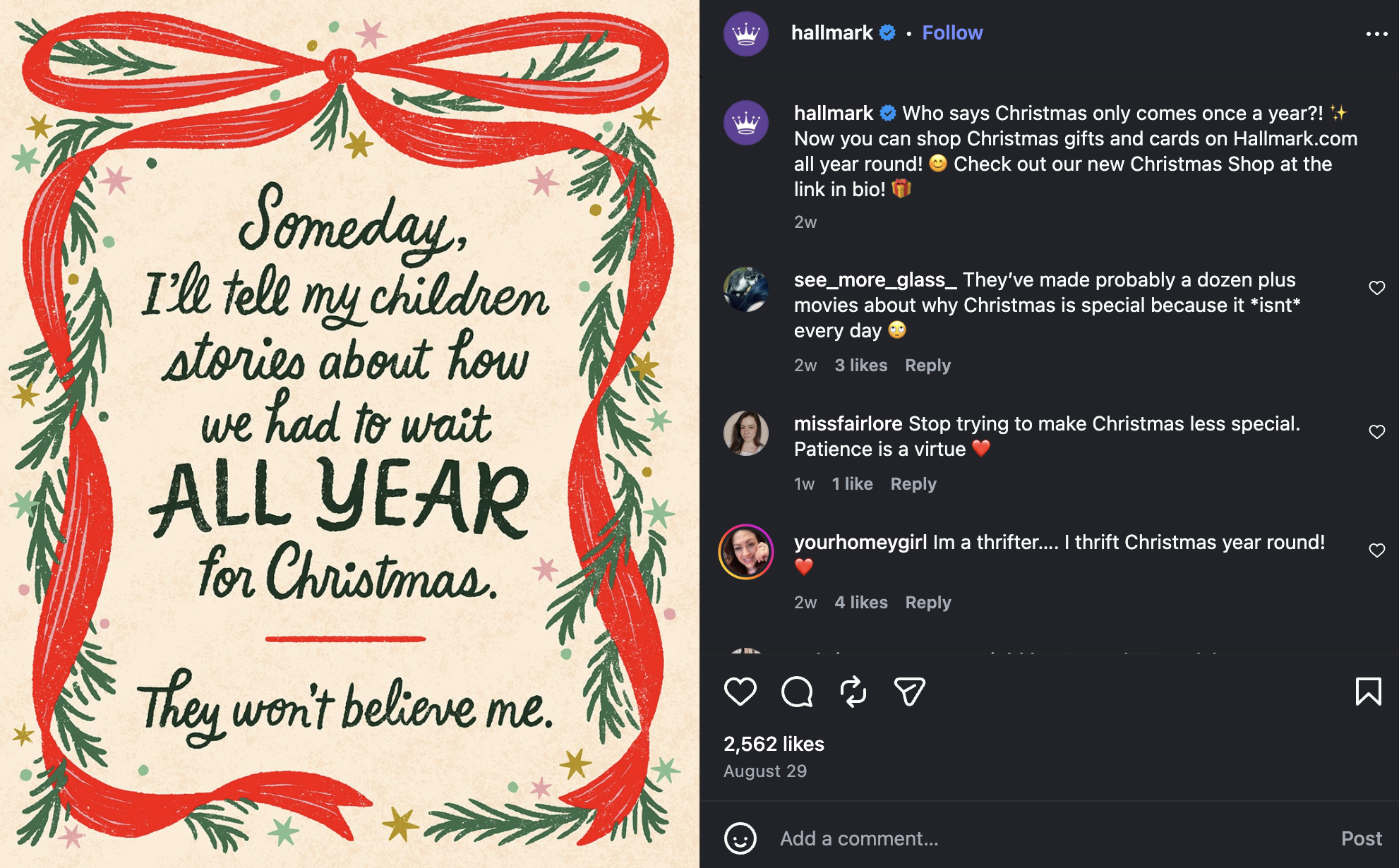
The convergence of economic tightening, shifting consumer timelines, and the maturation of social commerce is redefining the traditional holiday shopping season. According to data from the Q3 2026 Sprout Social Pulse Survey, which analyzed responses from 2,286 consumers across the United States, the United Kingdom, and Australia, more than three-quarters (78%) of shoppers plan to use social media platforms as much as, or more than, last year to source and evaluate holiday gifts. This reliance underscores a structural shift in retail: social networks are no longer merely channels for brand awareness; they have consolidated their positions as primary engines of product discovery, peer-led recommendations, customer service inquiries, and direct-to-consumer transactions.
Against a backdrop of macroeconomic uncertainty, including projected price increases driven by tariffs, brands are facing a complex consumer base that is simultaneously planning earlier and spending cautiously. Understanding these intersecting trends is essential for retailers attempting to protect market share and secure customer loyalty during the critical year-end sales cycle.

The Chronology of Early Marketing versus Consumer Preferences
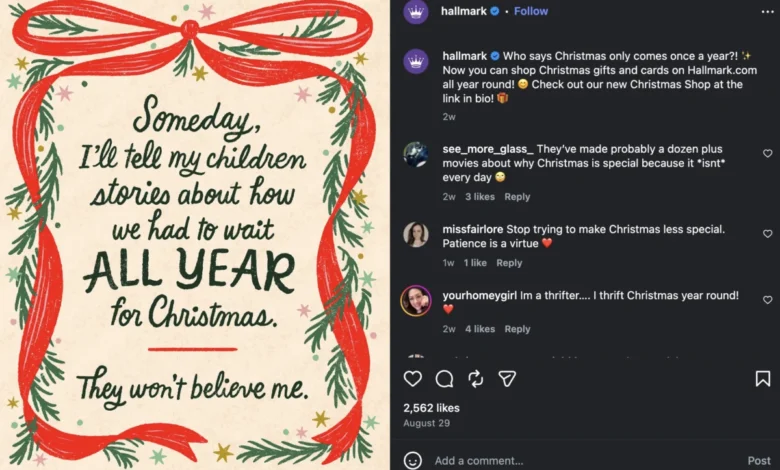
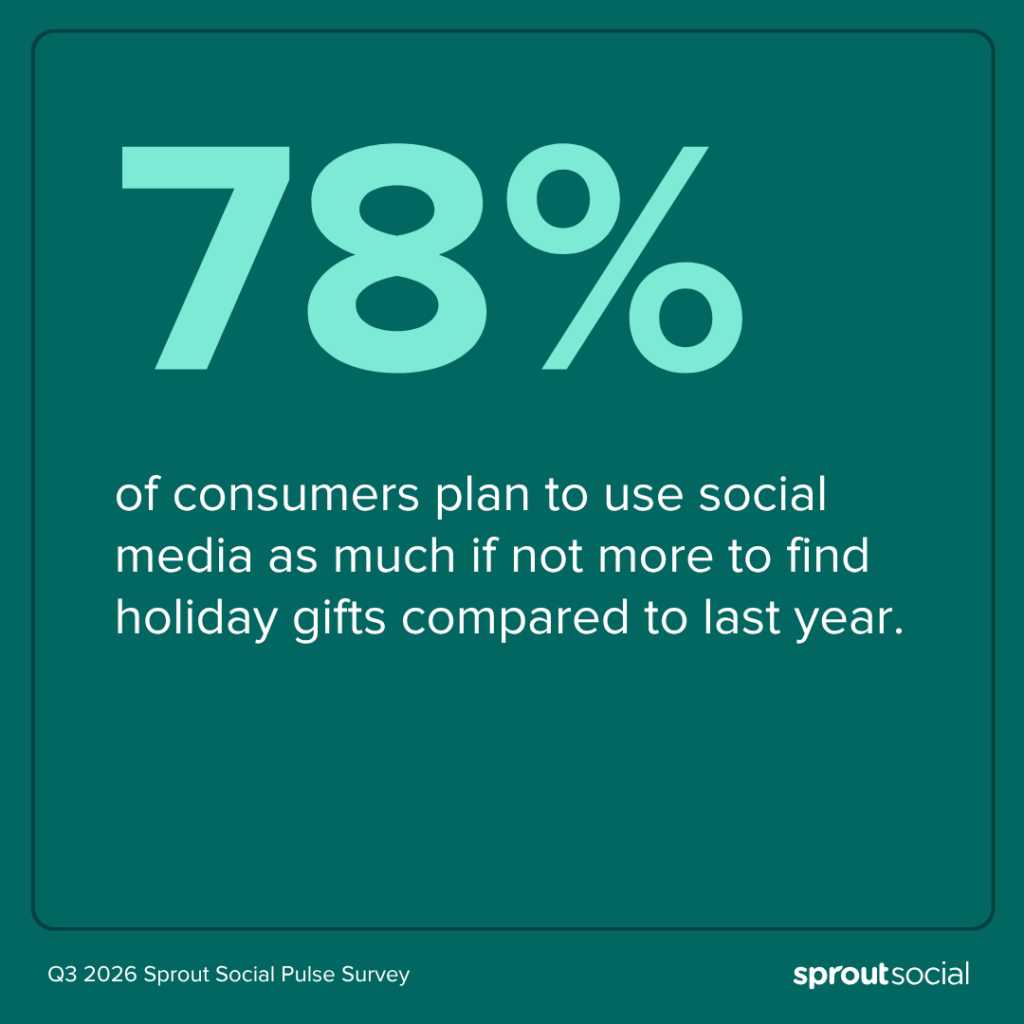
The timeline for holiday retail marketing has experienced systematic acceleration over recent years. Milestones that once reliably signaled the onset of autumn and winter shopping—such as festive product launches, seasonal collections, and dedicated promotional campaigns—have steadily crept into the summer months. In mid-2026, marketing anomalies such as "Summerween" celebrations in June, early-August pumpkin spice introductions by major beverage chains, and pre-autumn digital catalog previews by traditional holiday mainstays like Hallmark highlighted an increasingly compressed calendar.
However, this accelerated corporate timeline diverges from expressed consumer preferences. Data from the Q3 2026 survey reveals that 50% of consumers believe brands should ideally initiate holiday advertising in October. This represents a distinct numerical shift from previous years, such as 2025, when preferred campaign windows tilted toward August and September.
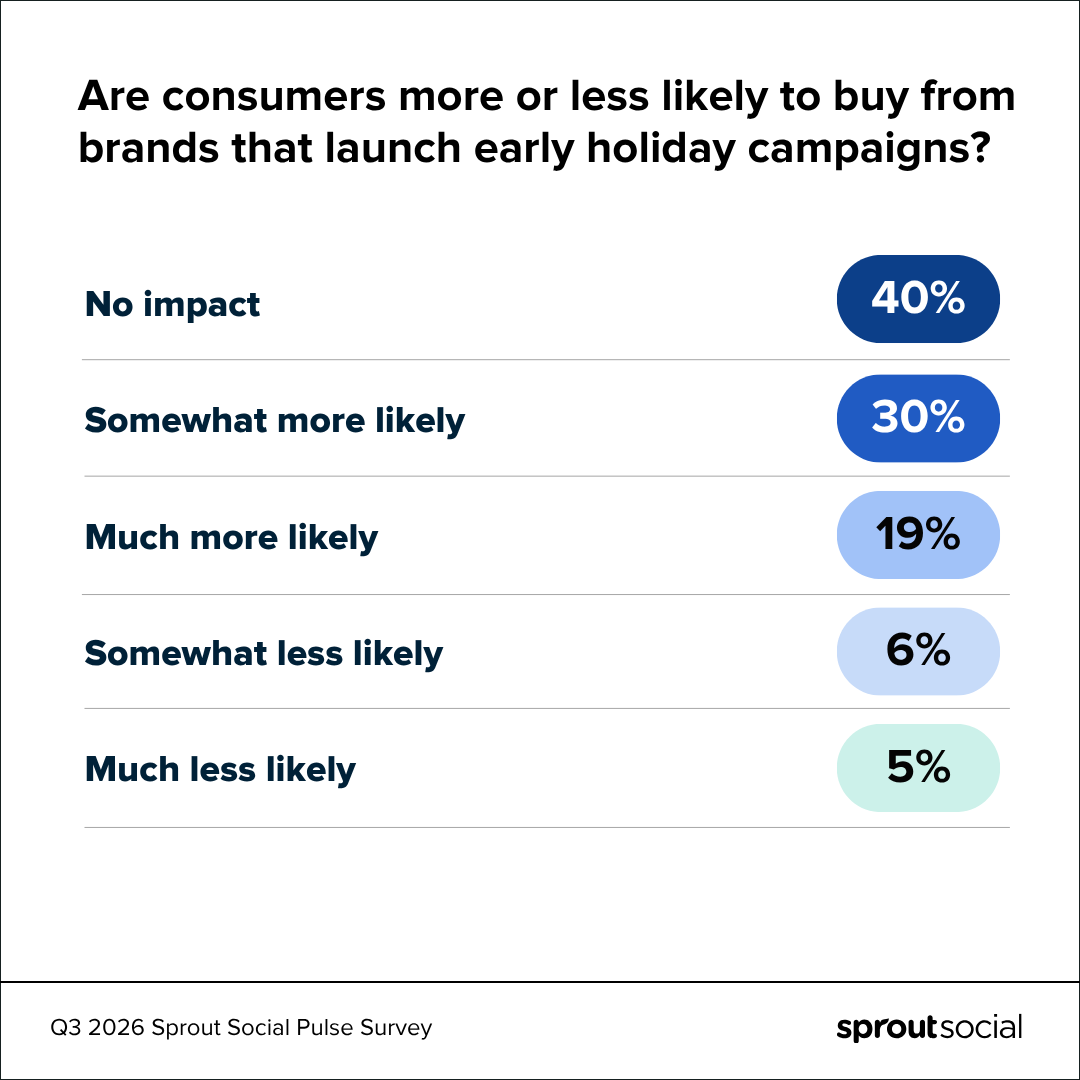
Despite this stated preference for traditional timing, consumer psychology reveals a disconnect between sentiment and purchasing action. When evaluated on actual behavior, 40% of surveyed shoppers reported that early campaigns launching as early as August have no discernible impact on their purchasing decisions. Conversely, nearly 50% of respondents indicated they are either somewhat more likely or significantly more likely to purchase from brands that begin advertising in August.
Industry analysts interpret this dichotomy as an indicator that campaign timing is secondary to core value propositions. For retail strategists, the data suggests that launching early does not inherently alienate consumers, nor does it guarantee conversion. Consequently, marketing expenditures are increasingly redirected away from debates over calendar timing and toward the intrinsic quality, relevance, and value of the creative content itself.
Macroeconomic Pressures: Tariffs, Inflation, and Budget Constraints
While campaign timing exerts minimal downward pressure on purchasing decisions, macroeconomic factors and trade policies are playing a decisive role in shaping holiday shopping habits. Persistent inflation and looming tariff implementations have instilled a profound sense of financial caution among global consumers.
The survey data illustrates widespread economic anxiety: 69% of respondents expressed concern regarding potential price increases directly tied to tariffs, while 56% stated an explicit intention to reduce their overall holiday spending compared to previous years. To mitigate these financial pressures, consumers are altering their purchasing schedules. Over a third of shoppers (36%) plan to begin their holiday shopping significantly earlier than in past years, driven by a desire to lock in prices before anticipated cost hikes take effect.
This preemptive shopping behavior is fundamentally altering cash flow timing for retailers. Rather than concentrating sales within the traditional late-November and December rush, brands are observing a prolonged, incremental buying cycle that begins as early as late summer. This shift requires supply chain managers, inventory planners, and digital marketing teams to maintain promotional momentum across an extended period.
The Drivers of Conversion: Value and Functional Demonstrations
With consumer budgets restricted by economic headwinds, brands must deploy targeted strategies to stimulate conversion. Traditional brand storytelling must now be paired with immediate, quantifiable incentives.
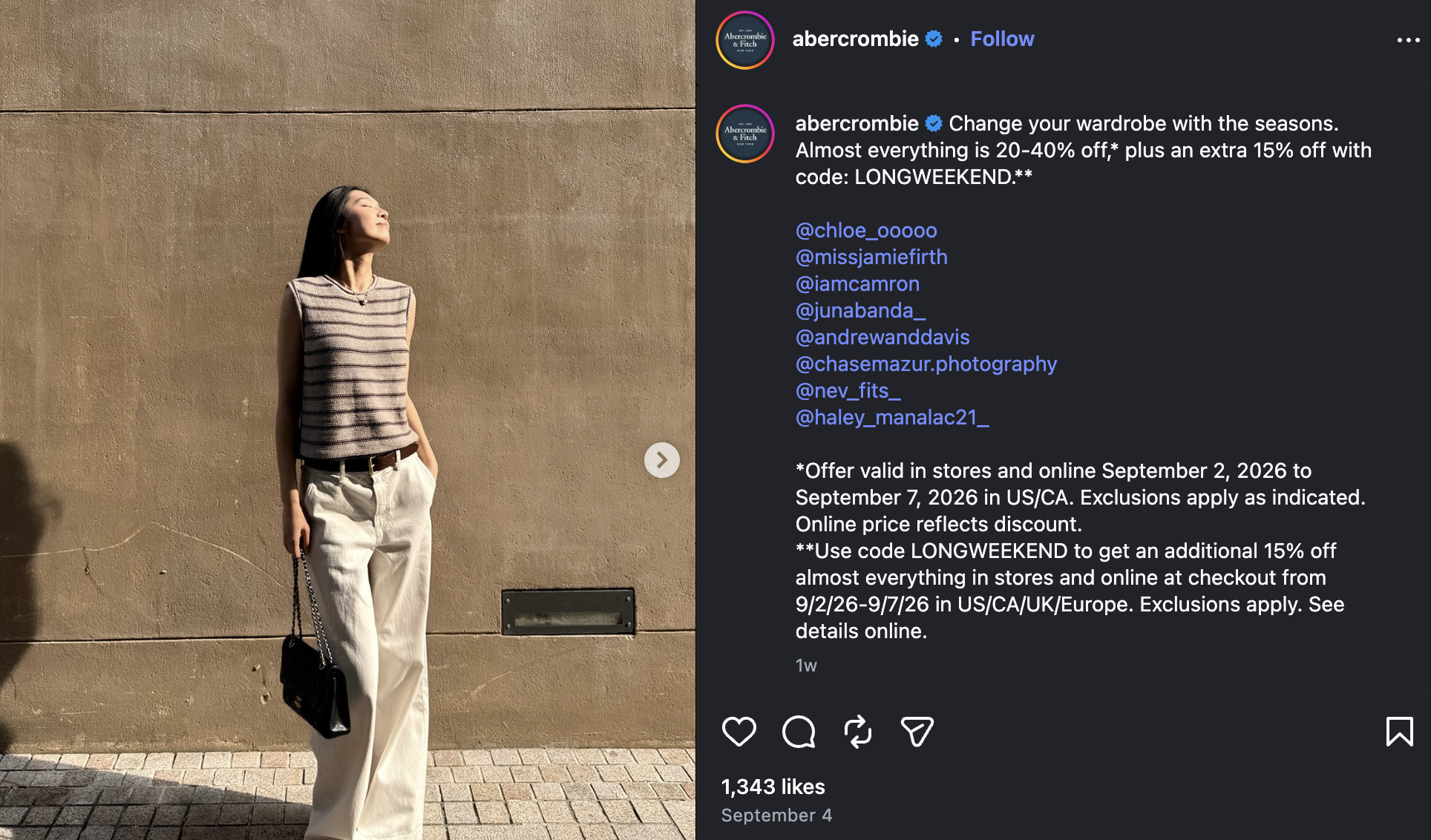
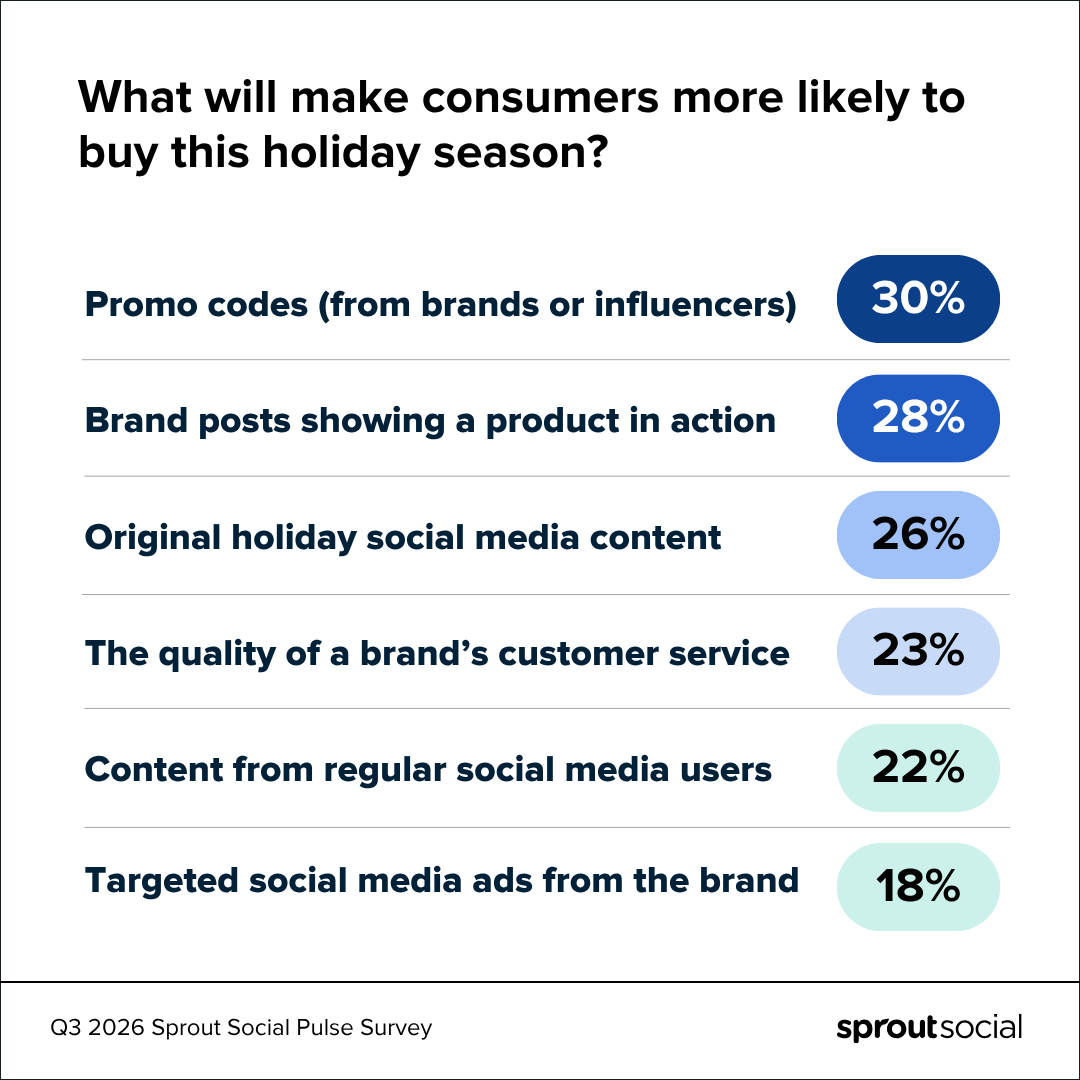
Promo codes have emerged as the single most effective tool for capturing consumer attention and driving sales. Thirty percent of respondents identified promotional codes—whether sourced directly from brands or via influencer marketing campaigns—as the primary factor that would persuade them to make a purchase. This emphasis on discounting highlights the paramount importance of affordability in the 2026 retail landscape.
Beyond price incentives, consumers are demanding practical transparency. Twenty-eight percent of shoppers reported that they are more likely to buy when brands demonstrate their products in action, moving beyond static imagery to functional video content. Furthermore, 23% cited original, holiday-specific creative content as a primary motivator. This represents a notable evolution from 2025 metrics, which prioritized customer service history and user-generated content above all else.
Influencer partnerships have consequently transformed into multi-functional assets for brands. Effective creator collaborations in 2026 must simultaneously address three consumer demands: delivering verifiable discounts, showcasing product utility in real-world settings, and providing fresh, engaging holiday narratives.
Social Media as the Epicenter of Product Discovery and Direct Purchase
The integration of social search and commerce features has permanently altered how consumers navigate the holiday marketplace. Social media networks have successfully transitioned from supplemental discovery tools to primary search engines, particularly for experiential, highly visual, and peer-validated information. Earlier data from Sprout Social’s Q2 2026 pulse survey indicated that social search outperforms traditional search engines for local discovery and product reviews.
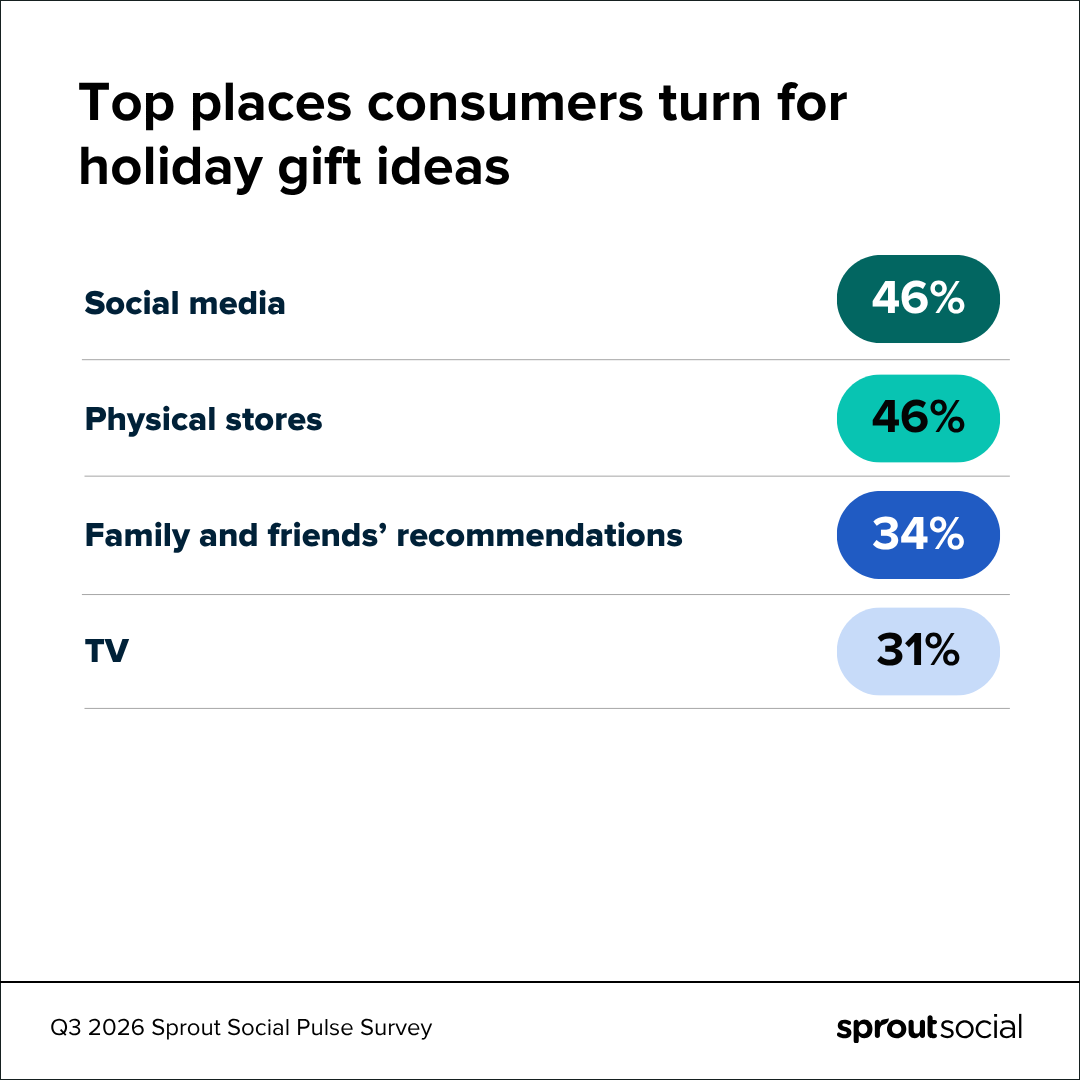
During the holiday shopping season, these habits amplify significantly. Social media now ties with physical retail stores as the single most popular destination for holiday gift discovery, with 46% of consumers turning to social platforms for ideas. Among younger demographics—specifically Gen Z and Millennials—social media holds the undisputed top spot, with at least half of these cohorts relying on social feeds to determine gift purchases.
Crucially, discovery is increasingly coupled with frictionless checkout experiences. More than half of all consumers surveyed expressed a willingness to complete purchases directly within social media applications. Native shopping infrastructures, such as TikTok Shop, Facebook Shops, and Instagram Checkout, have eliminated traditional friction points by allowing users to transition seamlessly from inspiration to transaction without leaving the app environment.
This behavior requires brands to build comprehensive, end-to-end shopping journeys natively within social platforms. Ensuring that product tagging, inventory syncs, and payment gateways function flawlessly within social apps is no longer optional for brands seeking to capture high-intent holiday traffic.
Evolving Expectations for Social Customer Care
As digital transaction volumes surge, customer service inquiries inevitably scale in parallel. The survey indicates that 86% of users plan to use social media channels as much as, or more than, last year to resolve customer service queries during the holiday season.
Consumer preferences dictate where these interactions occur. TikTok leads as the most favored platform for customer support at 50%, followed closely by Facebook (46%), Instagram (44%), X (28%), and WhatsApp (17%). Regarding the mechanics of communication, Direct Messages (DMs) remain the preferred medium across all generations, chosen by 55% of users. However, public comment sections are gaining traction as a primary support channel, with 31% of consumers stating they will seek assistance publicly in the comments.
This shift toward public-facing inquiries elevates the stakes for brand reputation management. Speed and accuracy are paramount: 70% of consumers expect a brand response within 24 hours of reaching out. Furthermore, 89% of respondents stated that response time directly influences their perception of a brand’s reliability.
To manage the exponential influx of inquiries during the holiday rush without sacrificing response times, many enterprises are integrating artificial intelligence (AI) tools into their customer service workflows. AI systems are deployed to triage incoming messages, categorize consumer sentiment, and draft initial responses. Consumer comfort with this technological integration is notably high: 70% of shoppers—rising to 77% among Gen Z—are comfortable with brands utilizing AI to expedite service tasks, provided the final resolution meets quality expectations.
Industry experts emphasize that while AI is effective for behind-the-scenes triage and acceleration, maintaining a human-in-the-loop framework is vital for preserving personalization and resolving complex consumer grievances. Because a poorly handled comment can quickly become a public liability, brands are advised to fortify their support teams, update self-service knowledge bases, and deploy comprehensive FAQ resources directly to social feeds ahead of the peak shopping season.
Broader Implications and Outlook for Retailers
The convergence of economic pressures, early shopping timelines, and social commerce dominance outlines a clear mandate for retail organizations entering the final quarter of 2026. Consumers are utilizing social media not merely as a storefront, but as a trusted ecosystem shaped by peer validation, creator influence, and digital community standards.
As tariffs and economic constraints compress household budgets, the retailers best positioned for success will be those that successfully balance economic value, operational responsiveness, and creative originality. By abandoning rigid adherence to traditional campaign launch calendars, embracing transparent promotional structures, optimizing for native social checkout, and maintaining rigorous standards of customer care, brands can secure consumer trust and position themselves for sustained commercial performance as they transition into the new year.