Google empowers marketers with unified data measurement by integrating Meridian and Gemini-powered insights into Google Analytics 360

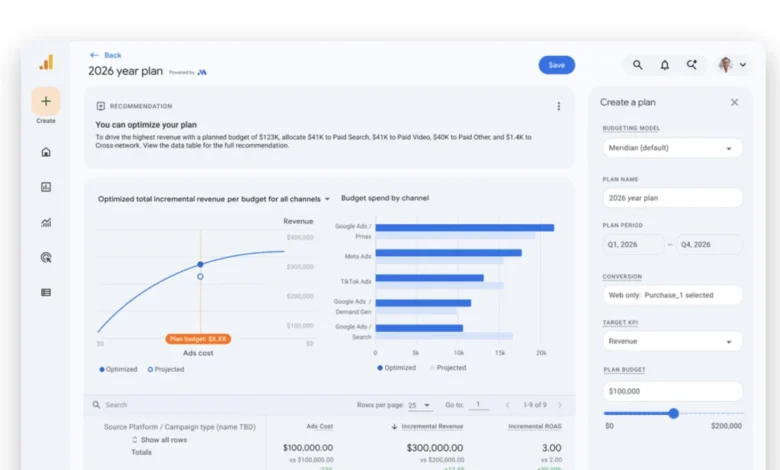
In an era defined by the rapid acceleration of artificial intelligence, the ability for enterprises to transform raw data into actionable business strategy has become the primary differentiator for market leaders. As digital ecosystems grow increasingly fragmented, the challenge of maintaining a cohesive view of marketing performance has reached a critical juncture. To address this, Google has announced a significant expansion of its measurement suite, integrating its open-source Marketing Mix Model (MMM), known as Meridian, directly into Google Analytics 360. This move, bolstered by the introduction of Gemini-powered Qualified Future Conversions (QFCs) in Google Ads, represents a strategic pivot toward providing brands with a unified, predictive framework for long-term growth.
The Evolution of Marketing Measurement
For decades, the marketing industry relied on last-click attribution models, which provided a straightforward, albeit incomplete, view of the customer journey. As privacy regulations tightened and third-party cookies began their phased deprecation, the efficacy of traditional tracking methods waned. Companies found themselves struggling to reconcile upper-funnel brand awareness campaigns with bottom-funnel conversion metrics.
The industry shift toward privacy-centric measurement has necessitated a return to more sophisticated statistical modeling. Marketing Mix Modeling (MMM) has emerged as the gold standard for this transition. By utilizing historical data to analyze the impact of various marketing channels on sales, MMM provides a privacy-safe, aggregate view of performance. Google’s Meridian, introduced as an open-source initiative, was designed to democratize access to these complex models, allowing organizations to quantify the impact of media spend with greater transparency. By embedding Meridian into the Google Analytics 360 interface, Google is effectively closing the gap between raw web analytics and high-level strategic planning.
A Timeline of Integration and Innovation
The journey toward this unified measurement framework did not occur in a vacuum. It follows a multi-year effort by Google to transition its ecosystem away from device-based tracking toward durable, AI-driven signals.
In 2022 and 2023, Google began intensifying its focus on "Privacy Sandbox" initiatives and the development of machine learning-based attribution models. These efforts were designed to help advertisers navigate the loss of traditional signals. By early 2024, the introduction of Meridian signaled a formal commitment to the open-source community, providing a transparent, extensible framework for data scientists to model the efficacy of their campaigns.
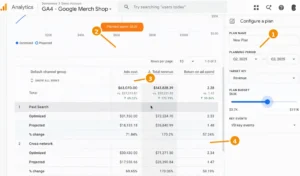
The current announcement represents the third major phase in this timeline: the operationalization of these models. By integrating Meridian directly into the workflow of Google Analytics 360, the platform is moving from a passive reporting tool to an active decision-support system. This trajectory suggests a future where the distinction between "analytics" and "modeling" is largely erased, replaced by an integrated dashboard that provides real-time adjustments based on historical and predictive data.
Bridging the Funnel with Gemini-Powered Insights
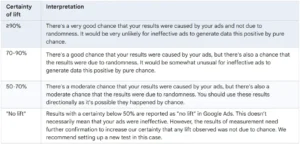
While Meridian addresses the structural needs of long-term planning, the introduction of Qualified Future Conversions (QFCs) addresses the tactical requirement for agility. QFCs leverage Google’s proprietary Gemini AI models to identify patterns in consumer behavior that indicate future purchase intent.
In the past, marketers often struggled to prove the value of brand-building campaigns because the sales impact did not manifest immediately. QFCs change this dynamic by linking upper-funnel activities—such as brand searches or engagement with video content—to projected future revenue. By analyzing signals like search volume spikes or interaction patterns that precede high-value conversions, the system allows marketers to optimize their budgets in real-time.
Industry analysts note that this capability is particularly critical for retailers and service providers with longer sales cycles. By surfacing these insights within Google Ads, the platform empowers advertisers to shift spend toward channels that show the highest potential for long-term growth, rather than merely those that show the highest immediate return on ad spend (ROAS).
Supporting Data and Market Context
The urgency of this update is underscored by recent shifts in global marketing expenditure. According to recent industry reports, the global market for marketing analytics software is expected to grow at a compound annual growth rate (CAGR) of over 12% through 2028. This growth is driven by the increasing complexity of omnichannel marketing and the rising cost of customer acquisition.
Data from existing adopters of advanced MMM frameworks suggests that companies utilizing holistic, model-based measurement see a 10% to 20% improvement in marketing efficiency. Furthermore, organizations that bridge the gap between brand-building metrics and performance-based outcomes tend to experience higher customer lifetime value (CLV) retention rates. By providing the tools to measure "missed revenue"—the gap between actual performance and potential performance based on modeled scenarios—Google is positioning its suite as a comprehensive financial planning tool rather than a mere traffic-monitoring dashboard.
Official Perspectives and Industry Implications
While Google has not released a specific roster of corporate partners for the immediate rollout, the development aligns with feedback from major retail and CPG (Consumer Packaged Goods) advertisers. These entities have long advocated for a measurement solution that respects user privacy while maintaining the granular insight required for multi-million-dollar budget allocations.
"The goal is to move beyond the siloed approach where brand awareness and performance marketing operate in separate streams," said an anonymous source familiar with the product roadmap. "By unifying the predictive capabilities of Gemini with the structural rigor of Meridian, the objective is to give CMOs the confidence to invest in the top of the funnel during uncertain economic periods."
The broader implication for the advertising industry is a shift in the definition of "performance." Historically, performance was synonymous with immediate action. With the integration of predictive modeling, performance is being redefined to include the "future value" of today’s brand engagement. This shift is expected to reduce the reliance on short-term discount-driven marketing, as advertisers gain the ability to prove the long-term profitability of brand-building efforts.
Challenges and Future Considerations
Despite the technical advancements, the integration of Meridian and QFCs is not without challenges. Implementing MMM requires a high degree of data hygiene; if the underlying data sets are inconsistent or incomplete, the predictive models will naturally lose accuracy. Google’s documentation stresses the importance of data quality, noting that the effectiveness of the Meridian model is intrinsically tied to the cleanliness of the input data from Google Analytics 360.
Additionally, the transition requires a cultural shift within marketing teams. Moving from simple dashboard metrics to probabilistic models requires a level of data literacy that not all organizations currently possess. The success of this initiative will likely depend on how well Google educates its user base on the nuances of statistical modeling and the interpretation of predictive signals.
Looking Ahead
The integration of Meridian and Gemini-powered insights into the Google ecosystem marks a maturation point in the AI-driven marketing era. By combining the transparency of open-source modeling with the raw power of large language models, Google is setting a new benchmark for how enterprises measure their return on investment.
As these features roll out to Google Analytics 360 users, the industry will likely see a renewed emphasis on long-term strategy over short-term optimization. For marketers, the mandate is clear: those who leverage these tools to understand the causal links between brand presence and future revenue will be best positioned to navigate the complexities of the modern digital economy. In the coming months, the focus will shift toward the adoption of these models at scale and the refinement of the predictive signals that will inform the next generation of global advertising spend.
Related posts: