Google Analytics Rolls Out Major Feature Suite to Pivot Digital Platforms from Descriptive Reporting to Predictive Strategy

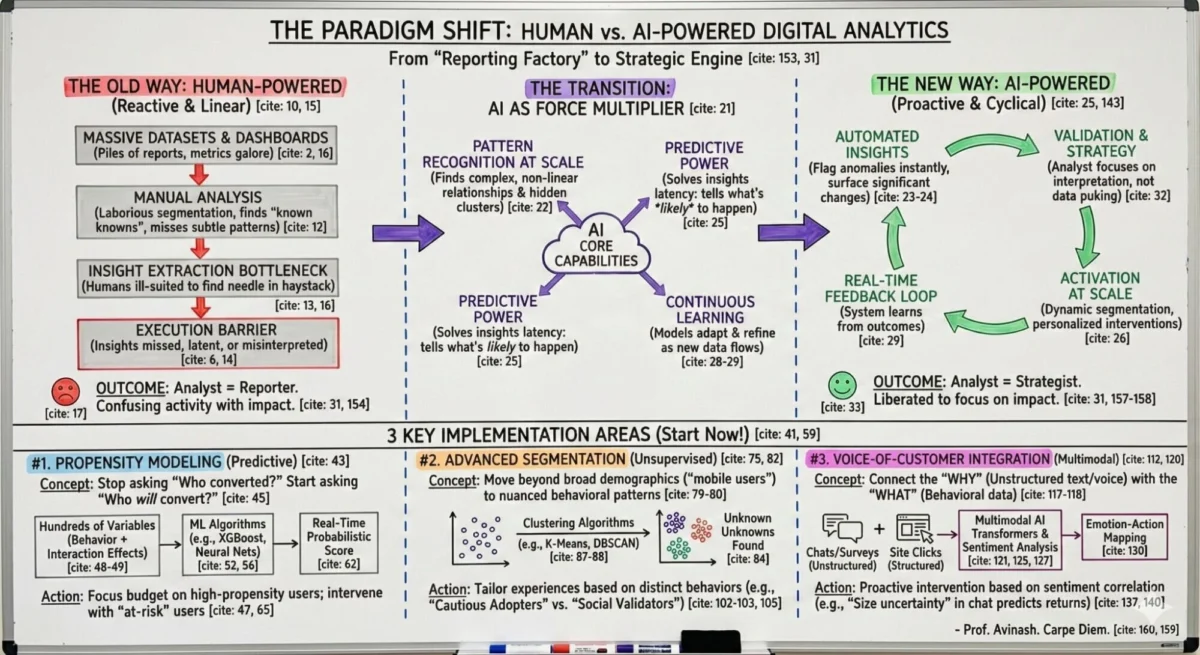
Over the past year, the development team behind Google Analytics (GA) has introduced a comprehensive suite of advanced capabilities designed to shift the platform’s utility from basic descriptive reporting to high-altitude, predictive decision-making. Historically utilized by marketing and analytics professionals primarily to evaluate past performance—tracking sessions, bounce rates, and historical conversions—the modern iteration of Google Analytics incorporates forward-looking artificial intelligence, automated attribution models, and conversational query assistants. This evolution aims to bridge the persistent gap between data collection and executive-level financial strategy, providing critical insights for corporate finance, marketing, and executive leadership teams.
Evolution of Digital Analytics: From Descriptive to Predictive
For decades, digital analytics operated largely as a retrospective discipline. Analysts spent hours compiling spreadsheets, segmenting traffic sources, and explaining historical anomalies to senior leadership—a role often characterized within the industry as "reporting squirrels." However, rapid shifts in consumer behavior, the proliferation of artificial intelligence platforms, and increasing scrutiny over marketing return on investment (ROAS) have necessitated a fundamental change.
The 2025-2026 feature rollouts by Google Analytics represent a strategic effort to address these modern challenges. By integrating native artificial intelligence assistants, multi-touch attribution (MTA) frameworks, cross-channel budgeting projections, and machine-learning-driven customer lifetime value (LTV) percentile metrics, Google has positioned its analytics ecosystem to help organizations model future outcomes before committing capital. Industry observers note that these tools allow marketing and analytics teams to transition into consultative partners for Extremely Senior Leaders (ESLs), shifting conversations away from vanity metrics and toward margin optimization and incremental revenue.
Tracking the Rise of Answer Engine Optimization (AEO)
One of the most significant additions to the platform is the inclusion of the AI Assistant channel report, located within the Traffic Acquisition section. This feature addresses the rapid ascent of Answer Engine Optimization (AEO) and Large Language Models (LLMs)—including ChatGPT, Claude, DeepSeek, Copilot, and Grok—which have collectively contributed to a measurable decline in traditional Search Engine Optimization (SEO) traffic across numerous digital properties.
Prior to the rollout of this native channel classification, identifying and measuring traffic driven by AI answer engines required complex regular expression (regex) strings and manual data filtering. The new reporting capability automatically aggregates traffic where the medium is set to "ai-assistant," capturing sessions originating from major conversational AI tools without requiring manual setup.
Industry data underscores the high value of this emerging traffic segment. According to benchmarks published by Adobe in March 2026, conversions originating from answer engines outperformed traditional search channels by 42%, while generating a 37% higher revenue per visit and capturing 48% more time on product description pages. Similarly, Shopify data released in May 2026 highlighted that LLM-driven traffic delivered a 50% higher conversion rate on product pages alongside a 14% increase in average order value (AOV) compared to organic search.
Despite these strong performance metrics, AEO traffic typically accounts for a modest percentage of total site sessions—generally ranging between 1% and 5% for standard enterprise websites. Analysts caution that answer engine traffic should not be viewed as a direct volume replacement for lost Google SEO traffic, but rather as a high-margin, high-intent engagement channel that heavily influences consumer decision-making, even when users do not immediately land on the primary website.
Advanced Conversion Attribution and Multi-Touch Analysis
To combat the limitations of simplistic last-click attribution models, Google Analytics has expanded its Advertising suite to include comprehensive Conversion Attribution Analysis and enhanced multi-touch journey mapping. By reintegrating robust assisted conversion metrics and categorizing consumer touchpoints—spanning owned, earned, and paid media—into early, middle, and late journey stages, the platform provides deeper clarity regarding the true utility of acquisition channels.
For example, digital marketing channels that appear underperforming under a strict last-click framework often reveal substantial value when evaluated through an assisted conversions lens. Paid social campaigns or organic search results frequently serve as critical early or mid-funnel touchpoints that prime consumers for eventual conversion, preventing organizations from prematurely defunding valuable upper-funnel initiatives.
Furthermore, Google has streamlined data integration by enabling seamless campaign data imports from competing advertising platforms, such as Meta Ads and TikTok Ads. This cross-platform data consolidation allows organizations to build more accurate attribution models, contrasting last-click credit against data-driven attribution (DDA) credit to identify undervalued marketing channels.
Cross-Channel Budgeting and Scenario Planning
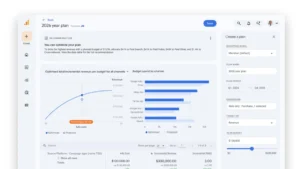
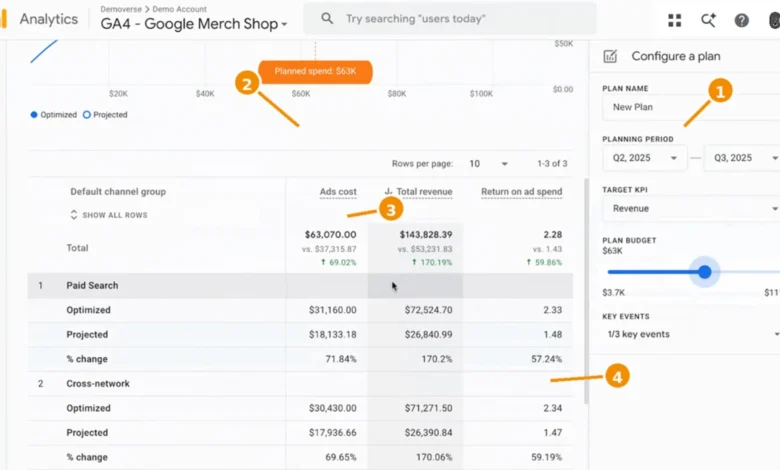
Moving beyond retrospective attribution, Google Analytics has introduced Cross-Channel Budgeting tools designed to aid Chief Marketing Officers and financial planners in resource allocation. Located within the Advertising section, the feature comprises two primary frameworks: Project Plans, which evaluate ongoing spend pacing against projected outcomes, and Scenario Plans, which model the financial impact of reallocating capital across different marketing channels.
Trained on historical business data while accounting for seasonality and external variables, these predictive models allow analysts to simulate various budget configurations. For instance, modeling the financial impact of shifting capital from paid social to paid search can reveal diminishing return curves and optimal spending maximums before actual funds are deployed. Industry experts emphasize that these predictive tools facilitate a "win before you spend" philosophy, enabling analytics teams to present data-backed scenario plans during executive budgeting meetings rather than merely auditing historical expenditures.
Conversational Analysis and the GA Model Context Protocol (MCP)
To democratize data access across corporate hierarchies, Google Analytics introduced "Ask Advisor," a conversational analytics interface accessible via a native search icon. Designed to lower the barrier to entry for senior executives who traditionally rely on analysts to pull custom reports, Ask Advisor allows users to pose complex queries in natural language. The underlying system performs the necessary data synthesis to deliver immediate answers regarding traffic shifts, product performance, channel mixes, and pricing impacts.
To extend conversational analysis beyond the boundaries of standard web analytics, developers can leverage the Google Analytics Model Context Protocol (MCP) server. By connecting Google Analytics data to approved enterprise large language models (such as Claude or ChatGPT via secure developer integration), organizations can cross-reference web traffic performance with offline sales data, promotional calendars, and broader media plans in a unified analysis workflow.
Operational Considerations and Cautions
While the expanded feature set offers significant strategic advantages, analytics professionals emphasize the importance of data hygiene and methodological caution. Key operational considerations include:
- Forward-Only Data Collection: Several advanced features—such as the AI Assistant channel report—collect data prospectively from the date of activation and do not backfill historical metrics. Consequently, organizations must enable these capabilities immediately to begin accumulating actionable datasets.
- Evolving Channel Definitions: Classification lists for AI assistants and third-party platforms are dynamic. Platforms may enter or exit default channel groupings over time, requiring monthly audits by analytics teams to ensure reporting consistency.
- Model Limitations: Predictive tools and cross-channel budgeting models rely on historical data to project future outcomes. Because current market conditions rarely mirror past performance, analysts are advised to frame model outputs as strategic projections or estimates rather than guaranteed forecasts.
- Data Governance: To maintain the integrity of multi-touch attribution and conversion analysis, organizations must enforce disciplined definitions for macro outcomes (e.g., e-commerce transactions) and micro outcomes (e.g., newsletter subscriptions) to prevent metric inflation and Garbage In, Garbage Out (GIGO) reporting errors.
Broader Industry Implications
The integration of predictive AI, automated cross-channel budgeting, and LTV-based audience segmentation marks a structural maturation of digital analytics platforms. By reducing the administrative burden of manual data extraction and regex filtering, modern analytics tools empower professionals to elevate their organizational influence.
Industry analysts project that the widespread adoption of predictive analytics frameworks will permanently alter agency-client relationships, shifting the focus of marketing agencies toward marginal efficiency, incrementality testing, and holistic revenue contribution. As organizations increasingly adopt these forward-looking capabilities, the role of the digital analyst will continue its evolution from a tactical reporter of historical traffic into an indispensable strategic architect of enterprise growth.
Related posts: