Bridging Algorithms and Ancestral Governance: How MIT’s Code.Tulsa Program Is Redefining Tech-For-Good Through Indigenous Partnerships

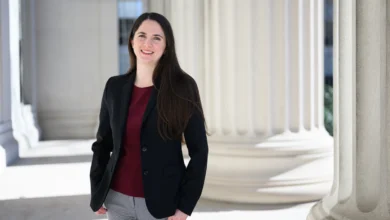
When Daphne Wang boarded a flight from Boston to Tulsa, Oklahoma, last summer, she packed her belongings with the typical expectations of an elite engineering undergraduate. As a mechanical engineering major at the Massachusetts Institute of Technology (MIT), her academic universe had largely been defined by clean lines of code, rigorous algorithmic problem-solving, and theoretical models designed to tackle isolated technical challenges. Placed as a summer intern at the Muscogee Creek Nation Department of Health, Wang anticipated spending her weeks optimizing databases or writing scripts. Instead, she found herself immersed in a complex, centuries-old landscape of tribal history, examining how modern technical innovation intersects with indigenous data sovereignty and community-specific governance structures.
"I learned so much that I think should be required curriculum for every single person in this country," Wang reflects on her transformative summer experience. "I think tech for good is genuinely getting out into communities and learning about people who aren’t you, creating worldly perspectives that you ultimately can take into everything else that you do."
Wang’s unexpected journey is part of a growing movement within higher education to bridge the traditional chasm between technical disciplines and the humanities. As artificial intelligence, data science, and automated decision-making systems increasingly dictate the fabric of modern life, academic institutions are facing mounting pressure to train engineers who understand not just how to build systems, but whom those systems affect, how historical contexts shape present realities, and what ethical responsibilities accompany technological deployment. Through initiatives like Code.Tulsa, universities and tribal nations are forging a new model of experiential learning—one that places empathy, historical literacy, and cultural humility at the heart of technological innovation.
The Genesis and Evolution of Code.Tulsa
Now in its second year, the Code.Tulsa program is administered by the MIT Public Service Center (PKG Center for Social Impact) and made possible through foundational financial and strategic support from the Patrick J. McGovern Foundation and the George Kaiser Family Foundation. The program places cohorts of MIT undergraduate students into immersive summer internships across the Tulsa metropolitan area. Students live at the University of Tulsa while working directly with local tribal governments—specifically the Muscogee (Creek) Nation and the Cherokee Nation—as well as regional innovation nonprofits such as Black Tech Street and the Urban Coders Guild.
The intellectual framework of Code.Tulsa is intentionally interdisciplinary. While students bring advanced technical skills in artificial intelligence, computer science, data analytics, and electrical engineering, they are required to confront the socio-historical dimensions of the region in which they operate. Vippy Yee, the PKG Center’s assistant dean for community-based programs, curates educational components that expose students to the historical and cultural significance of tech-based development in eastern Oklahoma, drawing on the expertise of local indigenous leaders and historians.
This deliberate pedagogical blend of engineering rigor and humanist inquiry aims to dismantle the historical silo that separates technical execution from social consequence. "As with all PKG Center programming, our aim is to help students integrate an engineer’s approach to problem-solving with a humanist lens on the nature of social challenges, and by extension interventions," explains Alison Badgett, director of the PKG Center.
For many students, this cross-disciplinary immersion fundamentally alters their academic and professional trajectories. Chenise Harper, an electrical engineering and computing major who completed her internship with the Urban Coders Guild, candidly admits her initial resistance to historical studies. "I hated history, but I learned a lot about why it is useful for making social change and how to go about researching it," Harper says. "Getting to speak to people who were either very educated on the issues or have experienced them has been a massive help in reshaping the way that I think about social issues. I now feel a lot more confident that I can make an impact."
Maternal Health Data and Tribal Sovereignty
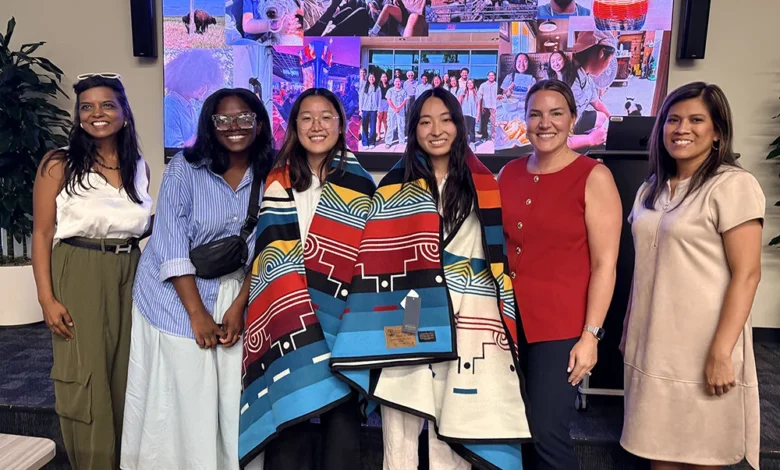
The practical application of this dual lens was vividly demonstrated during Wang’s internship alongside fellow MIT student Lucy Sun, an artificial intelligence and decision-making major. The duo was tasked with supporting the development of the Muscogee Nation’s first-ever Pregnancy Risk Assessment Monitoring System (PRAMS) survey. The overarching goal of the project was to capture robust, culturally nuanced maternal health data specific to Muscogee women—a demographic historically underserved or improperly aggregated in broad federal and state health datasets.
The assignment was far from a straightforward data-entry exercise. Wang and Sun were required to conduct exhaustive literature reviews, analyze complex datasets, and draft survey instruments while navigating delicate questions surrounding data sovereignty, privacy rights, and the unique governance structures of the Muscogee Nation. For sovereign tribal nations, the collection and handling of health data carry profound political, historical, and ethical implications, given a long history of external entities misusing or misrepresenting indigenous data.
"It was this change of pace—180 degrees from MIT, completely," Wang observes. At MIT, she notes, coursework routinely prepares students for massive technical scaling challenges, but offers comparatively few structured opportunities to "work with communities, [learn] how to think about the cultural and historical dimensions of the work, or how to consider the people who will be affected."
Breanna McNaughton-Long, an epidemiologist at the Muscogee Creek Nation Department of Health and Wang’s direct supervisor, praised the interns for their dedication, adaptability, and emotional intelligence. "They were instrumental. They did so much work that I don’t think we would have been able to do as quickly," McNaughton-Long says. "And they brought this sense that we were doing something that mattered."
A Student-Led Vision: The Tulsa Advanced Sciences Camp
While Code.Tulsa facilitates invaluable institutional partnerships for undergraduates, the broader ecosystem of tech engagement in the region has been profoundly shaped by grassroots student leadership. Code.Tulsa itself was conceived by Jack Carson, an MIT sophomore majoring in electrical engineering and computer science (EECS). As an incoming first-year student from Tulsa and an enrolled citizen of the Cherokee Nation, Carson recognized a stark disparity: rural Native students possessed immense intellectual potential but frequently lacked access to advanced STEM education and mentorship pathways.
Drawing on his background and local networks, Carson proposed the creation of a tuition-free, week-long immersive STEM camp hosted at the University of Tulsa specifically for high school students belonging to federally recognized tribes. To bring the vision to life, Carson established a rigorous nomination and application process. Out of 160 applications representing 25 distinct Native nations, Carson and his team selected 25 promising high school campers.
To construct the academic curriculum, Carson enlisted Harvard University student Allie Zong, whom he met during a campus preview weekend. Together, they founded the Tulsa Advanced Sciences Camp (TASC). The camp curriculum offers intensive, hands-on instructional tracks in artificial intelligence engineering, DNA technology, physics, and chemistry and energy—the latter developed with support from scientific pioneers such as physicist Alexandra LeViness of Commonwealth Fusion Systems, an MIT spinout working on commercial nuclear fusion.
Crucially, TASC pairs technical instruction with philosophical and leadership workshops designed to encourage students to think expansively about their academic and professional futures. "We teach them not knowledge, but curiosity, and the skills to teach themselves," Zong explains.
The impact on participants has been immediate and measurable. Alyssa Theofanidis, a citizen of the Cherokee Nation and a rising high school senior from Houston, attended the inaugural session of TASC and was so inspired that she returned the following summer as a teaching assistant. The camp "kind of propelled me to self-study calculus," Theofanidis notes, reflecting a broader sentiment among participants who are eager to channel advanced scientific knowledge back into their tribal communities.
Another camper remarked that interactions with guest lecturers and MIT student mentors expanded their personal horizons exponentially. "It got us to think 1,000 times more ambitiously about the impact we could have," the camper said. Observing the diverse perspectives of the MIT interns sparked a realization: "I thought, maybe this is what MIT looks like." Several participants noted that the camp directly inspired their intentions to apply to elite technical universities.
During the camp’s sessions, Cherokee Nation Principal Chief Chuck Hoskin Jr. addressed the students, emphasizing the moral dimensions of technological advancement. "Technology can be used for good, or it can be used for harm. Your generation has the opportunity to bend that arc toward something good," Hoskin told the assembly. Highlighting the institutional partnership between the tribe and the university, Hoskin added, "It’s a very special relationship that the Cherokee Nation has with MIT. As we reach out a hand in friendship, we have a hand reaching back. We are thankful for Cherokee citizen Jack Carson, a former secretary for the Cherokee Nation tribal youth council, for his leadership role in organizing this effort."
Redefining the Modern Engineer
The ripple effects of programs like Code.Tulsa and TASC extend far beyond the immediate summer months, challenging elite academic institutions to rethink the long-term professional identity of their graduates. While the vast majority of engineering and computer science graduates enter corporate sectors traditionally disconnected from direct public service, initiatives like these instill an enduring awareness of social responsibility.
Elvis Chipiro, a junior in computer science and engineering who completed his internship with the Cherokee Nation, captured this ethos in his reflections on the program. "Social impact is not separate from mainstream technology; rather, it is embedded in the choices engineers make every day," Chipiro observed. "Ultimately, meaningful social change is not driven by technology alone, but by people willing to design systems with empathy, responsibility, and inclusion at the center."
For students navigating the intense competitive pressures of top-tier universities, the experience often serves as a powerful reconnection to foundational motivations. Chenise Harper echoes this sentiment, noting that the daily rigor of coursework can occasionally obscure the broader human purpose behind technical education. "Remembering that… I could use my MIT education to help others was a big reason I applied to MIT in the first place," Harper says. "लेकिन [But] I forgot my own mission in the stress of school. Code.Tulsa really re-opened my eyes to why I am here."
As academic institutions and indigenous nations continue to forge these collaborative bridges, models like Code.Tulsa demonstrate that the future of technological innovation depends not solely on processing power or algorithmic elegance, but on the capacity of creators to listen, learn, and build in genuine partnership with the communities they serve.