How to Turn Brand Strategy into Visual Direction: A Comprehensive Guide to the Pre-Concept Phase in Modern Identity Design

The successful execution of a brand identity project rarely begins within the confines of design software like Figma or Adobe Creative Suite. Instead, the most enduring visual concepts are forged through a rigorous "pre-concept" phase—a strategic interval dedicated to research, stakeholder alignment, and the dismantling of hidden assumptions. In the contemporary design landscape, the failure of branding initiatives is frequently traced back to a critical gap between high-level strategy and visual execution. This gap occurs when abstract descriptors such as “modern,” “trustworthy,” or “disruptive” are left undefined, leading to a fundamental misalignment between a brand’s intended communication and the designer’s final output.
The Critical Gap in Modern Branding
In many professional design environments, the standard workflow involves a designer receiving a brief, conducting brief stakeholder interviews, and viewing a handful of competitor references before being expected to produce a "correct" visual concept. However, the definition of what is "right" is inherently subjective and difficult to evaluate if the project team has not reached a consensus on the brand’s core identity.
Industry analysis suggests that a significant percentage of design revisions and project stalls are caused by this lack of early-stage alignment. When a team relies on broad adjectives without contextualizing them, they invite conflicting interpretations. For instance, a stakeholder requesting a "premium" feel may be envisioning a minimalist, editorial aesthetic, while another may associate the term with exclusive, high-contrast luxury. Without a pre-concept phase to bridge this divide, the design process becomes a series of guesses rather than a calculated progression.
The Failure of Abstract Adjectives: Case Studies in Misalignment
To understand the necessity of the pre-concept phase, one must examine how vague language impacts real-world projects. A notable example involves a health tech firm aiming to appear "modern, trustworthy, and disruptive." While "disruptive" typically implies a bold or rebellious visual language, the company’s primary clientele consisted of conservative government medical institutions.
Through deep-dive discovery, it became evident that "disruption" in this specific context needed to be expressed through extreme clarity, efficiency, and professional confidence rather than visual noise. Had the design team proceeded with the literal definition of disruption, the resulting brand would likely have alienated its target audience by appearing unreliable or overly experimental.

Similarly, in the fintech sector, the term "bold" is often used to signal market leadership. However, for a financial product, boldness must be tempered with signals of security and competence. The challenge for the designer is not merely to be bold, but to determine the specific "kind" of boldness that retains user trust. These nuances demonstrate that brand attributes are only useful when defined within the specific context of the industry and the audience.
Chronology of the Pre-Concept Phase
The pre-concept phase serves as a practical bridge between the strategy kickoff and the development of the first visual concepts. The timeline typically follows a structured sequence:
- Phase 1: Initial Discovery (Week 1): Collection of business goals, product specifications, and target audience data.
- Phase 2: Contextual Research (Weeks 1-2): Analysis of the competitive landscape and category-specific visual codes.
- Phase 3: The Brand Workshop (Week 2): Active stakeholder engagement through perception mapping and metaphorical exercises.
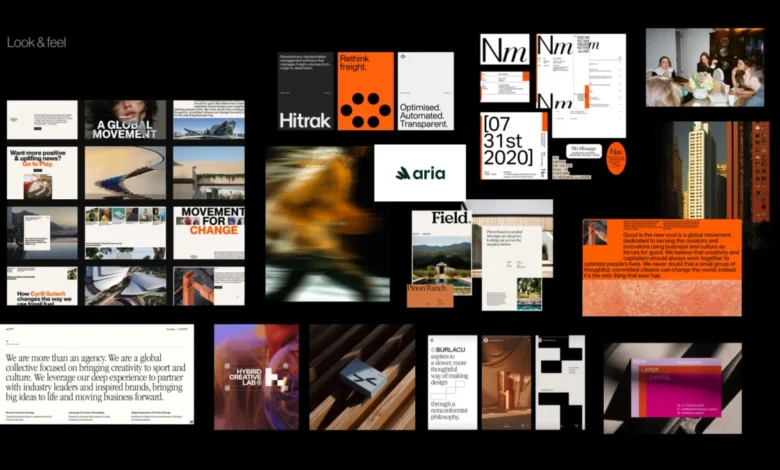
- Phase 4: Synthesis and Visual Foundation (Week 3): Translating workshop findings into look-and-feel boards and design codes.
- Phase 5: Boundary Setting (Week 4): Finalizing the constraints for the upcoming concept design phase.
Methodology: Researching the Brand Context
The foundation of the pre-concept phase is the clarification of perception. As noted by industry expert Marty Neumeier in The Brand Gap, a brand is ultimately a person’s "gut feeling" about a product or service. Therefore, the workshop must focus on what perception the team intends to cultivate.

Strategic questioning is the primary tool used during this stage. Instead of asking what stakeholders like, designers should ask questions that reveal underlying beliefs:
- What does the brand need to make people believe?
- Where does the brand need the most credibility?
- Which category assumptions should the brand follow, and which should it challenge?
- How far can the brand move from category expectations before it loses its audience?
By focusing on these questions, the team can move beyond personal preferences and toward a shared understanding of the brand’s functional requirements.
Competitive Mapping: Deciphering Category Language
A core component of the pre-concept phase is Competitor Perception Mapping. This exercise requires stakeholders to place competitor brands on a two-axis map based on perceived attributes. The axes are tailored to the specific tensions of the project, such as "Traditional vs. Progressive" or "Understated vs. Bold."

The value of this exercise lies in the disagreements it fosters. If one stakeholder views a competitor as "innovative" while another views them as "generic," it highlights a discrepancy in how the team defines innovation. Resolving these differences early prevents them from resurfacing during the final concept review, where they could potentially derail the project.
The Psychology of Association: The Visual Brand Driver
To further translate verbal strategy into visual cues, designers often employ the "Visual Brand Driver" exercise. Stakeholders are asked to select images representing the company across unrelated categories, such as transportation, furniture, or architecture.
For example, if a company were a piece of furniture, would it be a modular, high-precision desk or a soft, informal lounge chair? The adjectives associated with these choices—such as "structured" vs. "flexible"—provide a metaphorical framework that is easier for stakeholders to navigate than abstract design theory. This process separates brand perception from personal aesthetic taste, ensuring that the final design expresses the company’s identity rather than a stakeholder’s personal preference.

Synthesizing the Visual Foundation: Look, Feel, and Code
Once the research and workshop phases are complete, the findings are synthesized into three distinct layers:
1. Look and Feel (Perception Boards)
These are not traditional moodboards but "perception boards" designed to test specific visual directions. If the goal is "trustworthy and human," the board might explore the difference between institutional trust (clean, rigid, blue tones) and relational trust (warm, organic, approachable photography).
2. Design Code (Translating Ideas into Principles)
Design codes turn abstract brand drivers into specific visual principles. For a parenting application, the concept of "personalized support" might translate into organic shapes and handwritten lines. For a PropTech agency, the idea of "momentum" might manifest as ripple effects or motion-blur graphics. This stage tests the validity of visual metaphors before any original design work begins.

3. Brand Assets (The Building Blocks)
The final layer addresses the tactical elements of the identity: typography, color palettes, and logo styles. This provides the designer with clear boundaries—such as whether to use a serif or sans-serif typeface—without making the final creative output entirely predictable.
Industry Analysis: The Economic Impact of Alignment
The implementation of a rigorous pre-concept phase has significant implications for project ROI. In the design industry, "rework" is one of the highest hidden costs. Projects that bypass alignment phases often suffer from "concept churn," where designers produce multiple iterations that are rejected not because of quality, but because they miss the mark on unstated stakeholder expectations.
Furthermore, in an era where digital products must be built consistently across global teams, a well-defined visual foundation is essential for creating scalable design systems. By establishing a "design code" early, companies can ensure that their brand remains coherent as it evolves across different platforms and touchpoints.

Official Responses and Expert Insights
Design leaders increasingly advocate for this shift toward "strategic design." Jake Knapp, creator of the GV Brand Sprint, emphasizes that the goal of early-stage exercises is to make the abstract idea of a brand "concrete." By forcing stakeholders to make choices between competing values, designers can extract the necessary data to build a functional visual system.
Feedback from product teams suggests that when the first concept is presented as the logical next step in a shared journey—rather than a surprise reveal—the approval process is significantly streamlined. This collaborative approach fosters a sense of ownership among stakeholders, reducing the likelihood of late-stage friction.
Broader Impact and Implications
The shift toward a pre-concept-heavy workflow reflects a broader trend in the creative industries: the move away from "design as decoration" and toward "design as a business tool." As the marketplace becomes increasingly saturated, the ability for a brand to communicate its unique value proposition through specific, calculated visual cues is a competitive advantage.

The pre-concept phase does not eliminate the need for creative intuition or risk-taking. On the contrary, it provides those creative impulses with a sharper problem to solve. When a designer understands the precise boundaries of the brand’s character, they can explore more effectively within those constraints. Ultimately, the first concept should never be a guess; it should be the visual manifestation of a strategic consensus that the entire team already understands and supports.