From Hobbyist to E-commerce Automation: A Pokémon Card Collector’s Journey to Streamlined Sales

The seemingly simple act of collecting vintage Pokémon cards has evolved into a sophisticated e-commerce operation for one dedicated enthusiast, who has developed an innovative, AI-powered application to manage inventory, automate listings, and streamline social media promotion. What began as a personal quest to complete a childhood collection has blossomed into a thriving online store, demonstrating the power of leveraging technology to overcome the logistical challenges of selling niche physical goods.
The collector, whose name remains private, found themselves inundated with "spare" Pokémon cards after acquiring bulk lots to fill gaps in their personal collection. This surplus inventory, initially a byproduct of their hobby, quickly became a secondary venture. However, as the collection of sellable cards surpassed the 1,000 mark, the manual processes involved in listing and promoting each item became a significant bottleneck.

The Bottleneck of Manual Listing and Promotion
The initial approach involved listing cards individually on platforms like eBay. While these marketplaces offer robust tools for creating listings, such as title suggestions and pre-filled item specifics, the process is inherently time-consuming when dealing with a large volume of unique items. For collectibles like Pokémon cards, where demand is often driven by social media engagement and direct fan interaction rather than passive marketplace browsing, the lack of integrated social promotion proved to be a critical weakness.
"Social promotion is half of what makes a listing sell," the collector explains, highlighting a common challenge for sellers in the collectibles market. "And sometimes more than half, depending on the card." The manual effort required to share each individual card across platforms like Threads and Instagram was frequently the first task to be sacrificed when time became scarce, leading to listings that, while live, remained virtually invisible to the target audience.
This realization sparked the development of a custom Mac application designed to manage the entire sales pipeline from card acquisition to social media dissemination, culminating in listings on the collector’s own website.
The Genesis of an Automated E-commerce Solution
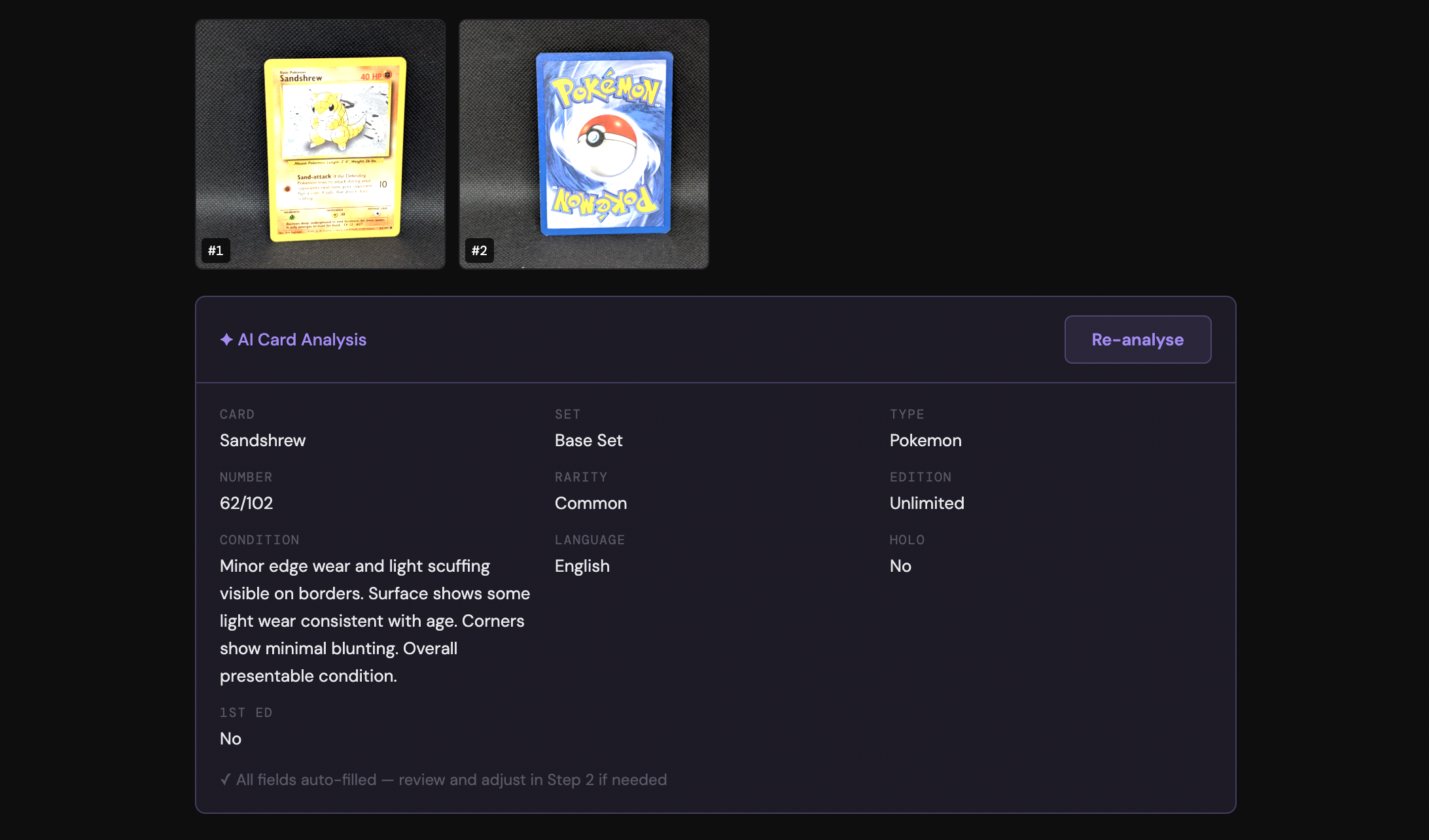
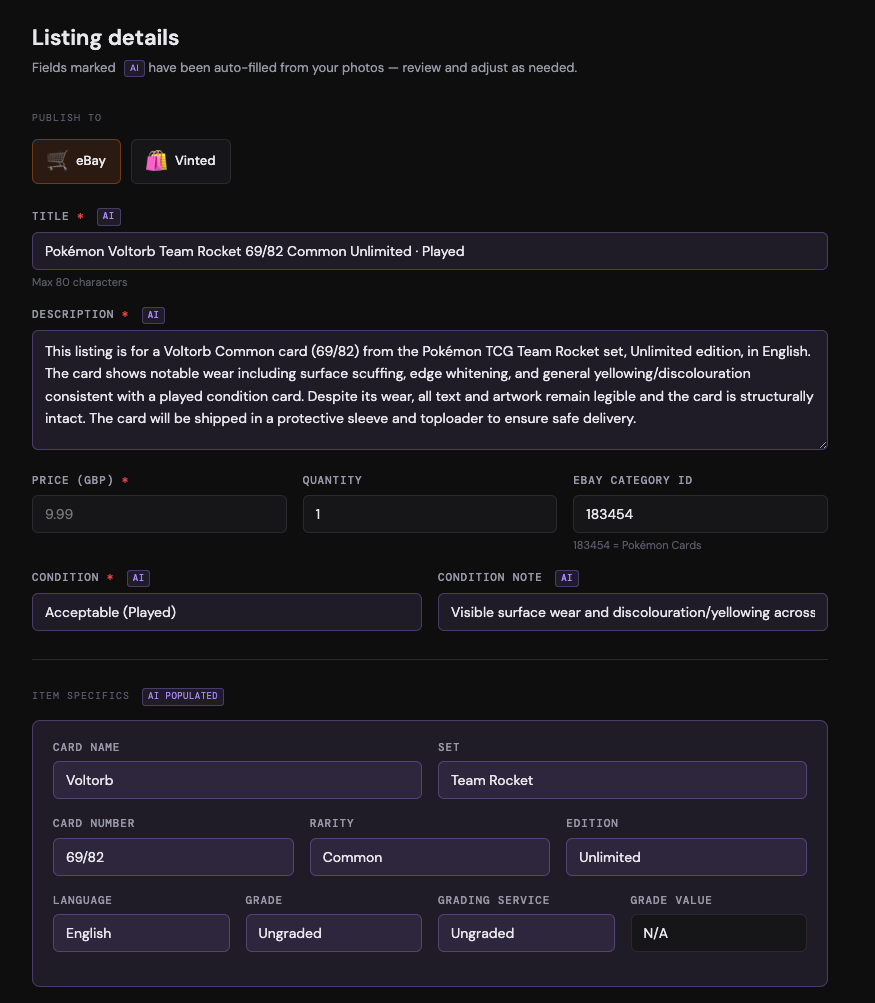
The journey began with a focus on individual card processing. The collector would feed front and back photos of a single card into the application. The application then utilized AI, specifically leveraging the Claude model, to extract crucial details such as card name, set, card number, rarity, edition, language, and importantly, condition. This automation significantly reduced the time spent on manual data entry and assessment, particularly for grading the condition of each card, a notoriously subjective and time-intensive task.
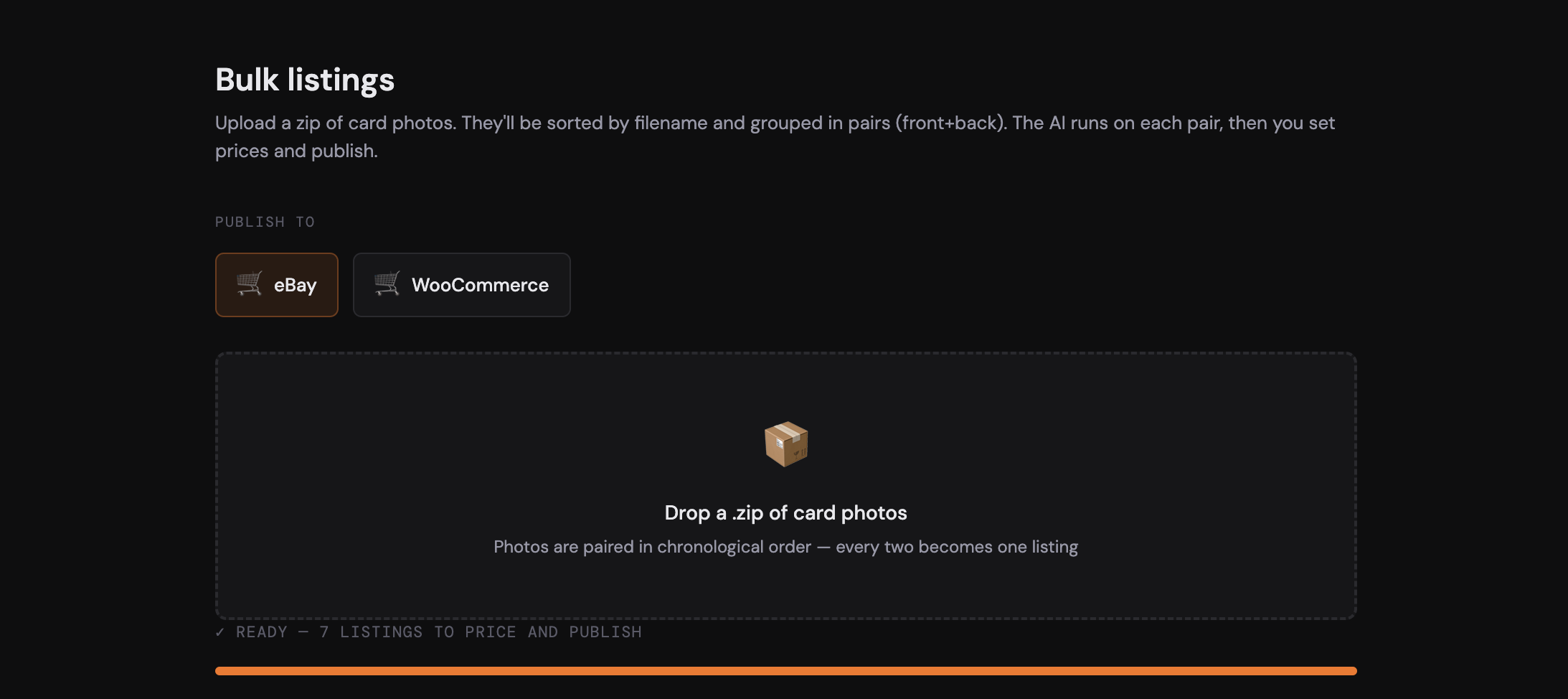
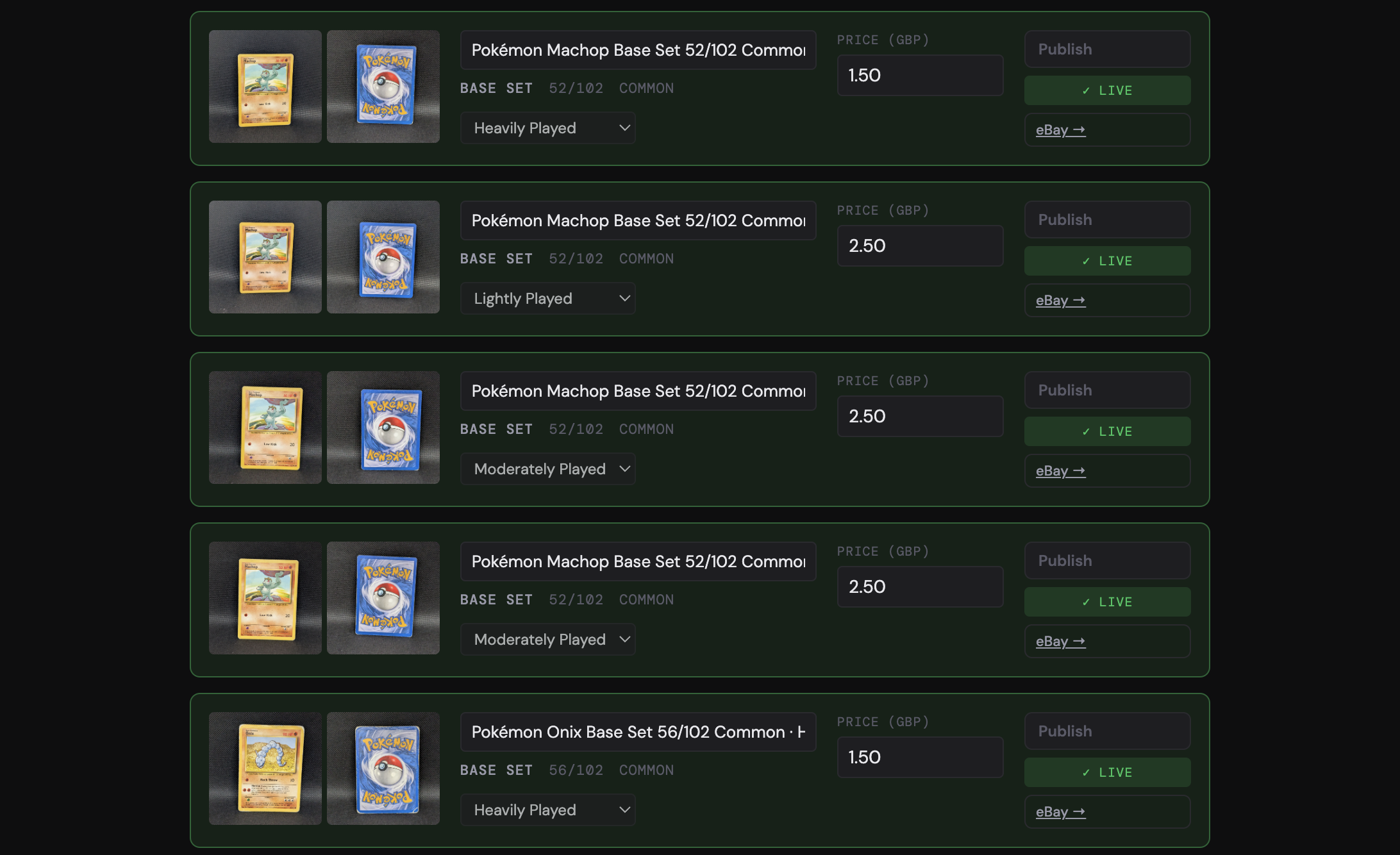
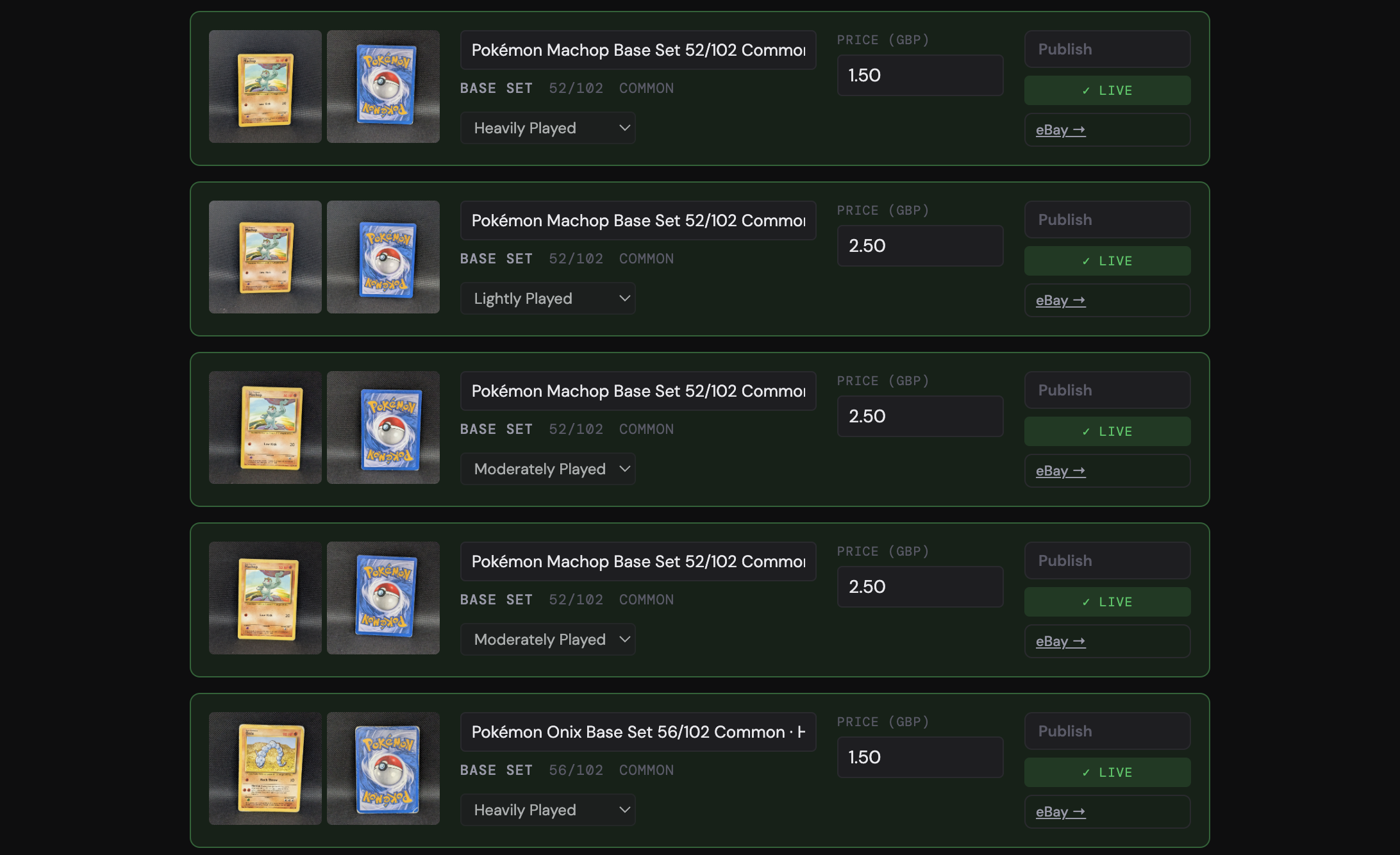
However, the sheer volume of cards necessitated further refinement. The application was upgraded to support batch processing through zip files. Collectors could now photograph batches of cards in a lightbox, pair the front and back images, zip them together, and drag the entire archive into the application. The software intelligently sorts and groups these image pairs, preparing them for the AI analysis.
Leveraging AI for Unprecedented Efficiency
The core of the application’s power lies in its AI integration. Once the image pairs are processed, Claude analyzes each card, extracting a wealth of structured data. This includes not only basic identification but also nuanced condition assessments. While the collector initially meticulously reviewed every detail, they found Claude’s accuracy to be high enough to reduce manual oversight, trusting the AI for straightforward assessments and only intervening when significant discrepancies were noted. This AI-driven extraction transformed the laborious task of cataloging into a rapid, almost passive, process.
The extracted data is then automatically populated into listing fields on various e-commerce platforms. Initially designed for eBay, the application was later expanded to support WooCommerce, allowing the collector to establish their own branded online store, "Shadowless." This modular design ensures future scalability, accommodating potential integrations with other platforms like Shopify.
Bridging the Gap: Integrated Listing and Social Promotion
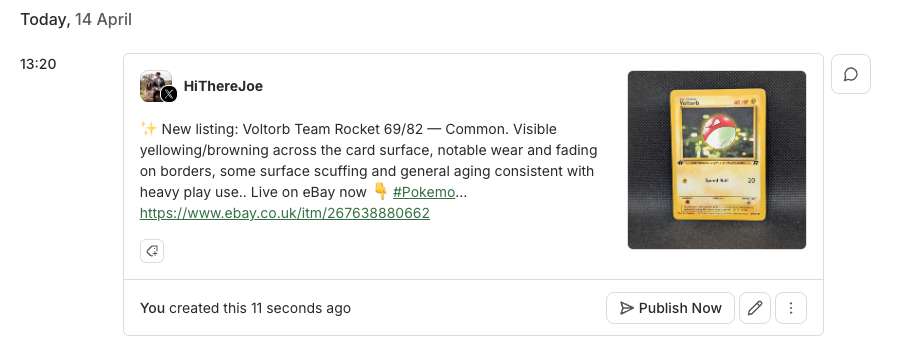
A pivotal element of this automated system is its seamless integration with social media scheduling tools, specifically through the Buffer API. The application not only generates product listings but also crafts corresponding social media posts. These posts include direct links to the product page on the collector’s website or direct users to a "link in bio" for platforms like Instagram where clickable links in post bodies are not supported.
The Buffer API plays a crucial role in optimizing the timing of these social media announcements. By leveraging Buffer’s "Best Time to Post" data, the application schedules promotions for when the target audience is most likely to be online, significantly increasing visibility compared to manually posting at arbitrary times. This ensures that newly listed cards are effectively broadcast to potential buyers, rather than languishing in obscurity.
The collector emphasizes that this integration transforms the sales process from a multi-app workflow into a single, cohesive action. "Listing a product and promoting it should be the same action rather than two separate workflows," they state, underscoring the efficiency gained by this unified approach.
Building a Branded E-commerce Presence
The transition from eBay to a self-hosted WooCommerce store marked a significant step in brand building. While eBay provided a strong initial platform, the desire for a dedicated space to cultivate a unique brand identity and offer a more tailored customer experience led to the creation of Shadowless. The application’s modular design facilitated this transition with relative ease, requiring only a few days of development to integrate WooCommerce support.
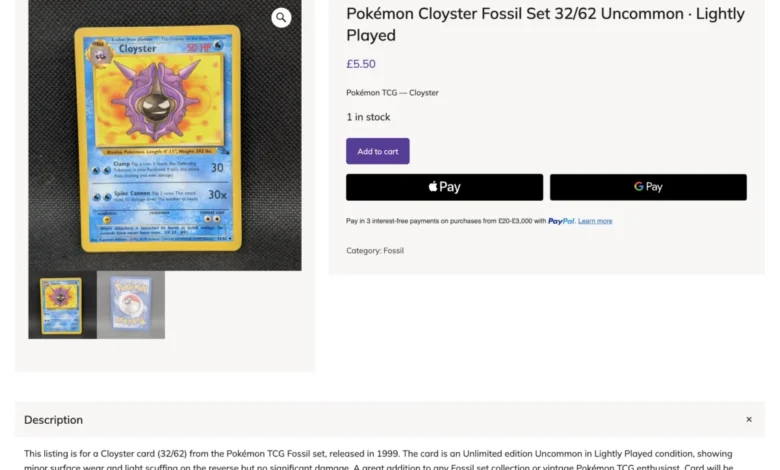
The AI-extracted data proved invaluable for the new store’s functionality. Attributes like set, card number, rarity, and edition were transformed into filterable categories on the Shadowless website. This feature allows customers to precisely narrow down their searches, seeking out specific types of cards, such as "Rare cards from the Fossil set," thereby enhancing the browsing experience and mimicking the curated feel of a physical card shop.
The Automation Workflow in Action
A typical workflow now looks remarkably streamlined:
- Photography: A batch of cards is photographed on a Sunday afternoon.
- Batch Upload: The paired front and back images are zipped and uploaded to the custom Mac application.
- AI Analysis: Claude processes the images, extracting detailed card information and condition assessments.
- Pricing: The collector manually sets prices, a step they are actively seeking to automate through market data APIs.
- Publish: Upon hitting "publish," the application simultaneously creates product listings on the WooCommerce store and queues social media posts through Buffer.
- Automated Promotion: Scheduled posts are automatically disseminated across selected social media channels at optimal times.
This process has dramatically reduced the time spent per card, shifting the collector’s focus from tedious administrative tasks to strategic pricing and inventory management. The cost of the AI analysis for over 1,300 products has reportedly been minimal, estimated between $15 to $20.
Ongoing Development and Future Enhancements
Despite the significant automation achieved, the collector continues to refine the system. The primary focus for future development is the automation of the pricing step. By integrating with card market data APIs, the aim is to provide data-driven price suggestions, eliminating the last manual touchpoint in the bulk listing process. This is seen as crucial for maintaining competitive pricing and ensuring customer satisfaction in a dynamic market.
Another area of development involves managing inventory fluctuations. As cards sell before their scheduled social media posts go live, there’s a risk of promoting out-of-stock items. The collector is exploring solutions to create a script that can track stock changes and automatically adjust or remove corresponding scheduled social media posts.
Broader Implications for Small-Scale E-commerce
The journey of this Pokémon card collector offers valuable insights for any small business or individual seller dealing with physical goods. The core takeaway is the power of integrating listing creation with promotional activities. By treating these as a single, automated action, sellers can drastically reduce the time and effort required per item. This allows for a more efficient scaling of operations, turning dormant inventory into active, marketable products.
The underlying principles of this system – leveraging AI for data extraction, automating listing creation, and integrating with social media scheduling – are applicable across a wide range of e-commerce ventures. Whether selling vintage clothing, handmade crafts, or any other physical product, adopting a similar automated workflow can unlock significant efficiencies and drive sales growth.
Resources for Builders
For those inspired to build similar automated solutions, Buffer provides comprehensive resources. Their developer documentation offers detailed information on their GraphQL schema, authentication flow, and practical quick-start examples. The Buffer MCP (Message Creation Platform) server documentation specifically guides users on integrating with AI agents like Claude. Support is available through Buffer’s dedicated team and their active Discord server, fostering a community of developers sharing knowledge and building innovative integrations.
The story of this Pokémon card collector is a compelling testament to how technological innovation, driven by a personal passion and a clear understanding of market dynamics, can transform a hobby into a highly efficient and successful e-commerce enterprise. The integration of AI and social media automation has not only solved the logistical challenges of managing a large inventory but has also created a more dynamic and engaging sales channel, setting a new standard for niche collectible selling.
Related posts: