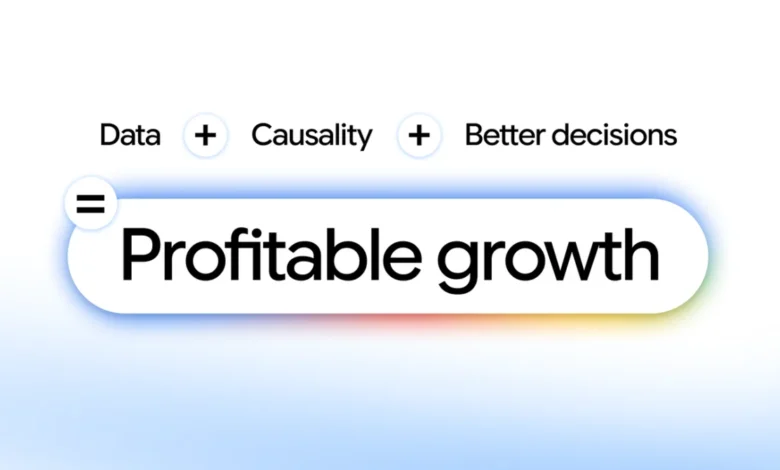
This strategic evolution, spearheaded by Nipoon Malhotra, VP of Ads Analytics, Insights, and Measurement, reflects the company’s ongoing response to a dual-pressured environment: the increasing demand for data privacy and the rising requirement for high-performance AI integration. By unifying data infrastructure and enhancing causal modeling, Google aims to provide advertisers with a roadmap to navigate the complexities of modern digital marketing.
The Foundation of AI-Driven Performance
At the core of this initiative is the recognition that AI models are only as effective as the data fueling them. For years, Google has encouraged the adoption of its tag management solutions, but the latest updates represent a deeper, more structural integration. By streamlining how first-party data is ingested and activated, the platform is attempting to eliminate the friction that historically led to data silos.
The integration of Google Ads Data Manager directly into Google Analytics (GA) and Display & Video 360 (DV360) is arguably the most significant operational change. Data silos have long been a primary impediment to cross-channel optimization. By centralizing the management of offline and app-based data, Google reports that advertisers are seeing an average 26% increase in incremental Return on Ad Spend (ROAS). This statistic serves as a cornerstone for the company’s argument that unified data is no longer a luxury, but a requirement for competitive performance.

A Chronology of Measurement Evolution
The trajectory of these announcements did not occur in a vacuum; it is the culmination of a multi-year effort to stabilize measurement in a post-third-party-cookie world.
- Early 2024: Google began signaling a shift toward "AI-essentials" for marketers, emphasizing the need for high-quality first-party signals.
- Mid-2024: The introduction of the Data Manager API, built on the IAB Tech Lab’s Event and Conversions API (ECAPI) standard, provided the plumbing necessary for a secure, cross-platform ecosystem.
- Late 2024/Early 2025: The current rollout of the Data Strength Uplift Metric represents the latest stage, moving from mere data collection to explicit performance quantification.
- Present Day: The full integration of these tools into a "proactive performance engine" model, supported by the general availability of Meridian GeoX for causal experimentation.
This timeline reflects a clear migration from simple tracking—which often relied on fragmented, often inaccurate user identifiers—to a model based on aggregate, privacy-safe signals that leverage machine learning to fill in the gaps.
Quantifying the Impact of Data Strength
One of the most common critiques of data-heavy advertising strategies is the "black box" nature of machine learning. To address this, Google has introduced a new "Data Strength Uplift Metric" within the Google Ads dashboard. This tool is designed to provide tangible proof of value by calculating exactly how many additional conversions are recovered due to an advertiser’s first-party data setup.
The implications for campaign management are substantial. Historically, advertisers struggled to justify the technical overhead of advanced data integrations (like the Google tag gateway). By providing an explicit uplift figure—such as the 14% conversion increase observed by those utilizing the gateway, and the 20% boost seen in Demand Gen campaigns—Google is providing a direct business case for the technical infrastructure it promotes. This data-backed transparency is likely intended to incentivize brands to prioritize technical maturity, thereby feeding more "clean" data back into Google’s AI algorithms.

Advancing Causal Modeling with Meridian
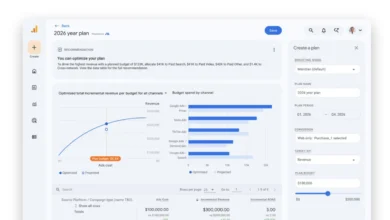
While first-party data helps with immediate optimization, long-term strategic decisions—such as budget allocation across television, social, and search—require a different toolset. Google’s commitment to Meridian, its open-source Marketing Mix Model (MMM), addresses this need.
The recent upgrades to Meridian represent a move toward "agentic" modeling. By integrating AI that can audit data quality, suggest corrections, and guide model construction in real time, Google is lowering the barrier to entry for complex econometrics. Previously, MMM was the domain of highly specialized data scientists; by automating the diagnostic phase, Google is making enterprise-grade causal analysis accessible to a wider range of marketing teams.
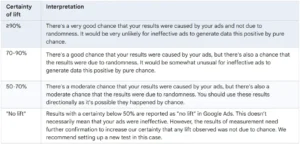
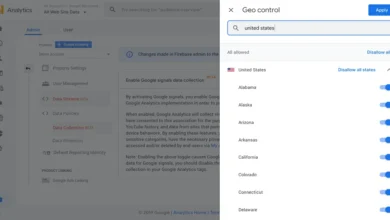
Furthermore, the general availability of Meridian GeoX marks a turning point in how advertisers prove incrementality. GeoX, which allows for causal geo-experiments, addresses the long-standing industry challenge of "incrementality vs. attribution." By running these experiments, brands can isolate the actual business impact of a specific campaign rather than relying solely on last-click or data-driven attribution models. The ability to incorporate these results directly into the Meridian model creates a hybrid approach—combining the speed of machine learning with the precision of causal experimentation.
Implications for the Digital Advertising Industry
The broader impact of these developments is the professionalization and centralization of the "measurement stack." By providing a comprehensive, end-to-end toolkit—from data collection via Data Manager to causal analysis via Meridian—Google is creating an ecosystem that encourages marketers to stay within its suite of tools.

For the industry, the implications are three-fold:
- Technical Debt as a Competitive Advantage: Advertisers who lack the technical capability to implement enhanced conversions or utilize the Data Manager API will likely find themselves at a performance disadvantage. Data quality is becoming the primary lever for competitive growth.
- The Rise of the "Marketing Scientist": As tools like Meridian become more accessible but also more sophisticated, the role of the marketing professional is shifting. The emphasis is moving away from manual campaign management toward the management of data pipelines, model calibration, and the interpretation of causal signals.
- Standardization of Measurement: By aligning with the IAB Tech Lab’s ECAPI standard, Google is attempting to standardize how data is shared across the digital advertising ecosystem. This could potentially reduce the reliance on proprietary, platform-specific measurement, creating a more cohesive view of the customer journey across the web.
Future-Proofing for Rethink 2026
As marketers prepare for the upcoming Rethink 2026 conference, the focus remains on the transition to these new methodologies. The narrative presented by the company is one of transition: moving from the uncertainty of the past few years toward a defined, AI-ready future.
The effectiveness of these tools will ultimately be tested in the coming quarters. While the reported uplift metrics and the promise of better decision-making are compelling, the true value will be measured by the ability of these tools to help businesses navigate volatile market conditions. If the promise holds true, and the integration of first-party signals with causal modeling does indeed provide a clearer view of return on investment, the industry may see a significant shift in budget allocation back toward channels that can be clearly measured through this new, data-dense framework.
For the present, the directive to marketers is clear: secure the foundation, embrace the automation of the measurement stack, and transition toward a model where every marketing dollar is validated by causal evidence. As artificial intelligence continues to dictate the delivery and optimization of ads, the ability to feed that engine with accurate, robust, and privacy-compliant data will define the leaders of the next decade of digital marketing.