Drive profitable growth with new data and measurement tools as Google unveils a suite of AI-driven advancements for modern marketing analytics.

In the rapidly evolving landscape of digital advertising, the transition from reactive reporting to proactive performance management has become a strategic imperative for global brands. As artificial intelligence continues to reshape consumer interaction, Google has announced a comprehensive series of updates to its measurement stack, designed to bridge the gap between raw data and actionable business outcomes. These enhancements, aimed at simplifying data infrastructure and increasing the precision of causal analysis, signal a significant shift in how marketers quantify the impact of their investments in an increasingly fragmented media environment.
The Evolution of Marketing Analytics
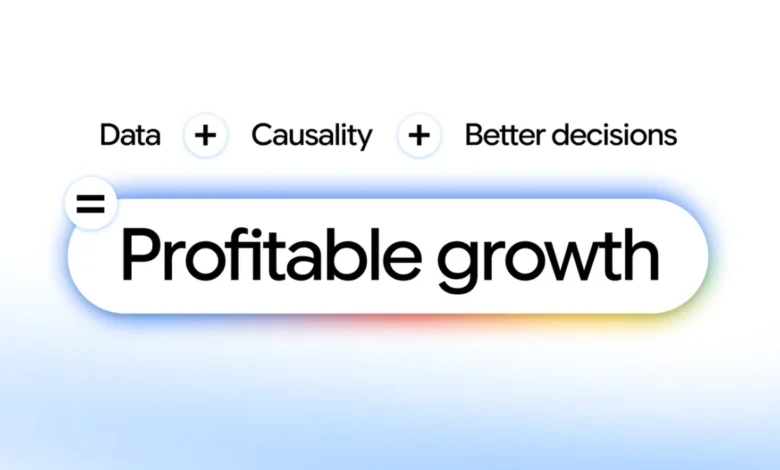
Earlier this year, Google outlined a vision for the future of marketing measurement, characterizing it not as a static "report card" of past performance, but as a dynamic, AI-powered engine for growth. The core of this strategy rests on three pillars: a robust first-party data foundation, the integration of causal modeling, and the ability to link upper-funnel brand investments to bottom-line sales.
The current announcement builds upon that foundation, introducing new tools to unify data silos and streamline the activation process. For marketing departments, this move addresses a long-standing pain point: the technical difficulty of synthesizing fragmented data from mobile apps, web properties, and offline conversion events. By consolidating these signals, Google aims to provide machine learning models with the high-quality data necessary to optimize bidding, targeting, and budget allocation in real time.
Unifying First-Party Signals for AI Optimization
Central to these updates is the integration of Data Manager into Google Analytics and Display & Video 360 (DV360). Historically, businesses struggled to maintain consistent data pipelines across disparate platforms. By centralizing these connections, Google is enabling a more seamless flow of information.

Industry data suggests the urgency of this transition. Advertisers who successfully connect their offline and app-based data streams to the Data Manager environment have reported, on average, a 26% increase in incremental Return on Ad Spend (ROAS). This performance lift is largely attributed to the improved accuracy of the AI models, which can better identify high-value customer segments when fed more complete, first-party inputs.
Furthermore, the expansion of "enhanced conversions" across GA and DV360 offers a more secure method for matching customer data. By leveraging privacy-safe signal matching, advertisers can improve ad relevance without compromising user trust. Early adopters of this technology have observed an average 11% increase in search conversions, illustrating the tangible benefits of a more precise measurement setup.
The Rise of the Data Manager API
To standardize these processes, Google has launched the Data Manager API, which aligns with the IAB Tech Lab’s Event and Conversions API (ECAPI) standard. This move toward universality is critical for enterprise advertisers who rely on complex, multi-platform ad tech ecosystems. The API not only facilitates secure data transmission but also introduces automated diagnostic tools. These features proactively alert marketers to data quality issues—such as tag misconfigurations or signal drop-offs—before those issues manifest as performance declines in active campaigns.
Additionally, Google is introducing a "Data Strength Uplift Metric" within the Google Ads dashboard. This feature serves as a transparency tool, allowing marketers to quantify the specific conversion gains attributable to their first-party data infrastructure. For brands utilizing the "Google tag gateway," data shows an average 14% conversion uplift, with some campaigns, such as Demand Gen, seeing improvements exceeding 20%.
Advancements in Meridian: The Future of MMM
While real-time signals optimize day-to-day operations, long-term strategic planning requires a different set of tools. Google’s open-source Marketing Mix Model (MMM), known as Meridian, has received significant upgrades designed to make econometrics more accessible and actionable.

The latest version of Meridian introduces "agentic" capabilities—a term reflecting the software’s ability to assist users in auditing data quality, resolving model errors, and providing real-time guidance during the model-building process. By automating the more tedious aspects of data cleansing and model selection, Google is effectively lowering the barrier to entry for sophisticated causal analysis. These back-end optimizations also mean that complex models, which once took hours to compute, can now be executed with significantly higher efficiency.
A key addition to the Meridian framework is the ability to incorporate specific brand-building signals, such as branded Google Query Volume. This allows marketers to measure the long-term, delayed effects of upper-funnel video and television advertising—a challenge that has historically plagued marketing attribution. By proving how brand awareness translates into future search intent and eventual sales, companies can make a more compelling case for sustained brand investment.
Global Availability of Meridian GeoX
Perhaps the most significant addition to the Meridian suite is the general availability of Meridian GeoX. Initially introduced as a beta, this open-source library allows marketers to run causal geo-experiments across virtually any advertising platform.
Geo-experimentation—the process of testing an ad strategy in specific geographic regions while maintaining control groups in others—is widely considered the gold standard for proving incrementality. By making these tools generally available, Google is empowering businesses to move beyond correlation and establish clear causal links between marketing spend and business results. Users can now incorporate these incrementality findings directly into their MMM models, resulting in a more holistic and accurate view of marketing efficacy.
Broader Implications and Strategic Outlook
The release of these tools occurs against a backdrop of increasing privacy regulation and the deprecation of third-party cookies. As the digital ecosystem moves toward a privacy-first model, the reliance on first-party data is no longer optional. Google’s strategy is clear: by providing the infrastructure to capture, clean, and analyze this data, they are positioning their ad suite as the essential operating system for the AI-driven marketing era.

Nipoon Malhotra, VP of Ads Analytics, Insights, and Measurement at Google, has emphasized that these updates are part of a larger, ongoing effort to transform measurement from a passive administrative task into a proactive engine for growth. The shift toward "agentic" modeling and standardized APIs suggests that the next phase of digital marketing will be defined by speed and technical precision.
However, the success of these tools depends on the willingness of organizations to invest in their internal data foundations. The "playbook" suggested by Google requires a high degree of technical maturity, necessitating close collaboration between marketing, IT, and data science teams.
Looking Toward Rethink 2026
As the industry prepares to digest these changes, the upcoming "Rethink 2026" event is expected to serve as the primary forum for demonstrating these capabilities in practice. For marketers, the core takeaway is the transition from "what happened" to "what will happen." By integrating predictive AI with rigorous causal proof, businesses can move toward a more profitable future where every marketing dollar is backed by empirical evidence.
In conclusion, the combination of improved signal management, the democratization of causal modeling through Meridian, and the universal application of the Data Manager API represents a significant leap forward for marketing analytics. As these technologies become standard, the competitive advantage will likely shift to those who can most effectively translate these sophisticated insights into rapid, data-driven decisions.