The technology sector has long chased the holy grail of the autonomous personal assistant—a digital concierge capable of managing the mundane friction of daily life, from booking restaurant reservations to querying pricing for complex services. For major technology conglomerates, the race to dominate this space has resulted in astronomical capital expenditures, massive server clusters, and continuous PR campaigns touting the near-human capabilities of proprietary artificial intelligence. Yet, behind the polished curtain of automated convenience, a familiar and labor-intensive reality often lurks.
Recent investigative reporting has revealed that Meta’s much-hyped "Muse" artificial intelligence agents, which are designed to execute outbound phone calls on behalf of users, are significantly augmented by human workers stationed in traditional call centers. This revelation indicates that the tech giant is resurrecting a playbook from a decade ago—a strategic approach that ultimately failed due to insurmountable scaling hurdles, prohibitive operational costs, and lackluster consumer demand.
The Mechanics of the Muse Rollout and the Human Element
The rollout of Meta’s Muse personal artificial intelligence agents was met with considerable fanfare within the tech community. Positioned as the next evolutionary step in conversational commerce and personal productivity, Muse is engineered to act as a surrogate for the user. Its primary function is to bridge the gap between digital intent and physical execution by placing phone calls to local businesses, service providers, and corporate entities to secure bookings, inquire about pricing structures, and resolve scheduling conflicts.
However, the autonomous nature of these interactions is not as absolute as marketing materials might suggest. According to internal insights leaked by Meta employees and corroborated by technology investigative outlets, the corporation has established a hybrid workflow that subtly integrates human intervention into the AI’s operational pipeline. When a Muse agent encounters complex scenarios, ambiguous conversational branches, or technical roadblocks during an outbound call, the system seamlessly transfers the interaction—or specific requests—to trained human agents.
This hybrid architecture is ostensibly deployed as a transitional mechanism. In the early stages of any artificial intelligence deployment, models are prone to hallucinations, conversational dead-ends, and structural misunderstandings. By inserting human operators into the loop, Meta can ensure a higher success rate for user requests while simultaneously capturing valuable training data to fine-tune the underlying large language models. Proponents of this methodology argue that it represents a pragmatic approach to bridging the gap between current technological limitations and ultimate autonomy.
Nevertheless, the practice blurs the line between artificial intelligence and human labor, reviving an ethical and operational debate that plagued the industry during the early waves of the consumer chatbot boom. Users deploying Muse to handle their personal errands may be entirely unaware that a human worker in a call center is finishing the sentence, dialing the phone, or negotiating the booking.
Historical Parallels: The Rise and Fall of Facebook M
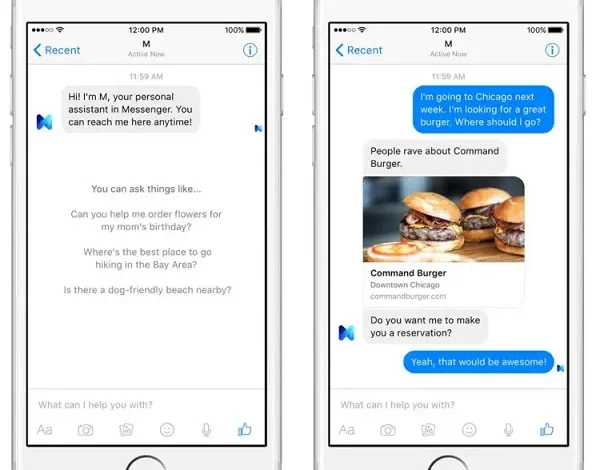
To understand the implications of Meta’s current strategy with Muse, one must examine the corporate history of the company’s previous attempts at human-in-the-loop artificial intelligence. In August 2015, then-Facebook introduced "M," a virtual assistant integrated directly into the Messenger platform. M was pitched to the public as a revolutionary, AI-powered concierge capable of answering complex queries, purchasing goods, arranging travel, and executing phone calls to businesses on behalf of the user.
Much like the contemporary Muse agents, Facebook M relied on a dual-engine architecture: artificial intelligence handled routine pattern recognition and basic requests, while a dedicated workforce of human contractors—often referred to internally as "trainers" or "M-trainers"—supervised the system, stepped in when the algorithm failed, and completed complex tasks manually.
At the time, the user experience was heralded as magical. A user could type a natural-language request into Messenger, and within minutes, the task would be completed. Behind the scenes, however, the human labor required to sustain this illusion was immense. Because the artificial intelligence of 2015 lacked the sophisticated semantic understanding of modern large language models, human operators were shouldering the vast majority of the cognitive load.
The consequences of this hybrid model quickly materialized as an engineering and economic nightmare. Because human labor does not scale with the exponential efficiency of software code, the cost of operating M scaled linearly with user adoption. Every new user meant more requests, which required more human workers, driving operational expenses sky-high.
By January 2018, just over two years after its initial rollout, Meta officially pulled the plug on the M project. Industry analysts and journalists who had tested the service noted that, despite its novelty, they rarely found practical use for it in daily life. When technology journalist Casey Newton reported on the shutdown for The Verge, he shared his personal experiences with Meta CEO Mark Zuckerberg, who conceded that Newton’s lukewarm adoption mirrored the broader feedback received from the consumer base. The experiment was quietly shelved, serving as a cautionary tale within Silicon Valley regarding the dangers of masking human labor behind an artificial intelligence brand.
The Evolution of the Hybrid Model and Scaling Realities
The decision by Meta to revert to a human-assisted model for Muse highlights a persistent architectural challenge in artificial intelligence development: the "last mile" problem of automation. While modern generative AI models possess unprecedented fluency, contextual awareness, and reasoning capabilities compared to their 2015 predecessors, they still struggle with real-world execution, unpredictable human behavior over telephone lines, and dynamic local business environments.
When an AI agent calls a small business to check pricing or availability, it must contend with hold music, interruptions, regional dialects, aggressive sales pitches, and sudden policy shifts by the callee. If the AI drops the call or misunderstands a complex pricing tier, the user experience is instantly degraded. By utilizing human call center staff as a safety net, Meta effectively mitigates brand risk and ensures high task completion rates during the critical launch phase.
Yet, this strategy introduces significant financial and structural contradictions. Scaling a consumer-facing AI tool across billions of active Meta ecosystem users requires infrastructure that can operate at marginal costs close to zero. Introducing human labor into the critical path of millions of daily queries reintroduces the exact labor bottlenecks that software is supposed to eliminate.
Furthermore, recent reporting from financial and technology news agencies indicates that Meta’s experimentation with human-in-the-loop architecture extends beyond voice agents. Reports outline that the company previously tested a "human concierge" approach designed to supplement standard Meta AI chat responses with real-time human staff. However, that specific concept was reportedly shelved due to acute corporate concerns over data privacy, regulatory compliance, and the inherent risks of exposing sensitive user data to third-party human contractors. The pivot from chat augmentation to outbound calling agents suggests that Meta is willing to take calculated risks with labor-intensive solutions where the immediate utility—such as booking an appointment—is more tangible to the consumer.
Broader Implications for the AI Industry
Meta’s reliance on human-augmented AI agents is not an isolated phenomenon within the broader technology landscape. Across the industry, companies racing to commercialize agentic AI—autonomous software capable of executing multi-step workflows across the internet and physical world—frequently lean on human oversight to handle edge cases. This phenomenon, often colloquially referred to in the tech industry as "Mechanical Turk" mechanics, underscores a wider truth about the current state of the artificial intelligence revolution: true end-to-end autonomy remains elusive for many complex consumer tasks.
For consumers and regulatory bodies, the practice raises important questions regarding transparency, informed consent, and labor practices. When individuals interact with a system marketed as an "AI agent," they inherently attribute the interaction to algorithms and software logic. Discovering that human workers are listening to audio streams, reading transcripts, or actively placing phone calls on their behalf introduces complex privacy considerations.
From an economic perspective, the strategy reveals the intense competitive pressure facing major platforms. With rivals like Google, OpenAI, Apple, and Microsoft aggressively deploying personal assistant features across operating systems and hardware devices, Meta cannot afford to be left behind in the agentic AI race. If deploying human-assisted systems is the only way to ensure that Muse functions reliably in the wild, executive leadership appears willing to absorb the operational inefficiencies and historical baggage of the approach.
Whether consumers will embrace a service that secretly relies on human call centers to bridge technological gaps remains to be seen. In 2018, the combination of high costs and low utility killed Facebook M. As Meta pushes forward with Muse, the company is betting that a decade of advancements in artificial intelligence, paired with modern human-augmentation techniques, will finally tilt the economic and functional scales in its favor—regardless of whether users realize who, or what, is truly answering the call.
Related posts: