The Definitive Guide to the Best Time to Post on LinkedIn in 2026: Data Reveals a Significant Shift in Professional Engagement

In a significant development for social media strategy, Buffer, a leading social media management platform, has released comprehensive data revealing the optimal times to post on LinkedIn in 2026. This analysis, drawn from an unprecedented study of over 4.8 million LinkedIn posts, indicates a noticeable shift in professional user behavior, with engagement increasingly migrating to later afternoon and evening hours. This trend mirrors patterns observed on other rapidly evolving platforms like Instagram and TikTok, suggesting a broader evolution in how professionals interact with social media outside of traditional working hours.
The research, spearheaded by Buffer’s data scientist Julian Winternheimer, has been meticulously compiled over approximately two years. The findings for 2026 present a departure from previous years, notably 2025, when peak engagement was almost exclusively concentrated within standard business hours, tapering off sharply after 5 p.m. This year’s data suggests that professionals are still actively seeking and engaging with industry-relevant content, but their consumption habits have evolved to include time slots beyond the traditional workday.
"By ‘we,’ I mean Julian Winternheimer, our resident data scientist," the article’s author notes, highlighting the rigorous analytical foundation of the report. "We’ve (OK, Julian has) been running these numbers for around two years now, and the 2026 LinkedIn findings surprised me a little. In 2025, peak engagement was almost entirely confined to working hours – things fell off pretty sharply once 5 p.m. hit. This year, we’re seeing those peak windows shift later into the day, which mirrors what’s been happening on Instagram and TikTok for a while now. Late afternoon and evening hours are now pulling some of the strongest LinkedIn engagement numbers we’ve seen. People are still showing up for professional content; they’re just doing it after they’ve closed their laptops for the day."
This evolution in user behavior has significant implications for businesses, marketers, and individual professionals seeking to maximize their reach and impact on the platform. Understanding these shifts is crucial for crafting effective content strategies and ensuring that valuable professional insights reach the intended audience at the opportune moment.
The Critical Role of Engagement in LinkedIn’s Algorithm
The data underscores the fundamental importance of engagement – reactions, comments, and reposts – as a key signal for LinkedIn’s algorithm. These interactions inform the platform’s decision-making process regarding content distribution, influencing which posts are deemed valuable and subsequently shown to a wider audience. As the analysis points out, "the more engagement your post receives, the more people will see your post." While this is a simplified explanation, it highlights a core principle: higher engagement generally correlates with increased visibility. Therefore, identifying and leveraging peak engagement windows is not merely about reaching more people at a specific time, but about optimizing content for algorithmic favor.
This symbiotic relationship between engagement and reach makes the analysis of posting times particularly pertinent. The research aims to pinpoint those specific time slots where content is most likely to resonate with the LinkedIn user base, thereby fostering greater interaction and expanding its organic reach.
Unveiling the Peak Engagement Windows: A Shift Towards Evenings
Buffer’s extensive analysis of 4.8 million LinkedIn posts has identified a clear pattern: the most opportune times for high engagement on LinkedIn in 2026 are generally between 3 p.m. and 8 p.m. on weekdays. Within this broader window, specific days and times emerge as particularly potent. Posts shared at 4 p.m. on Wednesdays and at 3 p.m. and 4 p.m. on Fridays consistently demonstrated the highest overall engagement rates.
The visual representation of this data, often depicted in heatmaps, clearly illustrates these high-engagement periods. The darkest blocks on these charts signify the most impactful posting times, while lighter areas indicate lower engagement. This year’s heatmap reveals a distinct shift towards late afternoon and evening hours, a noticeable contrast to the 2025 data which showed a more pronounced peak solely within traditional working hours.
This shift is not an isolated phenomenon. Similar trends have been observed on platforms like Instagram and TikTok, where users have increasingly gravitated towards consuming content during their leisure time, after professional obligations have concluded. The LinkedIn data suggests that professionals, while still prioritizing professional content, are now integrating its consumption into their post-work routines, whether during their commute, while unwinding at home, or during late-night browsing.
While midday hours are not rendered entirely ineffective – LinkedIn’s own marketing blog acknowledges that breaks such as lunch or mid-afternoon pauses can lead to increased platform activity – they are no longer the sole or dominant peak engagement periods. The data indicates that these midday slots still perform adequately but are surpassed by the later afternoon and evening windows. This represents a significant evolution in how professionals engage with the platform, moving beyond a strictly work-centric consumption model.
Daily Breakdown: Strategic Posting Times for Maximum Impact
To provide actionable insights, Buffer’s research further dissects the optimal posting times on a day-by-day basis, normalized to local time zones for universal applicability.
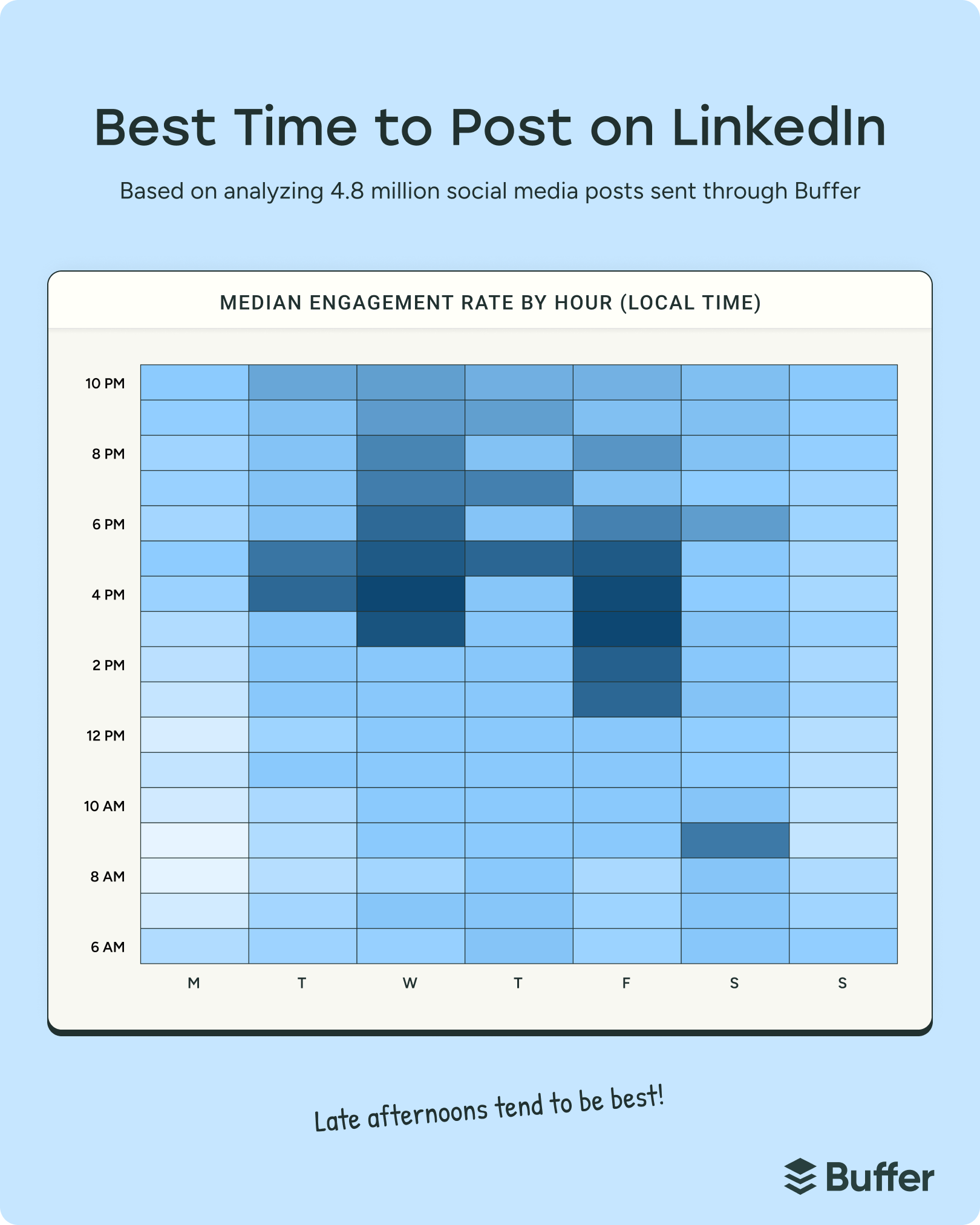
Monday: While generally a lower engagement day compared to midweek, Monday sees its peak engagement at 10 p.m. Professionals often catch up on content after their workday concludes. Other strong slots include 5 p.m. and 9 p.m. Marketers are advised to consider saving their highest-priority content for later in the week.
Tuesday: Similar to Monday, Tuesday exhibits slightly lower overall engagement. The prime posting time is 4 p.m., as users begin to wind down their professional activities. 5 p.m. and 10 p.m. also show promising engagement levels. Testing these times with a specific audience is recommended before establishing a regular Tuesday schedule.
Wednesday: This day emerges as a strong contender for optimal engagement. The best time to post on Wednesday is 4 p.m., which is highlighted as one of the highest-engagement slots of the entire week. Additional productive times include 3 p.m. and 5 p.m., creating a robust afternoon-to-early-evening window. Wednesday is identified as a prime day for sharing the most important content.
Thursday: With a peak at 5 p.m., Thursday also benefits from late afternoon and evening engagement. 7 p.m. and 9 p.m. are further strong times for reaching users who engage later in the evening.
Friday: Friday’s optimal posting time is 3 p.m., coinciding with the professional winding-down period at the end of the work week. 4 p.m. and 5 p.m. are also highly effective times. Friday is recognized as another strong day for overall engagement.
Saturday: Weekend engagement tends to be lower than weekdays. The best time to post on Saturday is 9 a.m. If weekend posting is a necessity, 6 p.m. and 10 p.m. also show some activity, though weekday posting is generally advised for higher impact.
Sunday: Sunday engagement is also comparatively low. The top posting time is 10 p.m., with 9 p.m. and 6 a.m. also showing some user activity. As with Saturday, prioritizing weekday content is recommended for maximizing reach.
It is crucial to note that these times are presented in the user’s local time zone, simplifying the application of this data for a global audience.
The Prime Day for LinkedIn Engagement
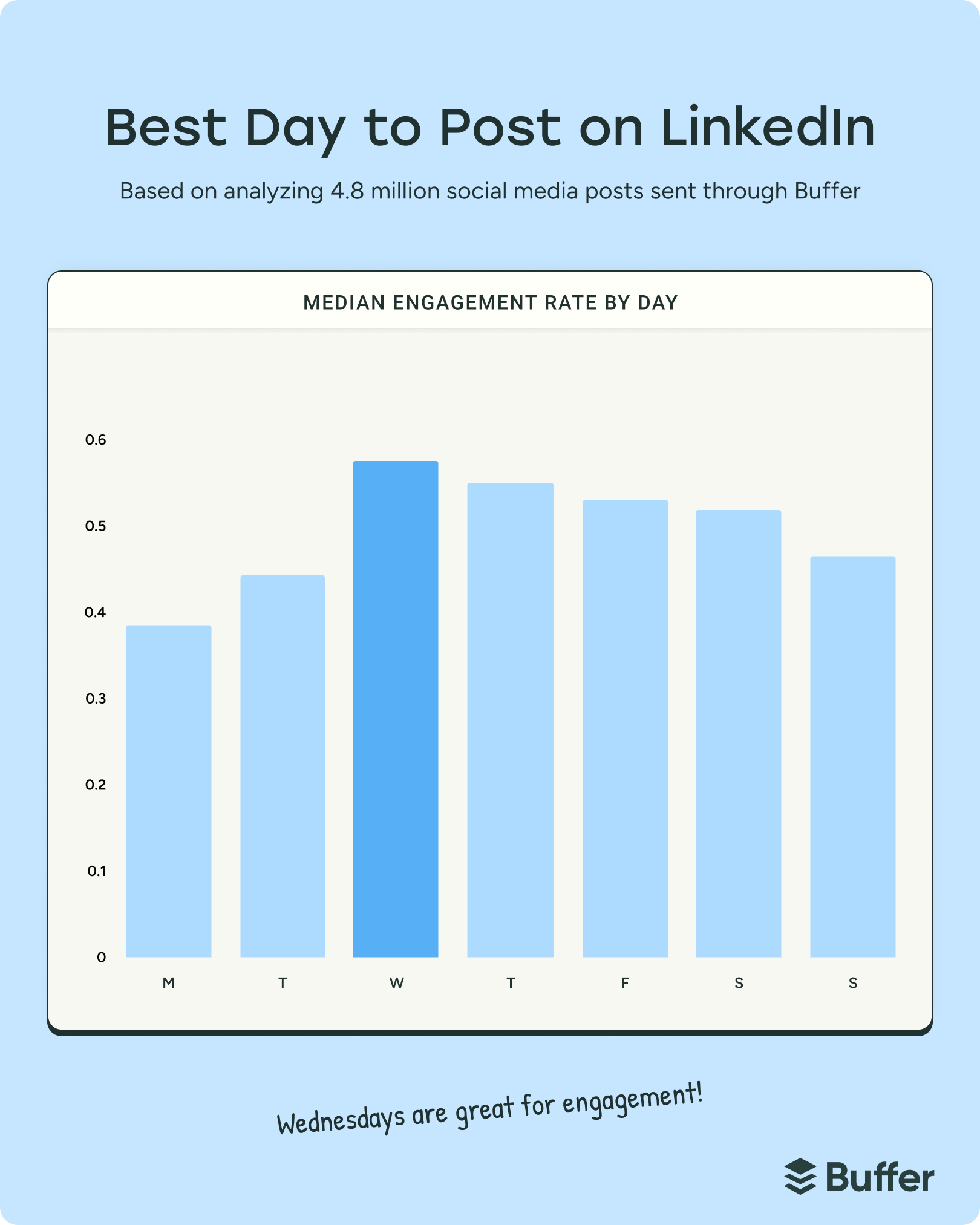
Beyond specific times, the analysis identifies Wednesday as the most impactful day of the week for posting on LinkedIn. This is closely followed by Thursday and then Friday. The reasoning behind this mid-to-late week preference is that professionals are typically fully immersed in their work week and actively seeking valuable content, but not yet disengaged in weekend mode.
Conversely, Monday and Tuesday consistently show the lowest engagement rates in the data. Monday, in particular, registers the weakest numbers of the week. This aligns with the "heads-down work" theory, suggesting that professionals may be more focused on core tasks at the beginning of the week, leaving less time for extensive social media browsing.
However, the report acknowledges that not all research aligns perfectly. LinkedIn’s own marketing blog has previously highlighted studies where Tuesday emerged as a highly active day. This serves as a reminder that while aggregate data provides a powerful baseline, individual audience behavior and industry-specific nuances can lead to variations. Therefore, testing early-week posts with one’s own followers remains a crucial component of any robust social media strategy.
Integrating Optimal Timing into Your Buffer Workflow
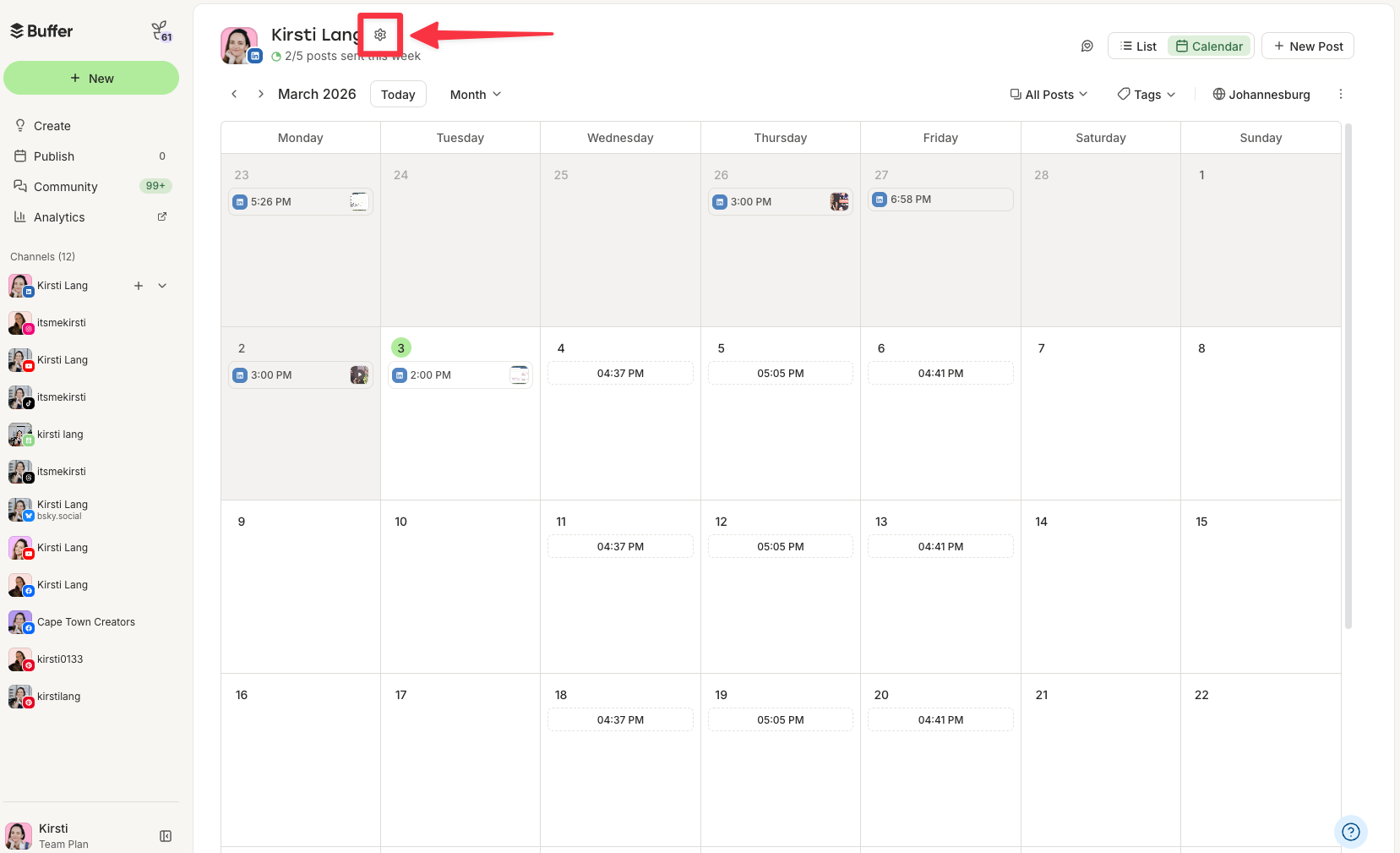
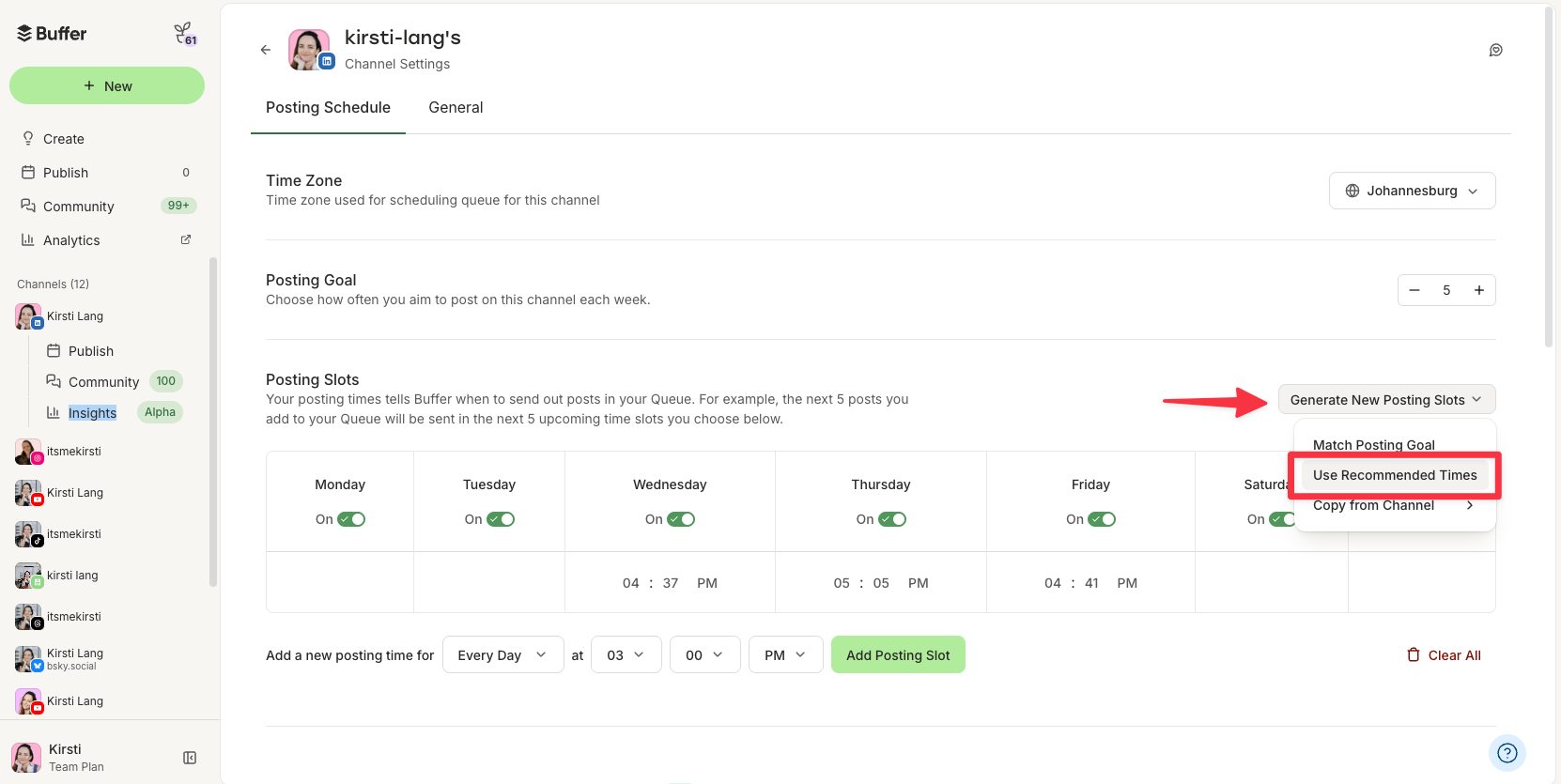
For users of Buffer, the platform offers automated solutions to leverage these insights. The "best times to post" feature can be automatically configured to align with the latest data-driven recommendations for LinkedIn and other supported social media channels. These optimal posting slots appear directly in the user’s Buffer queue and calendar, simplifying the scheduling process.
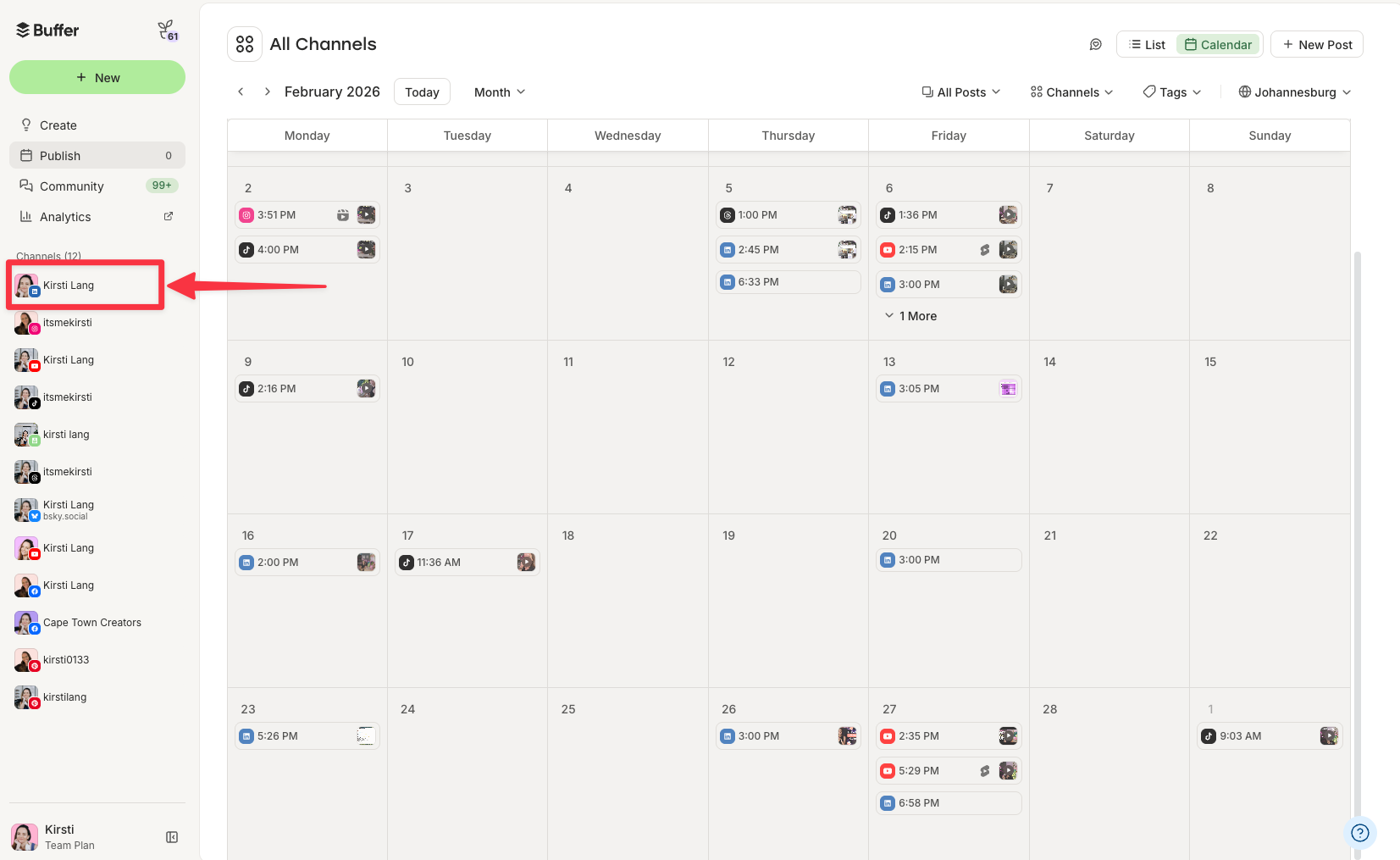
The setup process is described as taking "less than a minute." Once configured, the schedule automatically updates to reflect the most effective posting times for the week, based on Buffer’s ongoing analysis of millions of LinkedIn posts. When scheduling a new post, users can select these high-engagement slots directly or opt for the "Next available" slot, which defaults to an optimal time.
Buffer’s integrated approach not only simplifies scheduling but also provides a framework for continuous optimization. Users are encouraged to monitor their performance within Buffer Insights and make further adjustments based on their specific audience’s engagement patterns.
Beyond the Data: Finding Your Unique Optimal Posting Times
While Buffer’s data offers a strong starting point, the report emphasizes that these general timings are no substitute for understanding one’s own audience. To truly pinpoint the best time to post for a specific niche or brand, a deeper dive into individual analytics is essential.
LinkedIn’s native analytics provide data on top-performing posts over specified periods for both pages and profiles. While this can help identify patterns, it requires diligent tracking of posting times, often facilitated by social media management tools or content calendars. The platform’s built-in timestamping, which typically shows relative times like "3h" or "2d," lacks the granular detail needed for precise timing analysis after publication.
Therefore, the most effective strategy involves combining aggregate data with personal analytics. By leveraging tools like Buffer, which automate scheduling based on broad best practices, and then analyzing platform-specific insights, users can refine their approach to discover their unique optimal posting windows.
Frequently Asked Questions: Demystifying LinkedIn Posting Times
Does the time you post on LinkedIn actually matter?
Yes, Buffer’s data, derived from over 4.8 million posts, unequivocally demonstrates that timing significantly impacts engagement. Posts published during peak windows, particularly late afternoon and evening on weekdays, consistently outperform those posted at off-peak times. However, timing is not a standalone solution; it acts as a powerful enhancer to a well-crafted content strategy.
When is the worst time to post on LinkedIn?
The data suggests that early in the week (Monday and Tuesday) and morning hours generally exhibit lower engagement compared to midweek and later afternoon/evening slots. Weekends also tend to be quieter, though specific times like Saturday at 9 a.m. and late Sunday evening can still yield some results.
What is the "golden hour" for LinkedIn posts?
While the term "golden hour" is often used to describe the critical period immediately following publication where early engagement can build momentum, LinkedIn has not officially defined a specific timeframe. However, the platform has indicated that early engagement signals can influence content distribution, reinforcing the importance of posting when the audience is likely to be active.
Is LinkedIn engagement higher in the morning or evening?
Recent data indicates that evening hours now surpass mornings for LinkedIn engagement. Posts shared between 3 p.m. and 8 p.m. on weekdays consistently garner higher engagement than morning posts. This represents a notable shift from previous years when traditional work hours dominated engagement patterns.
What’s the best time to post on LinkedIn on weekends?
For weekend posting, Saturday at 9 a.m. is identified as the most effective time. Sunday late evening (around 10 p.m.) also shows some activity. However, given the significantly lower engagement compared to weekdays, it is generally advisable to reserve key content for midweek.
Do these posting times apply to my time zone?
Yes, the recommended times are normalized to local time zones, meaning 4 p.m. refers to 4 p.m. in the user’s specific location, eliminating the need for manual conversion.
How often should I post on LinkedIn?
Buffer’s analysis of over 2 million LinkedIn posts suggests a posting frequency of 2 to 5 times per week is a strong starting point for most creators and brands. This cadence significantly boosts impressions and engagement rates compared to posting just once a week. Posting 6 to 10 times per week, and especially 11+ times per week, yields even more substantial gains in reach and interaction, regardless of audience size.
What type of content performs best on LinkedIn?
Carousel (document) posts currently lead in engagement, generating significantly more interactions than text-only posts. Content that offers genuine insights, professional value, or a unique perspective also tends to perform well on the platform.
Conclusion: Adapting to Evolving Professional Engagement
The 2026 LinkedIn engagement data from Buffer signals a profound shift in how professionals interact with the platform. The migration of peak engagement to late afternoon and evening hours is a critical insight for anyone looking to optimize their LinkedIn presence. By understanding these evolving patterns and leveraging the tools and strategies outlined, individuals and organizations can ensure their content not only reaches their target audience but also resonates with them at the most opportune moments, thereby maximizing their impact in the dynamic professional networking landscape. The key lies in embracing data-driven insights while remaining agile and responsive to the specific behaviors of one’s own audience.
Related posts: