The Evolution of Marketing Analytics
For decades, the efficacy of digital marketing has been tethered to the "why"—the ability of a human analyst to connect a dip in conversion rates or a spike in traffic to specific market forces or campaign adjustments. Traditionally, this required deep technical expertise, mastery of SQL or complex dashboarding tools, and a significant time investment to synthesize data into actionable strategy.
The introduction of agentic AI experiences aims to collapse the time between data observation and strategic execution. By leveraging large language models (LLMs), Google is attempting to democratize data science for marketing teams, allowing professionals to "ask" their platforms for insights rather than hunting for them in spreadsheets. This transformation is not merely about automation; it is about providing a collaborative partner that can handle the heavy lifting of data interpretation.
Chronology of Google’s AI Integration
The path to this announcement has been iterative. Following the initial rollout of Ask Advisor, Google has spent the last year refining the agent’s ability to understand the nuances of advertising performance. The current update represents the next phase of this development:
- Early 2024: Initial deployment of conversational AI features within Google Ads, focusing on campaign optimization suggestions.
- Mid-2024: Integration of advanced data modeling within Google Analytics 4 (GA4) to improve predictive audience segments.
- August 2026: The official launch of "agentic" capabilities, which allow the system not just to report data, but to proactively summarize performance, generate custom visual reports, and suggest competitive benchmarks.
Key Technological Upgrades
The latest updates to the platform include three primary pillars designed to enhance user workflow.
1. Intelligent Homepage Overviews
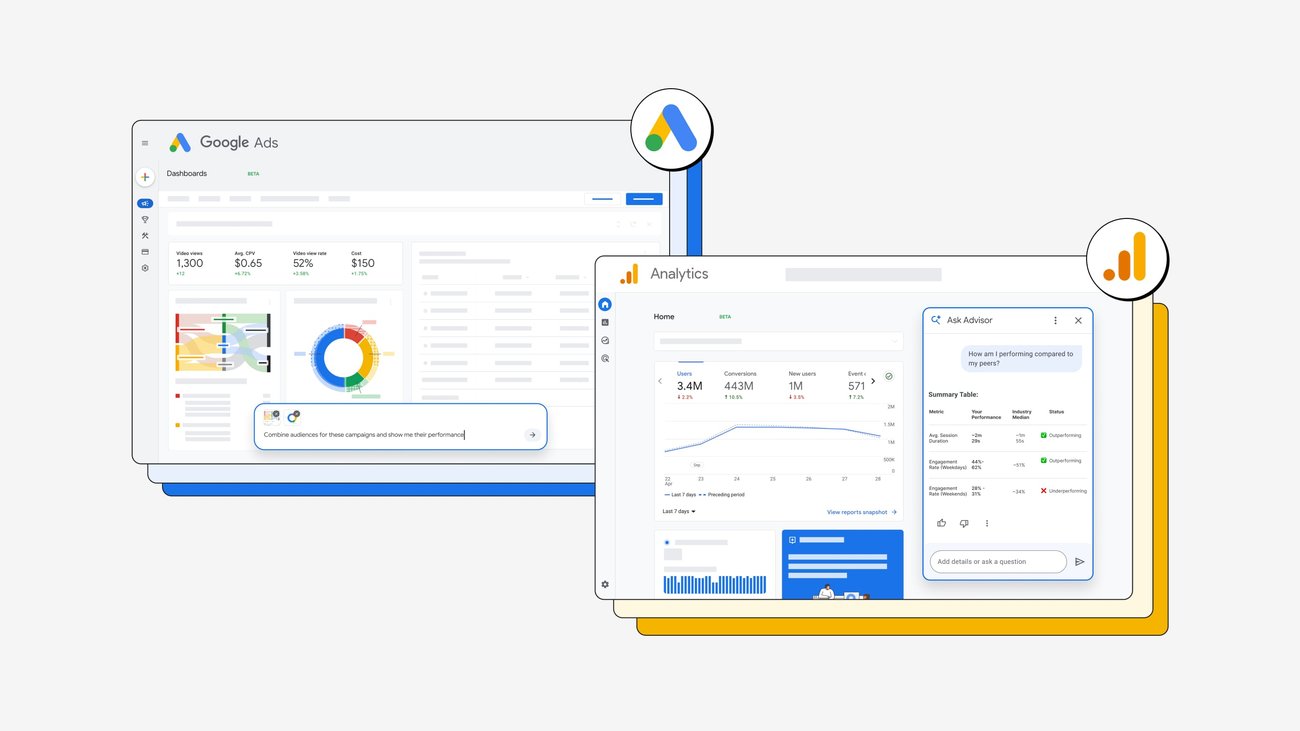
Google Analytics now features AI Overviews at the top of the homepage. These summaries automatically distill complex performance shifts into a narrative format. Whether a business experiences a sudden surge in organic traffic or a seasonal dip in conversion, the system provides a snapshot of the most critical changes since the user’s last login. This is coupled with a personalized notification system—allowing teams to receive these intelligence briefs via email or mobile at preferred cadences—ensuring that the business pulse is monitored even when the user is not actively logged into the dashboard.
2. Personalized Insight Cards
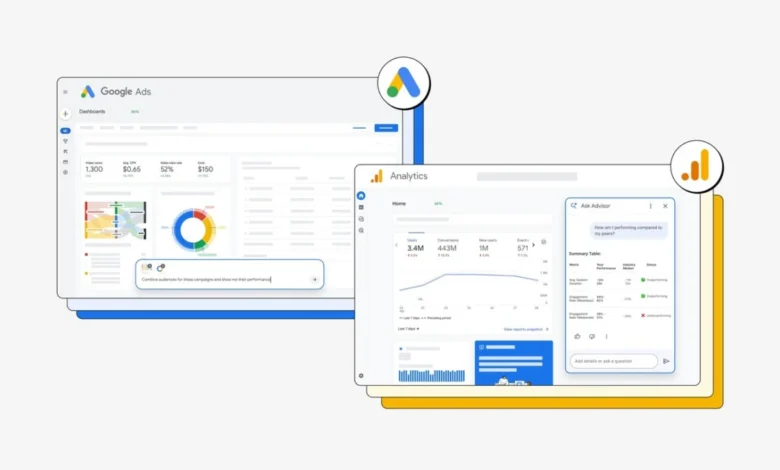
The Google Ads homepage has been completely overhauled to surface AI-powered insight cards tailored to specific business goals. These cards go beyond generic performance metrics; they identify trends such as impression share fluctuations against competitors and provide immediate, context-aware suggestions for budget or bid adjustments. Users can further refine these insights using a natural language prompt box, enabling a granular investigation into specific campaign performance metrics without leaving the main dashboard.
3. Generative Visual Reporting
One of the most significant barriers to data-driven decision-making is the creation of reporting materials. With the new "Dashboards" functionality, Google is introducing a generative approach to reporting. By entering a text prompt, users can request specific visual representations of their data. The AI does not simply pull a graph; it generates a comprehensive summary explaining the underlying drivers of the performance shown. This capability is currently launching in Google Ads, with a rollout for Google Analytics expected in the coming months.
Benchmarking and Strategic Context
A critical, often overlooked aspect of marketing is the ability to contextualize internal performance against the broader industry. The new benchmarking feature in Google Analytics allows marketers to compare their campaign metrics against anonymized, aggregated averages of similar businesses within their sector.
This move addresses the "silo effect" of digital marketing, where a 5% increase in conversion rate might look positive in isolation but could actually indicate underperformance if the industry average has risen by 15%. By providing this external context, Google is enabling more rigorous strategic planning.
Industry Implications and Expert Perspectives
The shift toward agentic AI is already seeing early adoption. Kevin Marshall, Paid Media Director at Gardyn, noted that the speed of the current iteration of Ask Advisor has fundamentally changed his workflow. "Ask Advisor has become my go-to for a directional check on paid media performance," Marshall stated. "That speed matters because it gives me time to dig deeper and make shifts that improve performance sooner."
From an analytical standpoint, this transition signifies a move toward "high-level" management. As AI handles the diagnostic heavy lifting—identifying what happened and why—the role of the digital marketer is evolving into that of a strategic overseer. Instead of spending 80% of their time building reports and 20% optimizing strategy, the ratio is expected to flip, allowing for more creative and high-impact decision-making.
Data Privacy and Security
Google has emphasized that these new tools are built upon its existing robust privacy infrastructure. As these AI agents interact with proprietary business data, the company maintains that all insights are generated within a secure, sandboxed environment. The use of anonymized data for benchmarking ensures that sensitive information is never shared between competitors, preserving the integrity of the market landscape.
Broader Economic Impact
The integration of these tools comes at a time when businesses are under increasing pressure to demonstrate the return on investment (ROI) for every dollar spent on advertising. By lowering the barrier to entry for complex data analysis, these tools could theoretically increase the efficiency of small-to-medium-sized enterprises (SMEs) that lack large data science teams.
Furthermore, the "agentic" nature of these tools—the ability to move from an insight directly to an action—represents a fundamental change in software design. As these tools become more autonomous, we may see a reduction in the "knowledge gap" that often prevents companies from scaling their digital marketing efforts.
Looking Ahead: The Future of Marketing Platforms
The inclusion of Gemini, Google’s most advanced AI model, as the engine for these tools, suggests that the capabilities will only continue to accelerate. Future iterations will likely include more proactive campaign management, where the system might suggest, and with approval, implement, complex bidding strategies or creative testing frameworks based on real-time market shifts.
For the modern marketer, the message is clear: the future is not about doing more manual work, but about asking better questions. As these tools become standard across the industry, the competitive advantage will lie with those who can effectively prompt these AI systems and interpret the strategic implications of their responses.
The tools are currently available for all users via the Google Ads and Google Analytics platforms. As the digital landscape continues to fragment, the reliance on such integrated, AI-assisted hubs will likely become not just a competitive advantage, but a baseline requirement for sustainable business growth in the digital age. By bridging the gap between raw data and actionable wisdom, Google is setting a new standard for how enterprises navigate the complexities of the modern consumer journey.
Related posts: