Gemini 3.5 Pro Delayed Over Coding, Bloomberg Reports, Highlighting Internal Challenges at Google

Google’s highly anticipated Gemini 3.5 Pro artificial intelligence model has been significantly delayed, missing its projected June rollout, with Bloomberg reporting that internal coding deficiencies are a primary factor. The setback has reportedly fueled frustration within the tech giant, as Google grapples with concerns about falling behind rivals like Anthropic and OpenAI in the fiercely competitive AI landscape. Initially slated for release in June following an announcement at Google I/O in May, the flagship model’s absence from the public domain signals deeper developmental hurdles for the company’s ambitious AI strategy.
Chronology of a Missed Deadline
The timeline for Gemini 3.5 Pro’s release began with considerable optimism. At its annual I/O developer conference on May 14, 2024, Google unveiled the Gemini 3.5 series, immediately releasing the more efficient Gemini 3.5 Flash model. During the announcement, Google’s blog post, dated May 19, explicitly stated that Gemini 3.5 Pro was already in internal use and that the company "looked forward to rolling it out next month." This firm commitment set expectations for a public launch in June.
However, as June concluded, the Gemini API release notes, the official changelog for developers, showed no entry for Gemini 3.5 Pro. The anticipated model simply did not materialize. The silence from Google regarding a revised launch date left a void, which Bloomberg filled with its report on July 16, detailing the reasons behind the unforeseen delay. The report, citing individuals familiar with the matter, confirmed that the model was "months behind schedule," highlighting a significant deviation from Google’s initial public projections. This chronology underscores a pattern of optimistic internal targets clashing with the complex realities of advanced AI development.
The Coding Conundrum: A Core Technical Hurdle
According to the Bloomberg report by Julia Love and Davey Alba, the delay is directly linked to the model’s coding capabilities. Sources indicated that Google had updated the training data for Gemini 3.5 Pro late in June specifically to enhance its coding skills. However, the subsequent evaluation of these improvements yielded "disappointing" results. This technical shortfall in a critical area has necessitated further development and refinement, pushing back the release date.
The importance of robust coding capabilities in large language models (LLMs) cannot be overstated. Modern AI applications increasingly rely on models that can not only understand and generate natural language but also comprehend, generate, debug, and even refactor programming code. This "agentic coding" capability, as it’s often referred to, empowers developers to build more sophisticated applications, automate complex tasks, and significantly accelerate software development cycles. For an AI model aiming to be a "pro" version and a flagship offering, excelling in coding is paramount for enterprise adoption and developer engagement.
This isn’t the first time Google has acknowledged challenges in this domain. In May, Sundar Pichai, Google’s CEO, publicly admitted that the company was "a bit behind" the frontier in agentic coding. He tied this lag to Google’s lack of a direct developer-facing coding product that generates the vast amounts of proprietary data crucial for training superior coding AI, a competitive advantage enjoyed by some rivals. The recent Bloomberg report suggests that this acknowledged gap has now directly impacted the rollout of a core Gemini model, transforming a strategic concern into a tangible product delay.
Internal Dissatisfaction and the Competitive Landscape
The delay of Gemini 3.5 Pro has reportedly led to significant internal frustration within Google. Bloomberg’s sources, including ten current and former employees who wished to remain anonymous to discuss internal concerns freely, described a prevailing sentiment that Google is losing ground to its primary competitors. This perception stems from the fact that while Google’s flagship model faces delays, rivals like Anthropic and OpenAI have continued to ship advanced models that are perceived to outperform Gemini in various benchmarks and practical applications.
OpenAI, with its rapid iteration cycle, released GPT-4o shortly before Google I/O, showcasing impressive multimodal capabilities, faster response times, and enhanced performance across different modalities including text, audio, and vision. This model quickly became a benchmark for speed and versatility, setting a high bar for Google’s offerings.
Anthropic, another major player, has also made significant strides with its Claude 3 family of models (Opus, Sonnet, and Haiku). Claude 3 Opus, in particular, has garnered praise for its strong performance in reasoning, coding, and mathematical tasks, often surpassing competitors in specific enterprise-focused applications and demonstrating a strong commitment to AI safety and ethics.
The continuous advancements from these competitors put immense pressure on Google. In a sector where innovation moves at an unprecedented pace, even short delays can translate into lost market share, diminished developer mindshare, and a perception of lagging technological prowess. This competitive intensity is further amplified by the significant investments pouring into AI, with companies vying for leadership in a market projected to reach trillions of dollars. Google’s ability to attract and retain top AI talent is also implicitly linked to its perceived leadership and progress in developing cutting-edge models. Bloomberg also previously reported on the departure of two senior AI researchers from Google’s AI organization to OpenAI and Anthropic, citing concerns within DeepMind about Google’s offerings for businesses building AI coding tools, further underscoring the internal pressures.
Google’s Official Stance and Market Implications
In response to the Bloomberg report, a Google spokesperson confirmed that the company is "currently testing 3.5 Pro" with partners. This statement, while confirming the model’s existence and ongoing development, does not provide a new public release date. It indicates that the model is still in a closed beta phase, far from a general public rollout. The spokesperson also mentioned that an "upgraded Flash model" is being tested, suggesting that Google is working on improvements across its 3.5 series.
The delay of Gemini 3.5 Pro carries several significant implications, though not all are immediately apparent to the average user:
- Impact on Developers: For developers building applications on the Gemini API, the delay means a longer wait for the flagship model’s enhanced capabilities, particularly in coding. This could force them to reconsider their roadmaps, potentially leading some to explore alternative AI platforms from competitors that offer more robust or readily available coding-centric models.
- Strategic Implications for Google: The delay affects Google’s overall AI model timeline and its strategic positioning in the enterprise AI market. A superior "Pro" model is crucial for attracting large business clients who require advanced capabilities for complex tasks, including code generation, debugging, and software development automation. Losing ground here could impact Google Cloud’s competitive edge in AI services.
- Perception of Innovation: Consistent delays can erode market confidence and damage Google’s reputation as a leader in AI innovation. While Google has a long and storied history in AI research, the current competitive environment demands rapid, reliable deployment of cutting-edge technology.
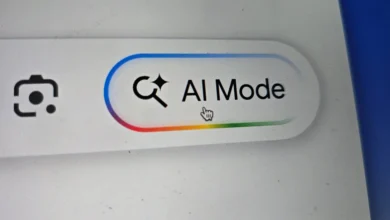
- No Immediate Impact on Search: It is crucial to clarify that this delay does not immediately affect Google Search. At I/O, Google made Gemini 3.5 Flash the default model for "AI Mode" globally. Google’s materials did not indicate that 3.5 Pro would replace Flash as the default for Search. Therefore, the answers generated by Google Search today remain unaffected by the 3.5 Pro delay. The primary impact is on the model’s availability for developers and broader AI applications beyond direct search integration.
Background Context: Google’s AI Journey and Challenges
Google has been at the forefront of AI research for decades, with foundational contributions like the Transformer architecture. However, its journey to bring these advancements to market has seen its share of ups and downs. The initial rollout of Bard, Google’s conversational AI, faced criticism for factual inaccuracies, leading to a rebranding and integration into the broader Gemini ecosystem. The subsequent launch of Gemini itself was met with mixed reviews, particularly concerning its image generation capabilities, which required a temporary pause and significant adjustments. These incidents highlight the immense complexity of developing and deploying advanced AI models at scale, especially under intense public scrutiny and competitive pressure.
The development of LLMs is an iterative process involving vast datasets, sophisticated algorithms, and continuous refinement. Ensuring accuracy, safety, and performance, especially in specialized domains like coding, requires meticulous testing and validation. The reported "disappointing" results from updated training data underscore that merely feeding more data is not always a magic bullet; the quality, relevance, and architectural integration of that data are equally critical.
Looking Ahead: The Path to Gemini 3.5 Pro
As of the current reports, Google has not provided a new public rollout date for Gemini 3.5 Pro. The statement about "testing with partners" suggests that the model is undergoing rigorous internal and external evaluation to address the identified coding deficiencies and other potential issues before a broader release. This testing phase is critical to ensure that when Gemini 3.5 Pro finally launches, it meets the high performance standards expected of a flagship model and effectively competes with offerings from OpenAI and Anthropic.
Until Google makes an official announcement, Gemini 3.5 Flash remains the sole publicly available model in the 3.5 series. The industry will be closely watching for Google’s next move, eager to see how the tech giant navigates these challenges and reaffirms its position in the rapidly evolving artificial intelligence landscape. The success of Gemini 3.5 Pro, whenever it arrives, will be a crucial indicator of Google’s ability to translate its immense research capabilities into market-leading products in the generative AI era.