Google Enhances Analytics 360 with Meridian Integration and Gemini-Powered Qualified Future Conversions to Advance Marketing Measurement

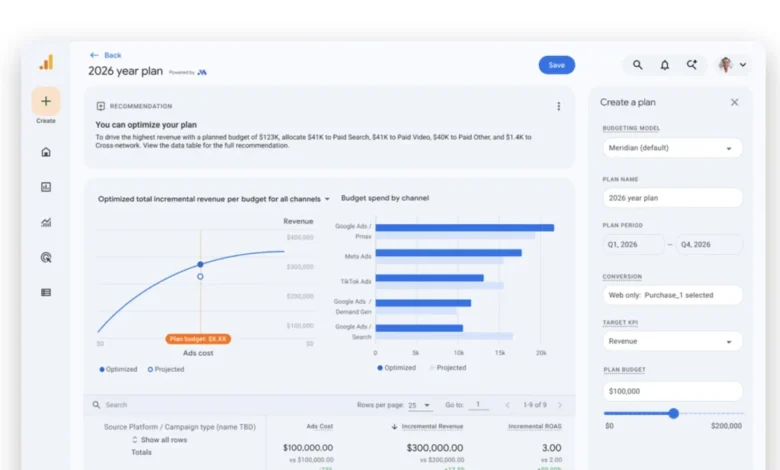
The landscape of digital marketing measurement is undergoing a fundamental transformation as Google announces the integration of its open-source Marketing Mix Model, Meridian, into the Google Analytics 360 ecosystem. This strategic move, coupled with the introduction of Gemini-powered Qualified Future Conversions within Google Ads, represents a significant leap toward unified measurement in an era where data privacy and artificial intelligence are redefining how brands evaluate success. By bridging the gap between high-level econometric modeling and granular platform insights, Google aims to provide enterprise marketers with a more holistic view of their return on investment, particularly as traditional tracking methods face increasing technological and regulatory headwinds.
The Evolution of Marketing Measurement in the Privacy-First Era
For decades, digital marketers relied heavily on multi-touch attribution (MTA) and third-party cookies to track user journeys across the web. However, the deprecation of cookies, coupled with the rise of privacy regulations such as GDPR and CCPA, has created significant "blind spots" in the customer journey. As individual-level tracking becomes less reliable, the industry has seen a resurgence of interest in Marketing Mix Modeling (MMM)—a top-down, aggregate-level statistical analysis used to estimate the impact of various marketing tactics on sales.
Google’s decision to integrate Meridian into Google Analytics 360 is a direct response to this shift. Meridian was originally introduced as an open-source MMM framework designed to help data scientists and marketers build high-quality models that are both transparent and customizable. By moving this tool into the Google Analytics 360 interface, Google is democratizing access to sophisticated econometric modeling, allowing organizations to move beyond siloed data and toward a "unified measurement" approach.
This integration is not merely a technical update but a strategic pivot. In the current economic climate, where marketing budgets are under intense scrutiny, the ability to turn raw data into actionable decisions is a competitive necessity. Google’s framework emphasizes that in the AI era, data serves as the primary fuel for growth, but the true value lies in the tools that leverage that data to provide a complete picture of performance.
Meridian: A Deep Dive into Open-Source Modeling
Meridian distinguishes itself from proprietary "black box" measurement tools by being open-source. This transparency is critical for large enterprises that require the ability to audit their models and understand the underlying assumptions driving their budget allocations. Meridian utilizes a Bayesian approach to modeling, which allows marketers to incorporate prior knowledge—such as historical sales data or industry benchmarks—into their analysis.
The integration into Google Analytics 360 will allow users to streamline the data ingestion process. One of the primary challenges of MMM has historically been the "data gravity" problem: the difficulty of gathering and cleaning data from disparate sources like television, radio, social media, and search. By housing Meridian within the Analytics 360 environment, Google simplifies the pipeline, enabling a more seamless flow of Google-native data into the model while still allowing for the inclusion of non-Google media spend.
Furthermore, the model is built to handle "calibration." This is a process where the results of experiments (such as lift studies) are used to inform and refine the MMM. By combining the strengths of top-down modeling with bottom-up experimental data, Meridian provides a more accurate reflection of "incrementality"—the true measure of how much additional revenue a specific marketing activity generated that would not have occurred otherwise.
Leveraging Gemini for Qualified Future Conversions
While Meridian focuses on the aggregate, Google is also enhancing its tactical measurement capabilities within Google Ads through Qualified Future Conversions (QFCs). Powered by Gemini, Google’s most capable AI model, QFCs are designed to solve one of the oldest problems in marketing: the "upper-funnel" attribution gap.
Traditionally, it has been difficult for marketers to justify spending on brand awareness or "top-of-funnel" campaigns because these activities do not always lead to an immediate click or sale. However, these activities often plant the seeds for future conversions. QFCs use AI to identify signals—such as an increase in brand-specific searches—that correlate with future sales. By linking current upper-funnel spend to predicted future revenue, Gemini helps marketers uncover "missed revenue" that might have been ignored by traditional last-click attribution models.
The implications of QFCs are profound. For example, if a consumer views a high-impact video ad on YouTube and, three days later, searches for the brand name, Gemini can identify this sequence as a qualified path toward a conversion. By providing these timely insights, Google Ads allows marketers to invest more confidently in demand-creation activities, knowing that the AI can track the downstream impact of those investments.
A Chronology of Google’s Measurement Roadmap
The integration of Meridian into Analytics 360 is the latest milestone in a multi-year roadmap focused on privacy-centric measurement. To understand the significance of this update, it is essential to look at the timeline of Google’s measurement evolution:
- The Launch of GA4 (2020): Google introduced Google Analytics 4 as the successor to Universal Analytics, moving from a session-based model to an event-based model designed for a cookieless future.
- The Introduction of Meridian (Early 2024): Google released Meridian as an open-source project, signaling its commitment to MMM as a cornerstone of modern measurement.
- Gemini Integration (Mid-2024): Google began infusing Gemini AI across its advertising suite to improve creative generation and predictive analytics.
- The Integration Announcement (Present): The formal announcement that Meridian will be natively accessible within Google Analytics 360, with future plans to integrate QFC predictive signals directly into the MMM framework.
This timeline demonstrates a clear trajectory: Google is moving away from being a mere provider of tracking scripts and toward becoming a comprehensive modeling and intelligence platform.
Supporting Data: The Growing Need for Unified Measurement
The shift toward tools like Meridian and QFCs is supported by broader industry trends. According to recent market research, the global marketing analytics market is expected to grow at a CAGR of over 14% through 2030. This growth is driven by the increasing complexity of the customer journey, which now spans an average of six to eight touchpoints before a purchase is made.
Furthermore, internal Google data suggests that advertisers who use a combination of MMM and attribution modeling see, on average, a 15% to 20% improvement in media efficiency. The challenge has always been the complexity of execution. By automating parts of the MMM process within Analytics 360, Google is lowering the barrier to entry for firms that previously could not afford the high cost of third-party econometric consulting.
In the realm of brand search, data indicates that "branded" search queries have a significantly higher conversion rate than generic queries. However, those branded searches are often the result of "unmeasured" brand marketing. By using Gemini to link these searches back to initial ad exposure, Google is providing the data-driven evidence that CMOs need to defend their brand-building budgets.
Industry Reactions and Strategic Analysis
While Google’s official stance emphasizes growth and efficiency, industry analysts view these updates as a strategic move to maintain dominance in the ad tech space. By providing the tools that prove the value of Google Ads, Google effectively creates a "virtuous cycle" for its own ecosystem. If a marketer can see, via Meridian, that YouTube spend is driving high ROI, they are more likely to increase that spend.
Data scientists have generally welcomed the open-source nature of Meridian. "The biggest issue with MMM in the past was the ‘trust gap,’" says one independent analytics consultant. "When a platform tells you that its own ads are working, there is a natural skepticism. By making Meridian open-source and Bayesian-based, Google is giving us the math. We can see the code, we can adjust the priors, and we can validate the results. That builds trust."
However, some privacy advocates remain cautious. While MMM is inherently more private than individual tracking, the use of AI to predict "future conversions" still relies on vast amounts of aggregate user data. Google has countered these concerns by emphasizing that these updates are built on a "strong foundation" of privacy-safe data collection, focusing on patterns and signals rather than individual identities.
The Broader Impact: Reshaping the Marketing Department
The integration of Meridian and QFCs will likely lead to a shift in how marketing departments are structured. We are seeing the "rise of the marketing technologist"—a role that sits at the intersection of data science, finance, and creative strategy.
For the first time, the "Performance Marketer" (focused on immediate ROAS) and the "Brand Marketer" (focused on long-term equity) have a shared language. Meridian provides the long-term view, while QFCs provide the short-term predictive signals. When these two are integrated, as Google intends to do in the near future, the result will be a unified dashboard that tracks the health of the entire sales funnel in real-time.
This unification is particularly important for the Chief Financial Officer (CFO). Historically, marketing has been viewed as a cost center because its results were often difficult to quantify in traditional financial terms. With the transparency of Meridian and the predictive power of Gemini, CMOs can present their marketing spend as a capital investment with a measurable and predictable return.
Conclusion: Investing Confidently in What’s Next
As Google rolls out these updates to Google Analytics 360 and Google Ads, the message to the market is clear: the era of fragmented, "gut-feeling" measurement is over. In the AI era, the winners will be those who can harness their data fuel and process it through sophisticated, transparent models.
The integration of Meridian into Analytics 360, supported by the predictive insights of Gemini-powered Qualified Future Conversions, provides a roadmap for the future of marketing. It is a future where measurement is not just a backward-looking report, but a forward-looking decision engine. By understanding what is truly working today and predicting where the next conversion will come from, brands can move beyond mere survival and invest more confidently in the next phase of their growth.