The Intelligence Revolution and the Mandatory Transformation of Marketing Agency Operating Models

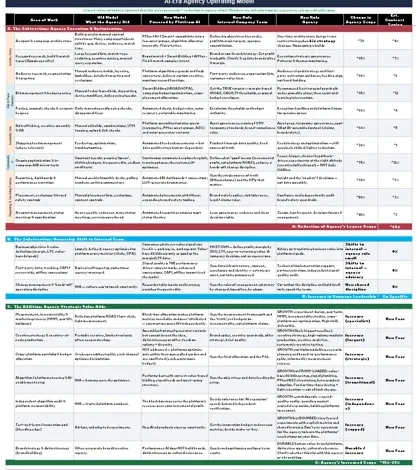
The global marketing landscape is currently undergoing a structural upheaval as the "intelligence and automation revolution" shifts from a theoretical possibility to an operational necessity. This transformation is not limited to a single niche but is impacting every facet of the agency ecosystem, including media, creative, performance, brand, measurement, CRM, and lifecycle marketing. Industry analysts and marketing leaders are observing a definitive "we are not in Kansas anymore" realization, driven by the rapid maturation of algorithmic platforms and the emergence of agentic AI. As these technologies assume the burden of manual execution, the traditional relationship between brands and their agencies is being fundamentally rewritten, moving away from labor-based billing toward a model centered on high-level judgment and incremental business outcomes.
The Economic Realignment: Savings and Strategic Reinvestment
The integration of artificial intelligence into marketing workflows is projected to result in a dramatic reduction in the cost of traditional agency services. By July 2026, experts anticipate that the reduction in manual work currently listed in standard Agency Statements of Work (SOW) will translate into a 25% to 75% savings in agency fees across all major disciplines. This "cut to grow" philosophy suggests that while the cost of execution is plummeting, the value of strategic oversight is rising.
Specifically, performance marketing contracts—which have historically been heavy on manual bidding and keyword management—are expected to shrink by as much as 75% to 80% in terms of labor-related fees. Conversely, brand marketing is seeing an increase in strategic importance. While the execution components of brand contracts may shrink by 25% to 40% due to automation, the overall budgets for these initiatives are likely to increase. This is because brands are shifting resources toward high-level creative concepts and complex consumer behavior analysis, areas where human intuition and cultural context remain paramount.
Industry data suggests that this change will occur on a sliding scale. Many organizations are already achieving 25% to 35% savings through the elimination of redundant manual tasks. As organizations move into 2025 and 2026, these savings are expected to be reinvested into "new work"—strategic areas that are currently underpowered or entirely absent from existing contracts—which will likely command a 15% to 25% increase in fees for specialized talent.
The Obsolescence of the "Percent of Media Spend" Model
A critical barrier to this transformation is the legacy compensation model based on a percentage of media spend. For decades, this model served as the industry standard, but in an AI-driven environment, it has become counterproductive. When an agency is paid based on the volume of media purchased, there is a built-in financial disincentive to utilize AI tools that optimize spend or reduce the need for high-frequency manual intervention.
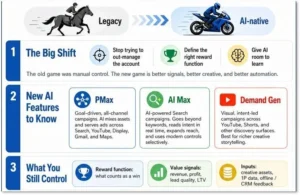
The legacy SOW rewards "optimization theater"—the act of manually tweaking campaigns to prove value—even when such actions may interfere with the learning cycles of machine learning algorithms. Modern platforms such as Google’s Performance Max (PMax) and Meta’s Advantage+ (A+) require periods of "stable learning" where human interference can actually degrade performance. Consequently, the industry is moving toward a tripartite contract structure:
- A Lean Base Retainer (40%–50%): Dedicated to governance, steering, and data engineering. This ensures the technical infrastructure is sound and the AI is operating within brand guardrails.
- Project Fees (30%–40%): Focused on creative concepts, pre-testing, portfolio strategy, and advanced strategic analytics.
- Outcome Incentives (15%–25%): Tied directly to incremental profit or verified revenue lift, rather than platform-reported Return on Ad Spend (ROAS), which can often be misleading.
A Chronology of Automated Subtraction
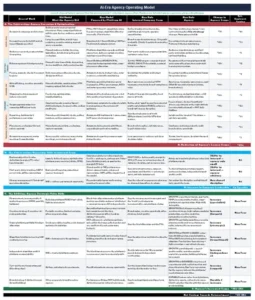
The transition from manual labor to algorithmic execution can be categorized into five distinct clusters of activity that are currently being "subtracted" from agency responsibilities.
1. The Activity Army: Architecture and Targeting
In the pre-AI era, agencies employed vast teams to handle account architecture, keyword research, and audience segmentation. This involved creating hundreds of thinly sliced campaigns to maintain manual control. Today, algorithms have "devoured" this work. Tools like PMax and Advantage+ collapse these structures into a few asset groups, using intent signals and millions of data points to find converters that humans might never have identified. The agency’s role has shifted from "building" to "deciding," focusing on setting the reward functions and brand safety red lines. This area represents a roughly 22% weight in traditional contracts, with a potential 78% reduction in manual effort.
2. The Bid and Pace Dancers: Real-Time Adjustments
Manual bidding, budget adjustments, and daily pacing checks were once the hallmark of a diligent agency. However, AI now performs narrow intelligence tasks at a scale and speed that humans cannot match. Value-based bidding (VBB) and automated budget optimization allow platforms to react to market shifts in milliseconds. Over-touching these accounts is now viewed as a form of "sabotage" that resets AI learning cycles. Agencies are now tasked with operating at the rhythm of the machine, representing a 14% contract weight with a 73% reduction in labor.
3. The Assembly Line: Creative Execution and Trafficking
The "torture of tagging," ad building, and formatting variations are increasingly handled by generative AI. Ad platforms can now assemble bits of text, images, and video to create the most relevant version of an ad for each individual user. While human oversight is still required for asset preparation and feed management, the "busy work" of trafficking has been reduced by approximately 45%.
4. Optimization Theater: The Illusion of Work
One of the most significant shifts is the decline of "optimization theater"—the daily ritual of pausing "losers" and making small A/B tweaks. Modern platforms run continuous "explore-exploit" cycles, testing thousands of combinations simultaneously. The agency’s role has been narrowed to conducting a few high-impact, clean experiments at the creative concept level. This area, often the largest cost in a contract (16%), is seeing a 75% reduction in manual labor.
5. The Reporting and Servicing Factory
The traditional model of manually pulling weekly spreadsheets and holding exhaustive "check-in" meetings with dozens of attendees is being replaced by automated data lakes and AI-fronted dashboards. Tools like Claude and other Large Language Models (LLMs) allow clients to query data directly, reducing the need for handwritten commentary on existing dashboards. This shift allows agencies to move from "Care" (reporting what happened) to "Do and Impact" (strategizing what should happen next), leading to a 60% reduction in reporting-related labor costs.
Implications for Talent and Agency Evolution
The transformation of the operating model is also changing the profile of the "ideal" agency employee. The industry is moving away from a model where agencies charge high fees to clients while hiring junior employees at low wages to perform manual tasks. Instead, the new SOW favors high-value work streams that command rates of $500 to $1,000 per hour for experienced strategists, data scientists, and creative directors.
Agencies that fail to adapt are expected to face obsolescence by 2027. Conversely, "modern agencies" are emerging—structurally built to be outcome-centered strategic partners that embrace the radical evolution of platforms. These entities do not sell "motion" or "activity"; they sell judgment, governance, and innovation risk reduction.
Analysis of Broader Industry Impact
The shift toward an AI-led agency model has significant implications for corporate governance and data ownership. Industry experts emphasize that as automation takes hold, it is more critical than ever for brands to own their own ad accounts, pixels, and data pipelines. Relying on an agency to "host" these assets creates a "hostage" dynamic that prevents the brand from fully leveraging its own first-party data.
Furthermore, the elimination of the "Percent of Media Spend" model is expected to cleanse the industry of "toxic" incentives, such as undisclosed markups and rebates. By aligning agency compensation with incremental profit, brands can ensure that their partners are genuinely motivated to drive business growth rather than simply increasing ad spend.
As the industry moves toward 2026, the distinction between "execution" and "strategy" will become the defining line of the marketing world. Agencies are not becoming worthless; rather, the basis of their value is migrating upstream. The successful agency of the future will be one that serves as a high-level navigator in an increasingly complex algorithmic sea, providing the human judgment that AI cannot yet replicate. For marketing managers and directors, the message is clear: the era of paying for "hours worked" is ending, and the era of paying for "outcomes delivered" has begun.