Google Analytics Unveils Advanced AI and Attribution Features to Elevate Enterprise Decision-Making

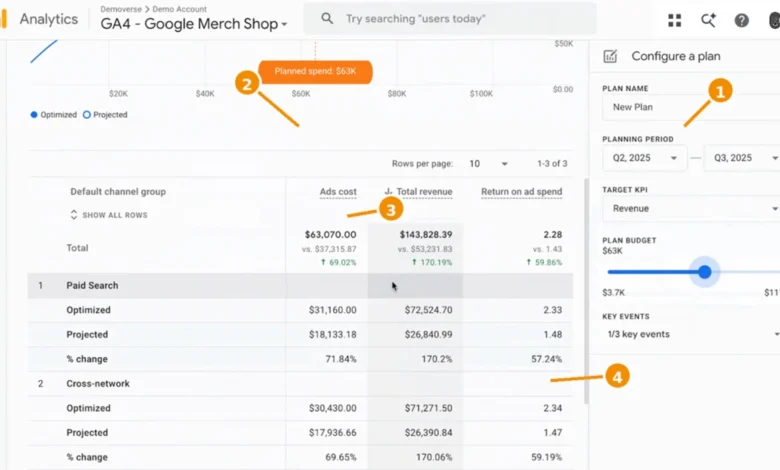
Over the past year, the development team behind Google Analytics has rolled out a suite of sophisticated capabilities designed to shift enterprise analytics from retrospective reporting to forward-looking strategic execution. These newly introduced tools, which include automated tracking for Answer Engine Optimization (AEO), advanced multi-touch attribution, cross-channel budgeting scenarios, and conversational AI advisors, aim to provide finance, marketing, and executive leadership teams with deeper insights into consumer behavior and revenue generation.
Strategic Shift in Digital Analytics
Traditionally, web analytics platforms have served as diagnostic tools used primarily to evaluate past traffic patterns, user demographics, and historical conversion rates. However, industry analysts note that the modern digital landscape requires tools capable of predicting outcomes and optimizing resource allocation before capital is deployed. The latest feature updates in Google Analytics address this demand by integrating predictive modeling, machine learning-driven attribution, and automated channel categorization directly into the platform interface.
Many of these newly launched capabilities operate on a forward-looking basis, meaning they begin processing data from the exact moment of activation without historical backfilling. Consequently, digital analysts and marketing professionals have been urged to configure these features promptly to begin accumulating actionable datasets.
Tracing the Rise of AI Assistant Channels
One of the most significant additions to the platform is the native tracking of Answer Engine Optimization (AEO) traffic within the Default Channel Group, designated under the "ai-assistant" medium. As artificial intelligence chat interfaces, generative search results, and autonomous digital assistants increasingly shape how users discover information, traditional search engine optimization (SEO) has undergone structural shifts. Industry data indicates that while AI-driven referral traffic typically accounts for a modest percentage of total site sessions—frequently ranging between 1% and 5%—the commercial value of this traffic is disproportionately high.
Independent analyses published by major commerce platforms and software providers in early 2026 highlight that users originating from answer engines exhibit higher conversion rates, longer average session durations on product pages, and increased average order values compared to traditional organic search traffic. Despite these performance advantages, challenges remain in accurately capturing the full scope of LLM-driven traffic. Industry practitioners note that queries originating from mobile applications, desktop wrappers, and in-app browsers often default to direct traffic classifications, while native generative search features integrated directly into major search engines are occasionally categorized under standard organic search parameters. To counter these limitations, advanced analytics teams have begun deploying custom channel groupings and regex-based tracking models to establish a more comprehensive baseline for AI-referred revenue.
Refining Attribution and Cross-Channel Budgeting
In tandem with AI tracking updates, Google Analytics has reintroduced and refined its Conversion Attribution Analysis tools within the Advertising section. These features allow organizations to move beyond last-click attribution models and evaluate assisted conversions across complex, multi-touch customer journeys. By examining how channels such as paid social, organic search, and display advertising contribute to early- and mid-funnel engagement, marketing teams can reassess the actual value of acquisition channels that might otherwise appear underperforming under single-touch attribution metrics.
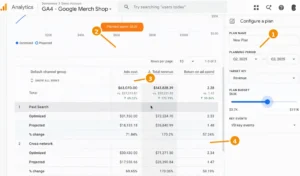
Complementing attribution analysis is the Cross-Channel Budgeting tool, which provides predictive modeling capabilities based on historical spend, seasonality, and conversion patterns. Through project and scenario planning modules, analysts can simulate the financial impact of reallocating marketing budgets across disparate channels. Rather than reacting to historical performance reports, finance and marketing departments can evaluate diminishing return curves and forecast projected return on ad spend (ROAS) prior to committing capital. Industry experts emphasize that integrating complete campaign cost data—including inputs from platforms such as Meta and TikTok—is essential for generating accurate predictive scenarios.
Conversational Intelligence and LLM Integration
To bridge the gap between complex datasets and executive decision-making, Google Analytics has introduced "Ask Advisor," a natural language conversational analysis interface accessible directly within the platform. Designed to lower the technical barriers associated with navigating multi-layered reporting dashboards, the feature allows users to query traffic trends, product performance changes, and channel attribution variances using conversational prompts.
For advanced organizations seeking to extend analytics capabilities beyond the native interface, Google has released a first-party Model Context Protocol (MCP) server. This open architecture permits developers to connect Google Analytics datasets directly to approved large language models, such as ChatGPT or Claude. By linking web analytics data with internal promotional calendars, media plans, and offline sales figures, enterprise teams can execute cross-domain queries that encompass the entire business ecosystem rather than isolated web metrics.
Broader Implications for Enterprise Governance
The integration of advanced machine learning models, lifetime value (LTV) percentile segmentation, and automated source group consolidation reflects a broader evolution in enterprise software architecture. By automating data cleaning tasks—such as standardizing disparate social media referral strings—and offering native predictive budget planning, the platform seeks to minimize manual data manipulation.
For analytics professionals, these technological advancements signal a transition from routine reporting tasks to high-level strategic consulting. As executive leadership gains direct access to conversational analytics tools and predictive scenario planning, the mandate for analytics teams shifts toward validating predictive models, auditing feature configurations, and translating complex multi-touch attribution data into defensible corporate growth strategies.