The Ultimate Guide to Naming UI Components, Design Tokens, and Digital Assets in Modern Software Development

The eternal adage in computer science and design—that there are only two hard things in caching invalidation and naming things—continues to plague digital product teams across the globe. Language shapes not only how developers and designers conceptualize software architecture, but also the communicative friction experienced during cross-functional collaboration. Ambiguity in terminology frequently leads to systemic misalignments regarding colors, icons, user interface components, and core product features. Consequently, teams continually struggle to establish cohesive naming conventions for design tokens, cascading style sheet (CSS) classes, and programmatic variables.

When labels are overly generic, comprehension plummets, leaving engineers guessing what a specific element controls. Conversely, when identifiers are excessively specific, they eliminate modular flexibility and hinder code reuse. Navigating this delicate balance requires robust taxonomic frameworks, industry-standard vocabularies, and structured methodologies. Recent releases from leading design system teams and open-source repositories provide actionable roadmaps to resolve these persistent nomenclature challenges.
The Roots of Semantic Confusion in Digital Product Teams
Historically, digital product creation has suffered from a fragmented linguistic landscape. Designers speak in visual metaphors—such as "coral," "hero banner," or "soft shadow"—while front-end engineers translate these concepts into semantic markup, object-oriented CSS classes, and state-driven variables. Simultaneously, product managers evaluate features through the lens of key performance indicators, user retention, and monetization funnels, utilizing yet another distinct vocabulary.

This multi-dialect environment breeds profound operational inefficiencies. When team members discuss the exact same interface element using different terms, development velocity decelerates. Furthermore, low feature adoption rates can frequently be traced back to poor discoverability rooted in confusing, non-intuitive nomenclature. Addressing this friction demands a unified taxonomy that bridges the gap between human-centric language and machine-readable code.
Expanding Creative Horizons: General Naming Resources
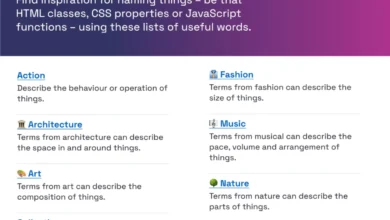
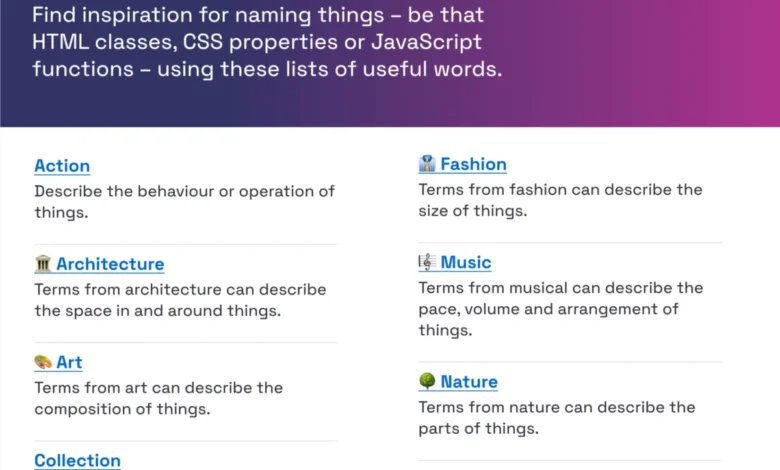
To escape standard naming pitfalls, developers and designers are increasingly looking outside traditional software engineering terminology. A prominent resource in this space is Classnames, developed by Paul Robert Lloyd. This curated web utility offers thematically grouped lists of words designed to inspire out-of-the-box thinking when naming HTML classes, CSS properties, and JavaScript functions.

Rather than relying on tired conventions like wrapper, container, or box, Classnames provides access to thematic word collections drawn from nature, architecture, fashion, theater, music, and publishing. These terms describe behavioral patterns, relational likenesses, structural order, and functional grouping. By integrating these diverse lexicons into design systems, teams can create descriptive, memorable identifiers that remain distinct from standard layout terminology.
Harmonizing Color Palettes Through Unique Identifiers
Color naming remains one of the most contentious aspects of design token management. Hexadecimal codes and RGB values are machine-readable but entirely devoid of human context, whereas descriptive names like "dark-blue-v2" quickly become obsolete as brand palettes expand.

To solve this, David Aerne maintains an expansive open-source repository of color names that catalogs over 30,000 unique designations sourced from collaborative user contributions and art historical references. Accompanied by integrated color pickers and name-search functionalities—popularized by tools like Color Parrot—this repository supplies predictable, human-readable strings for design tokens. Implementing a centralized color-naming convention prevents duplicate definitions and ensures consistency across multi-platform design systems.
Establishing Scalable Best Practices for Layers and Groups
Beyond code, naming discipline must start within design files. Disorganized Figma workspaces filled with "Rectangle 4 copy" or "Group 12" severely impede handoff efficiency between product designers and engineering teams. Javier Cuello’s comprehensive research into design system naming best practices establishes clear guidelines for structuring layers, groups, and components.

According to Cuello’s framework, an effective design asset name must possess a logical structure, remain concise yet meaningful, be universally understood across disciplines, and avoid direct ties to volatile visual properties. By establishing strict do’s and don’ts for sizing, states, and component categorization, teams can maintain scalable design files that mirror production code architecture.
Scaling Design Tokens Across Multi-Brand Ecosystems
As enterprises scale to manage dozens of distinct products across multiple geographic regions, maintaining a flexible design token taxonomy becomes critical. A prime example of this challenge was addressed by the design systems team at Intuit, parent company to Mailchimp, QuickBooks, TurboTax, and Mint. Faced with the limitation of rigid, brand-specific themes, the engineering and design teams collaborated to build a resilient, multi-tiered token taxonomy.

Detailed in case studies by engineering leaders like Nate Baldwin, Intuit’s new taxonomy successfully separates foundational primitive values from semantic roles and component-specific implementations. This foundational separation allows the parent company to roll out brand refreshes and dark-mode adaptations seamlessly without breaking downstream component libraries.
Similarly, the Vodafone UK Design System team released their comprehensive Variables Taxonomy Map via the Figma Community. Built upon Nathan Curtis’s foundational work on token architecture, Vodafone’s map outlines a four-tier structure connecting brand primitives, themes, semantics, and page-level variables. This meticulous categorization ensures that any team member can instantly trace a variable back to its source and understand its exact operational context purely from its name.

For practitioners seeking hands-on tooling, Romina Kavcic’s Design Token Naming Guide and accompanying Design Token Names Inventory spreadsheet offer interactive builders and structured templates. These resources allow teams to configure custom naming structures encompassing components, categories, states, and roles while preserving a bird’s-eye view of complex token hierarchies.
Standardizing UI Components via Real-World Inventories
When initiating a new design system, reinventing component nomenclature is rarely necessary. Analyzing how mature engineering organizations label common interface elements saves countless hours of internal debate. Iain Bean’s Component Gallery addresses this exact need by aggregating interface components from dozens of real-world production design systems.

The gallery catalogs more than 50 standard UI components—ranging from accordions to visually hidden utility classes—while explicitly listing alternative names utilized across different frameworks. Supplemented by visual dictionaries such as Name That UI, these resources provide an empirical baseline for teams establishing their own component library nomenclature.
Optimizing Feature Discoverability Through User-Centric Naming
Internal system architecture is only one side of the coin; external product nomenclature directly influences user adoption. Research by UX specialist Erin Gannon emphasizes that low feature adoption is frequently a symptom of poor discoverability caused by opaque internal jargon.

Effective feature names must be driven by user problems rather than internal engineering milestones. They should clearly communicate the value proposition or the ultimate outcome of the job-to-be-done. Crucially, successful product teams survey users to capture how customers naturally describe a capability in their own vernacular, subsequently adopting those exact terms within the user interface.
Structuring Product and Service Naming Methodologies
At the highest level of abstraction, naming an entire product, service, or major initiative carries immense branding implications. Open-source repositories like Onym aggregate methodologies, brainstorming frameworks, vetting procedures, and etymological resources to guide cross-functional teams through comprehensive naming sprints. By combining structured workshops with quantitative user testing, organizations can mitigate the risk of launching services with confusing or legally encumbered monikers.

Broader Implications and Strategic Recommendations
The cumulative impact of poor nomenclature extends far beyond aesthetic frustration; it incurs measurable financial costs through delayed project delivery, bloated codebases, and increased onboarding times for new team members. When design, product, and engineering divisions operate in isolated linguistic silos, technical debt accumulates rapidly.
To mitigate these risks, organizations should establish a living nomenclature dictionary as part of their core design system documentation. Teams are advised to audit existing variables, components, and token hierarchies regularly, cataloging naming conflicts into a dedicated backlog. By treating naming as an intentional, collaborative discipline rather than an afterthought, software enterprises can drastically reduce cognitive friction, streamline cross-functional workflows, and deliver more cohesive, user-friendly digital products.