WP Trend Watcher: Bridging the Gap Between WordPress Information Overload and AI-Driven Curation

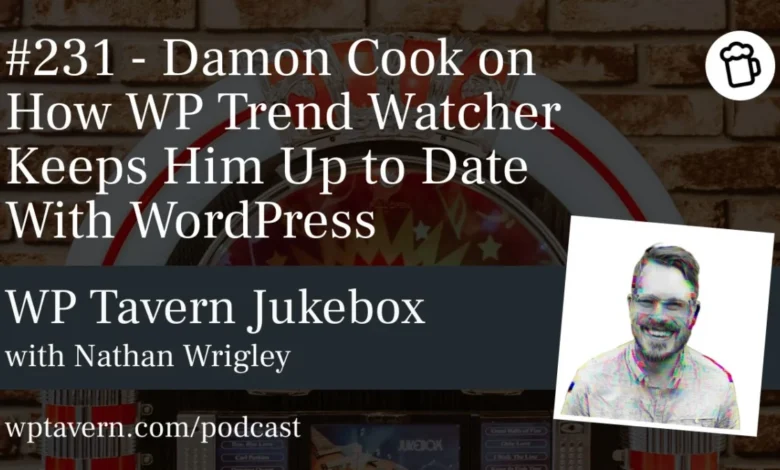
The digital landscape of the WordPress ecosystem has evolved into a complex, high-velocity environment where information is generated at a rate that challenges even the most dedicated industry professionals. With over 40% of the web powered by WordPress, the sheer volume of news, core releases, plugin updates, theme transitions, and community discourse has created a "fire hose" effect. To combat this, developer Damon Cook has introduced WP Trend Watcher, an open-source tool designed to synthesize this massive stream of data into actionable insights through a combination of local artificial intelligence and human oversight.
The Problem of Information Saturation
For agency owners, freelancers, and developers, staying abreast of WordPress developments is no longer a matter of simple maintenance; it is a strategic requirement. Releases such as the transition to version 7.1, shifts in block editor functionality, and changes to the broader Gutenberg landscape require constant vigilance. Historically, professionals have relied on manually scanning RSS feeds, Slack channels, and Trac tickets. This process is inherently inefficient, as it involves significant "dead time"—time spent filtering through irrelevant or duplicate content to locate high-value technical updates.
The challenge is exacerbated by the rise of AI-generated content, which has flooded the ecosystem with shallow summaries that often lack the technical depth required by developers. Damon Cook’s initiative emerged from a personal need to optimize his own workflow. By leveraging local, privacy-conscious AI models, Cook aimed to replace the manual slog of content aggregation with a system that prioritizes technical accuracy and human judgment.
Technical Architecture and Local Execution
WP Trend Watcher is built as a TypeScript-based codebase, currently hosted on GitHub. Unlike cloud-based SaaS solutions that send data to third-party servers, the tool operates on the user’s local machine. This architecture addresses two primary concerns: data privacy and the ability to customize the AI’s operational parameters.
Cook utilizes LM Studio, an application that allows developers to run Large Language Models (LLMs) locally on hardware such as the Apple Mac, which offers sufficient memory capacity to handle complex processing tasks. By keeping the AI local, users can experiment with different model weights—such as the Qwen family of models—without incurring API costs or risking the leakage of sensitive workflow data.
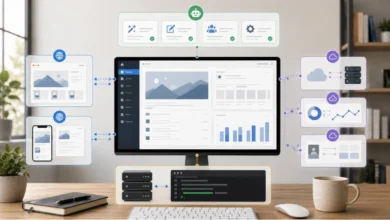
The tool follows a structured pipeline:
- Aggregation: It consumes a curated list of RSS feeds from reputable WordPress community sources.
- Filtering: The system employs logic to detect and prune duplicate reports and low-signal content.
- Summarization: The local AI model processes the remaining articles based on a specific prompt designed for developers and agency owners.
- Human Review: The AI-generated output is then presented to the user, who acts as the final editor to verify facts, identify potential hallucinations, and add contextual notes.
Chronology and Development Timeline
The genesis of WP Trend Watcher can be traced back to the broader shifts in the WordPress community observed during the 2024 calendar year. Cook, who has a decade of experience within WordPress-centric agencies and currently operates his own freelance firm, Noma Digital, recognized that the traditional methods of news dissemination were becoming unsustainable.
Following his participation at WordCamp US 2024, Cook began prototyping the tool. By late 2024 and early 2025, the project had transitioned from a private internal tool to a public, open-source utility. The current iteration allows users to run weekly reports, though the software is flexible enough to accommodate more frequent intervals depending on the user’s needs. The project remains in a state of active development, with future goals including more deterministic output formatting and the integration of automated citation footnotes to further increase transparency.
The Role of the "Human in the Loop"
A defining characteristic of WP Trend Watcher is its refusal to fully automate the publication process. While AI handles the heavy lifting of summarizing thousands of words into concise, bulleted lists, the final layer of curation remains strictly human.
Cook argues that this "human-in-the-loop" approach is essential for three reasons:
- Fact-Checking: AI models are prone to "hallucinations," or the generation of plausible but incorrect information. Human review ensures that technical documentation and release notes are accurate before they are finalized.
- Contextual Memory: The act of reviewing the AI’s summary against the source article reinforces the developer’s own understanding of the ecosystem. It transforms passive reading into active learning.
- Transparency: By publishing his own human-authored notes alongside the AI summaries, Cook maintains a standard of accountability, allowing readers to judge the quality of the curation based on the time and effort invested.
Broader Impact and Industry Implications
The emergence of tools like WP Trend Watcher signals a broader trend in how industry-specific information will be consumed in the coming years. As the volume of digital content continues to expand, the value proposition shifts from "access to information" to "curation of relevance."
For the WordPress community, this has significant implications:
- Efficiency for Agencies: Agency owners who manage large portfolios of client sites can use such tools to proactively identify breaking changes in Core, allowing them to communicate with clients before problems arise.
- Democratization of Insights: By open-sourcing the tool, Cook is providing a template for other niches. The architecture can be adapted to any industry—from finance to local government—providing a blueprint for decentralized, local-first intelligence.
- Shift in AI Utility: The project demonstrates that the most effective use of AI is not necessarily in content generation, but in content management. By serving as a filter rather than an author, AI can assist professionals in maintaining cognitive bandwidth.
Future Projections: The "Trend" in Trend Watcher
The long-term goal for the project extends beyond weekly summaries. Cook has expressed interest in developing a layer of the tool that can perform historical analysis. If the software maintains a consistent archive of these reports over several years, it could potentially answer complex questions: "Why did a particular feature get dropped from the WordPress release cycle?" or "How have community discussions on block themes evolved since 2025?"
This capability would effectively turn the tool into an industry knowledge base, capable of connecting the dots between disparate events that occurred years apart. While such a development remains in the conceptual stage, the foundation laid by the current implementation of WP Trend Watcher provides the necessary data-collection "scaffolding" to make this a reality.
Conclusion
WP Trend Watcher represents a pragmatic, sustainable response to the noise of the modern internet. By embracing local AI technology while maintaining a strict commitment to human editorial review, it offers a blueprint for how professionals can navigate the deluge of digital information without succumbing to the burnout associated with constant information monitoring.
As the WordPress ecosystem continues to grow, the ability to discern trends from noise will become an increasingly valuable skill. For developers like Damon Cook, the solution is not to retreat from the flow of information, but to build better filters—filters that are transparent, efficient, and ultimately under human control. The project invites participation from the community, encouraging others to fork the repository, contribute new sources, and refine the prompt engineering that powers its summaries. In a world where AI is often seen as a replacement for human work, WP Trend Watcher stands as a compelling example of AI as a tool for human empowerment.