How Kinsta Defended Hundreds of Thousands of Containers Against Critical PHP2Shell Vulnerabilities Without Disruption


In late October 2026, the global cybersecurity landscape faced one of its most severe runtime crises in recent memory following the disclosure of two critical, highly dangerous flaws collectively known as PHP2Shell. Tracked as CVE-2026-109618 and CVE-2026-109619, these vulnerabilities possessed a maximum CVSS 4.0 severity rating of 9.2. Affecting PHP’s internal memory management architecture, the flaws permitted unauthenticated remote code execution under specific conditions, threatening millions of web applications worldwide. Because PHP serves as the foundational processing engine for content management systems like WordPress, traditional application-layer updates, such as patching plugins or themes, were entirely ineffective. Mitigation required deep infrastructure-level remediation of the underlying PHP runtimes. For managed hosting providers, the incident presented an immense logistical challenge: securing massive fleets of isolated containers before malicious actors could successfully exploit the zero-day window. This report details how managed WordPress host Kinsta engineered a rapid, multi-layered defense strategy—blocking over 550,000 malicious requests, coordinating emergency platform patches across hundreds of thousands of isolated environments, and resolving the crisis without recording a single successful breach.
The Genesis of the Threat and Zero-Day Exploitation
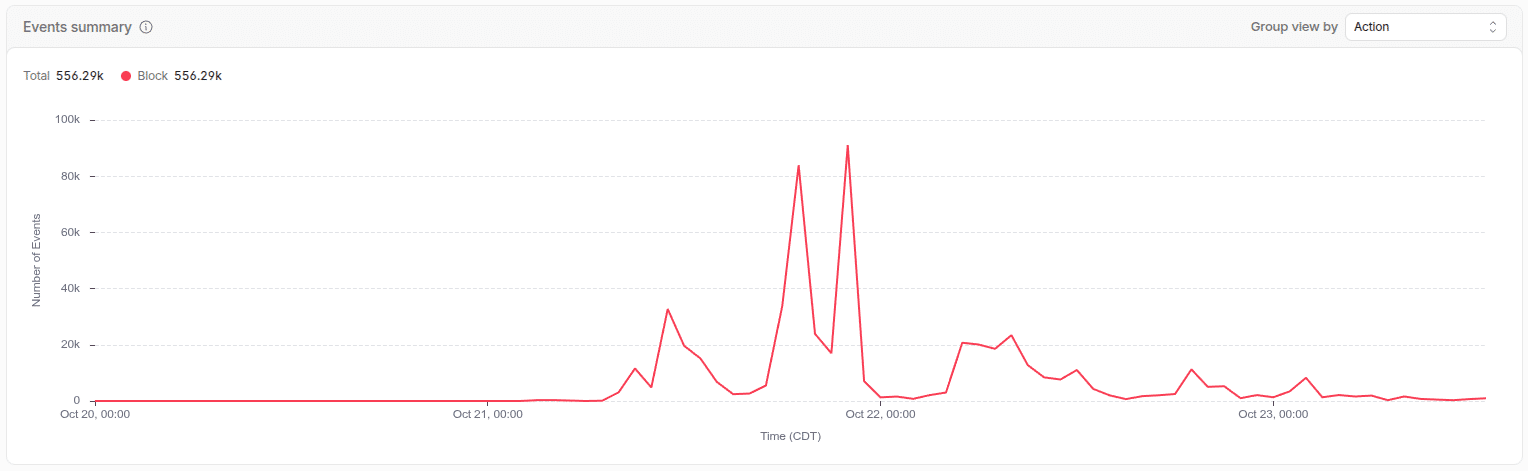
The timeline of the crisis accelerated rapidly following initial alerts from the PHP security team on October 20, 2026, which signaled an imminent critical security release for the following day. However, malicious actors frequently monitor advisory announcements to reverse-engineer upcoming patches or target systems during the vulnerability disclosure gap. According to internal engineering telemetry at Kinsta, exploitation attempts targeting the undisclosed flaws began materializing in the early hours of October 21—hours before official upstream patches were publicly available.
The nature of CVE-2026-109618 and CVE-2026-109619 meant that standard website firewalls relying on typical signatures would fail unless properly calibrated for deep runtime analysis. Attackers focused their payloads on manipulating PHP’s core request-handling mechanisms to execute arbitrary code. For platforms hosting hundreds of thousands of business-critical websites, e-commerce stores, and enterprise portals, the threat required an immediate, comprehensive engineering response that could outpace automated vulnerability scanners deployed by cybercriminals.

A Multi-Layered Emergency Response Architecture
Recognizing the gravity of the situation prior to official patch distributions, Kinsta’s security and engineering teams activated an emergency mitigation protocol designed to secure production and staging environments simultaneously. Because every website hosted on the platform sits behind Cloudflare’s infrastructure, Kinsta possessed a distinct operational advantage.
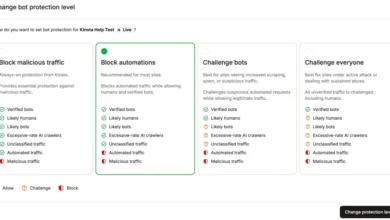
Engineers closely monitored the Cloudflare Web Application Firewall (WAF) changelog as emergency rules were engineered to detect exploitation attempts targeting PHP2Shell. Upon validation, the team immediately enforced block actions across the entire platform. This platform-wide approach ensured that every client site received instant protection without requiring individual account owners to manually configure security parameters. Furthermore, Cloudflare deployed full transaction detection protocols, analyzing signals from both incoming HTTP requests and server-side responses to catch heavily obfuscated payloads designed to bypass basic signature filters.
Simultaneously, Kinsta engineers implemented temporary local PHP configurations to minimize platform exposure. A critical vector for the exploitation involved PHP’s internal session handling. By globally modifying server configurations to disable the session upload progress feature via the session.upload_progress.enabled directive—a mitigation formally recommended by the PHP project—the engineering team blocked several primary attack pathways while awaiting final upstream code releases.
Chronology of the Platform-Wide Patch Rollout
Once official security updates—including PHP versions 8.2.35, 8.3.36, 8.4.27, and 8.5.12—were published on October 21, the operational bottleneck shifted from defensive filtering to large-scale deployment. Managing infrastructure at scale requires precision, especially when updating core runtime environments that power diverse application codebases.
Kinsta’s patching strategy incorporated close collaboration with Freexian, an enterprise long-term-support PHP package provider, ensuring that older, legacy branches (such as PHP 7.4, 8.0, and 8.1) received necessary backported security fixes safely. As patched packages arrived progressively in internal mirrors, engineers validated builds and initiated automated rollouts without waiting for every PHP branch to complete development.
The systematic deployment across the infrastructure unfolded over a compressed timeframe:
- October 21, 14:24 UTC: PHP 8.5.12 security updates arrived in the internal package mirror.
- October 21, 15:54 UTC: Large-scale automated deployment commenced across active container fleets.
- October 21, 17:45 UTC: Tens of thousands of isolated containers successfully updated; PHP 8.3.36 packages integrated into the deployment pipeline.
- October 21, 21:17 to 22:28 UTC: Patched packages for legacy environments (PHP 7.4, 8.0, 8.1) arrived and deployment commenced.
- October 21 to 22, 23:25 to 01:37 UTC: PHP 8.2 and 8.4 updates finalized and pushed to production containers.
- October 22, 04:31 UTC: Only 1,888 containers (approximately 0.5% of the total infrastructure) required secondary manual attention due to unique environment configurations.
- October 22, 08:26 UTC: 100% protection coverage verified across all systems, and the security incident was officially marked resolved on the corporate status dashboard.
By executing this continuous deployment pipeline, Kinsta updated hundreds of thousands of isolated containers within hours. According to Laszlo Farkas, Director of Engineering, the ability to rapidly deploy verified infrastructure-wide updates without breaking client applications remained the defining operational success of the response.
Global Repercussions and Client-Side Precautions

The severity of the PHP2Shell vulnerabilities triggered panic across public and private sectors worldwide. Government bodies, digital agencies, and enterprise organizations enacted aggressive precautions. Prominent institutions, including the National Cyber Security Centre in the Netherlands and various government web portals in Germany, France, Belgium, and Finland, temporarily took their official websites offline. In Japan, Prime Minister Sanae Takaichi issued a public warning via social media, advising administrators to patch immediately or suspend web operations.
This atmosphere of uncertainty resonated among Kinsta’s customer base. The platform’s support department experienced an unprecedented surge in inquiries. In an effort to safeguard their assets, approximately 3,000 customers proactively utilized MyKinsta’s environment suspension feature to take their sites offline, while others requested manual server-level traffic blocking.
While acknowledging the caution exercised by clients, Kinsta’s engineering leadership maintained that taking sites offline was unnecessary. Because Cloudflare emergency WAF rules were actively filtering and blocking malicious traffic at the network edge, online sites remained secure while continuing to serve legitimate visitors. Support teams actively guided clients away from unnecessary downtime, while engineers prepared to assist in restoring environments that had been preemptively suspended. Following the resolution of the incident, Kinsta systematically audited suspension logs to safely reactivate customer sites that had been shut down strictly due to PHP2Shell panic, separating them from unrelated administrative suspensions.
Data Analysis and Incident Verification
Quantitative metrics captured during the incident underscore the sheer volume of automated threats facing modern web infrastructure. By October 23, Cloudflare protections deployed across Kinsta’s ecosystem had successfully intercepted and blocked more than 550,000 distinct requests explicitly targeting the PHP2Shell vulnerabilities.

To ensure complete operational integrity, blocked-request statistics were cross-referenced with deep forensic investigations. Engineers conducted continuous manual spot-checks on targeted environments, collaborated closely with vulnerability intelligence partner Patchstack, and shared threat telemetry with broader hosting industry cooperatives. Through comprehensive log analysis and runtime monitoring, Kinsta confirmed that zero successful breaches occurred across its entire client base throughout the lifecycle of the threat.
Implications for Managed Hosting and Runtime Security
The PHP2Shell incident highlights structural vulnerabilities inherent in modern web ecosystems, where core runtime engines represent critical single points of failure. The crisis demonstrated the distinct advantages of managed cloud architecture over traditional self-hosted or unmanaged virtual private server environments.
Because Kinsta abstracts runtime management away from the end user, clients were insulated from the technical complexities of tracking upstream vulnerability disclosures, sourcing backported patches for legacy software branches, and executing manual server-level updates. As Farkas summarized, the ultimate success of the mitigation effort lay in the seamless protection afforded to clients who required no technical intervention to remain secure. As cyber threats increasingly target foundational language runtimes and core server components, proactive platform-level defenses, rapid automated container orchestration, and multi-vendor collaboration will remain the gold standard for enterprise web security.