Navigating the Shift: How Real-Time Social Listening and Dynamic Audience Segmentation Are Redefining Modern Business Strategy


In the contemporary digital economy, social media has long transcended its origins as a mere broadcasting channel to become a rich repository of real-time consumer behavior, preferences, and underlying motivations. For corporate leaders and marketing executives, the ability to segment social media audiences intentionally—relying on live conversation data rather than static demographic profiles—has become a vital mechanism for making smarter, high-impact business decisions. Whether optimizing ad spend, discovering white-space markets, or driving sustained revenue growth, organizations are finding that audience segmentation is no longer a static, one-off marketing task. Instead, it operates as a dynamic, cyclical discipline designed to surface emerging opportunities and ground corporate strategy in empirical, real-world data.
Understanding Social Media Audience Segmentation
Social media audience segmentation is the systematic process of breaking down a broader target audience engaging across social networks into smaller, distinct sub-groups based on shared characteristics, behaviors, or interests. Unlike traditional marketing segmentation, which historically relies on customer relationship management (CRM) records or retrospective survey inputs, social segmentation taps directly into live, unprompted conversation, engagement, and sentiment metrics.
This capability represents a cornerstone of modern social media intelligence. By uncovering the distinct factions driving online discourse, organizations can transition away from generalized assumptions about their customer base. Consequently, leadership teams across customer care, product innovation, campaign planning, and enterprise strategy can make precise decisions aligned with the immediate pulse of the market.
The Erosion of Trust and the Demand for Relevance
A primary catalyst accelerating the adoption of dynamic segmentation is the palpable degradation of consumer trust and attention spans in digital spaces. According to recent industry metrics, including data from the Q1 2026 Sprout Pulse Survey, consumers are increasingly selective regarding the content they engage with online. Roughly two-thirds of surveyed consumers—about 66%—report being more particular about their digital interactions compared to the previous year.

A significant contributor to this erosion of trust is the proliferation of what industry analysts term "AI slop"—undifferentiated, one-size-fits-all content generated mechanically without authentic human resonance. More than half of respondents, specifically 56%, noted that they encounter such content often or very often. Despite this consumer fatigue, many brands continue to allocate budgets toward generic, broad-reach campaigns. This strategy routinely results in wasted capital, particularly as major digital platforms increasingly prioritize genuine relevance over raw reach.
Segmentation serves as the critical bridge that enables brands to achieve true personalization and, by extension, cultural and commercial resonance with their target audiences, all without necessarily requiring expanded headcount or inflated marketing budgets.
The Four Pillars of Social Media Audience Segmentation
To effectively capture and utilize audience data, organizations generally categorize social segments into four distinct types, each illuminated by unique digital signals.
Demographic Segmentation
Basic demographic markers—such as age, gender, or follower counts—frequently serve as an initial baseline for creating audience segments. This information is typically gathered via user self-disclosure during profile creation or derived from network-level analytics provided by ad managers and dashboard tools.
While demographics alone offer limited predictive power, they often highlight broader behavioral trends. For instance, generational skews frequently align with specific network choices and content formats; platforms like TikTok and Instagram Reels tend to attract younger cohorts, whereas Facebook maintains a denser concentration of older demographics.
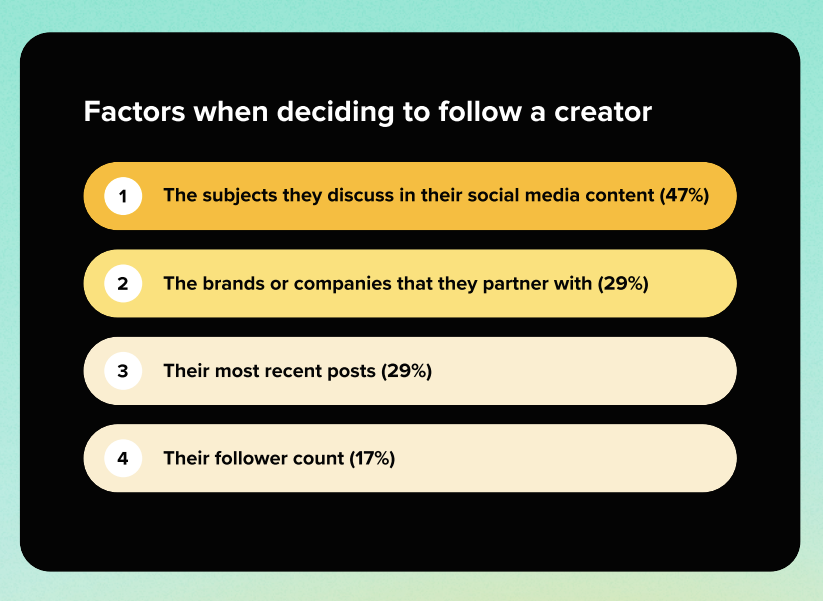
However, industry data underscores the limitations of relying too heavily on demographics. Because profile details are self-reported—with users frequently omitting fields or entering false data to protect privacy—they lack the robustness required for precise targeting. Furthermore, consumer priorities have shifted; recent data from the 2026 Influencer Marketing Report indicates that only 17% of consumers check an influencer’s follower count before deciding to follow them, while nearly half (47%) place far greater emphasis on content topic and behavioral authenticity. Consequently, demographic data is best utilized as a preliminary filter rather than the primary driver of a segmentation strategy.
Psychographic Segmentation
Psychographic segmentation involves classifying individuals based on psychological criteria, including personal values, underlying attitudes, and core motivations that influence their consumption patterns. By analyzing public comments, posts, and shared content, brands can gain profound visibility into the internal beliefs of their audience.
Organizations can subsequently tailor their messaging to align with these discovered values. For example, if a brand detects that a segment of its audience frequently discusses sustainability, climate change, and circular economies, it can categorize them as an environmentally motivated segment. This insight allows the brand to center its communications around ethical sourcing, reusable packaging, or community-driven environmental initiatives.
Behavioral Segmentation
While psychographics examine consumer beliefs, behavioral segmentation focuses strictly on actions. It measures how users behave on social platforms, the specific conversations they participate in, and the content formats with which they interact.
Building behavioral segments requires observing recurring patterns: posting frequency, preferred media formats (such as static images, multi-image carousels, or short-form video), and commenting habits. Identifying these patterns yields vital clues regarding consumer decision-making. For instance, if analytics reveal a segment consistently engaging with discount promotions, budget-saving hacks, and promotional codes, brands can deduce that price-to-value ratio is a primary purchasing driver. Messaging can then be adjusted to highlight economic value, affordability, or long-term return on investment.

Geographic Segmentation
A user’s physical location deeply influences both their social habits and spending behaviors. Brands can determine a user’s whereabouts through location tags, geotagged stories, and localized linguistic nuances or dialects. Furthermore, platform preferences often vary significantly by region.
Data compiled by the Pew Research Center examining social media platform usage across 37 countries demonstrates distinct regional trends. While Facebook maintains global dominance—particularly in high- and middle-income nations like the United States, Canada, and Australia—Instagram holds stronger popularity across several high-income European and Asia-Pacific markets, including Germany, Spain, and Japan. Conversely, platforms like TikTok capture leading market shares in specific middle-income nations across Asia and Africa, such as Malaysia, Pakistan, and Ghana.
Geographic segmentation yields the highest strategic value when paired with a behavioral or demographic overlay—such as analyzing users within a specific metropolitan area who are simultaneously discussing parenting challenges or professional development.
Essential Technological Infrastructure
Executing a sophisticated segmentation strategy requires moving beyond manual observation and adopting robust enterprise-grade technologies.
Social Listening Platforms

Advanced social listening tools transform segmentation from a reactive reporting task into an active discovery mechanism. Because public social channels generate continuous, unprompted streams of consumer data, listening platforms can surface emerging segments and trends that organizations might not have anticipated.
Prominent corporate examples illustrate this capability. Cosmetics brand e.l.f. utilized social listening to identify an organic consumer trend wherein users repurposed empty foundation bottles into oversized, custom lip glosses. Recognizing the community-led momentum, the brand launched a targeted digital campaign that generated millions of organic views and user-generated videos, ultimately culminating in the commercial release of a limited-edition DIY Halo Gloss Kit. Similarly, beverage brand Oatly monitored surging consumer demand for matcha lattes across multiple social networks, channeling these insights directly into research and development to formulate a new commercial product line. Modern listening platforms integrate advanced artificial intelligence to sift through billions of public data points, isolating actionable conversation themes for corporate strategists.
CRM and Business Intelligence Integrations
To validate whether social segments represent genuine commercial opportunities, organizations must connect social audience intelligence with first-party customer data housed in Customer Relationship Management (CRM) systems. Integrations between social media management platforms and enterprise software suites—such as Salesforce or HubSpot—grant teams a holistic view of the consumer lifecycle. By cross-referencing social activity with lead status, customer lifetime value, and purchase history, businesses can distinguish between passing viral trends and durable, high-value customer segments.
AI-Powered Analysis
Artificial intelligence streamlines the operational lift associated with data segmentation by executing automated pattern detection across massive conversation volumes. Rather than forcing human analysts to manually tag and code qualitative data, AI-driven agents continuously monitor emerging engagement shifts, sentiment variances, and audience signals, translating complex datasets into executive-ready summaries and strategic recommendations.
A Step-by-Step Approach to Building a Segmentation Strategy

Organizations looking to institutionalize a social audience segmentation framework can follow a structured, five-step methodology:
-
Define the Business Objective: Establish the core commercial goal tied to the audience segment, whether it is building brand awareness, generating qualified leads, or driving direct online sales. Each objective demands a distinct analytical lens and targeting approach.
-
Aggregate Social and Listening Data: Consolidate data streams from native platform analytics, social intelligence tools, and third-party dashboards. Utilize Boolean search queries and AI-assisted query builders to filter out irrelevant noise and isolate high-value conversation streams.
-
Identify Patterns and Group into Themes: Establish specific listening themes that map directly to enterprise objectives—such as tracking competitor complaints, product misconceptions, feature requests, or emerging consumer frustrations. Grouping data into these thematic buckets allows brands to spot recurring patterns and organic audience clusters.
-
Validate Against Internal Business Data: Cross-reference social audience segments with internal CRM and Business Intelligence data. Verify whether the behavioral patterns observed online correlate with actual purchasing history, retention rates, or product utilization tiers.
-
Activate Across Cross-Functional Teams: Route validated segment insights directly into the workflows of various departments. While marketing teams utilize this data for campaign optimization, customer experience (CX) and product development teams can leverage friction-point insights to refine support resources and improve product roadmaps.
Broader Implications and Strategic Outlook

As digital ecosystems mature, the divergence between reactive and proactive organizations will become increasingly pronounced. Companies that treat social media audience segmentation as a static reporting function will struggle to maintain consumer relevance in an era defined by content saturation and shifting consumer trust. Conversely, enterprises that embrace segmentation as a dynamic, real-time business intelligence discipline will remain uniquely positioned to anticipate market changes, adapt swiftly to emerging consumer demands, and secure sustainable competitive advantages across global markets.