Buffer Commit: A New Era for the Buffer Developer Ecosystem and the Future of Social Media Automation

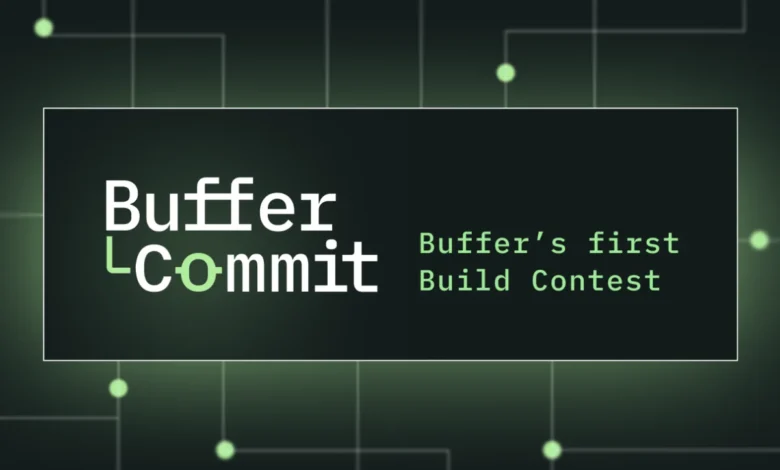
Buffer, the social media management platform, has officially announced the launch of Buffer Commit, its inaugural annual build contest centered on the company’s recently overhauled public API. This initiative marks a strategic shift in how the 16-year-old company interacts with its developer and creator communities. By dedicating a prize pool totaling $25,600—representing 10% of the company’s net profit from August 2026—Buffer is signaling a commitment to fostering an ecosystem of third-party integrations and specialized tools built directly on its infrastructure.
The contest, which officially opens for registration on October 15, 2026, features a focused build window from October 28 through November 13, 2026. With up to 16 winners selected to receive a $1,600 share of the prize pool, the structure of the event serves as a symbolic tribute to the company’s 16th anniversary, which falls on November 30, 2026.
The Evolution of the Buffer API
The genesis of Buffer Commit can be traced back to May 2026, when the company released its new, modernized public API. Developed over the course of a year, this infrastructure was built upon the same GraphQL foundation that has supported Buffer’s proprietary applications since 2019.
The rationale behind this move was rooted in a philosophy that has guided the company since its inception in November 2010. Founder and CEO Joel Gascoigne originally launched the first version of Buffer as a solution to his own frustration with the lack of scheduling tools for Twitter. By opening the API to the public, Buffer aims to replicate that iterative, problem-solving spirit across a broader user base.
Data provided by the company highlights the rapid adoption of this technology. In the months following the May launch, over 100,000 users have utilized the Buffer API to facilitate the creation of more than 300,000 unique ideas and approximately 20 million individual social media posts. This volume of activity underscores a growing demand for customizable workflows, particularly among creators and small business owners who require tools that integrate seamlessly with existing software stacks.
Contest Structure and Eligibility
Buffer Commit is designed to be inclusive, welcoming participants from various technical backgrounds. Eligibility is open to any individual aged 18 or older with a registered Buffer account, regardless of whether they utilize the free or paid tiers of the service.
The contest is categorized into two primary tracks: those building standalone applications that provide utility to the broader Buffer user base, and those developing integrations that streamline specific business workflows. To maintain fairness and focus, the competition mandates that all entries must be functional, publicly hosted, and capable of utilizing Buffer OAuth for account connection.
The selection process will be overseen by a panel of internal experts, including CEO Joel Gascoigne, Staff Product Manager Amanda Marochko, and Staff Engineer Joe Birch. Judges will evaluate submissions based on three core metrics: practical utility, engineering quality, and creative innovation. The winners are scheduled to be announced on December 7, 2026.
Beyond the cash prizes, victors will be awarded a series of non-monetary benefits, including a featured position in the Buffer Commit project gallery, a dedicated 90-minute virtual strategy session with the company’s executive leadership, and a one-year subscription to the Buffer Essentials plan. To ensure participant engagement, every individual who submits an eligible project will receive a commemorative piece of event merchandise, regardless of the final outcome.
Technical Support and Community Integration
To facilitate success, Buffer has established a centralized hub for the contest via a dedicated Discord server. This platform serves as a forum for technical support, office hours with the company’s engineering team, and project collaboration. A live, interactive Q&A session is scheduled for October 27, 2026, where the leadership team will provide further context on the vision for the contest and address specific queries from potential participants.
Recognizing the importance of transparency and "building in public," the company has also released a series of templates via the Buffer Template Library. These resources are intended to assist participants in documenting their progress from the initial commit to the final demonstration. Furthermore, the company has introduced two specialized awards—a "Build-in-Public" award and a "Best Design" award—which will be curated by the company’s internal design and content teams.
Market Analysis: The Shift Toward Modular Workflows
The launch of Buffer Commit reflects a broader trend in the software-as-a-service (SaaS) industry: the transition toward modular, interoperable platforms. By empowering developers and small business owners to build their own tools, companies like Buffer are effectively outsourcing product development to those most familiar with specific user pain points.
This strategy serves two purposes. First, it allows the platform to address niche requirements without expanding its own internal engineering scope. Second, it deepens user retention. When a business integrates a proprietary tool into its daily operations via an API, the platform becomes significantly more difficult to displace.
Industry analysts suggest that the rise of low-code and no-code tools has lowered the barrier to entry for such development, enabling a wider array of marketers and small business owners to participate in what was previously an engineer-exclusive domain. The success of early projects like Hiding Elephant and PostIQ—both of which emerged from the new API—serves as a proof-of-concept for this model. These projects demonstrate that small, targeted solutions can often provide more immediate value to specific demographics than monolithic, "all-in-one" platforms.
Long-term Implications and Strategic Outlook
For Buffer, the significance of this contest extends well beyond the selection of 16 winners. The data gathered during the build window—specifically regarding how developers interact with the GraphQL foundation and which endpoints are most heavily utilized—will directly influence the company’s product roadmap for the coming years.
The decision to make this an annual event indicates a long-term commitment to the developer community. By providing a recurring platform for recognition and resource sharing, Buffer is attempting to cultivate an ecosystem that operates similarly to an app store, albeit one built on open integration rather than gated entry.
For the participants, the contest offers a unique opportunity to gain visibility and professional guidance. The inclusion of a group session with the CEO is a calculated effort to bridge the gap between executive leadership and the community, fostering a culture of mentorship that is often lost as companies scale.
As the registration period commences, the focus remains on the quality of the incoming submissions. Whether or not these projects eventually evolve into standalone businesses, the inaugural Buffer Commit contest represents a milestone in the company’s trajectory, marking its transition from a simple scheduling tool to a foundational layer for social media infrastructure.
With the build window closing in mid-November, the industry will be watching to see not only what applications are produced, but also how these tools integrate into the daily workflows of the 100,000-plus users already leveraging the API. For those interested in participating, registration is currently accessible via the official Buffer API portal, with further documentation and community discussions housed on the official Discord server.