Kentucky Horsewear and Woosh Take Top Honors at the Annual Becom Awards in Brussels

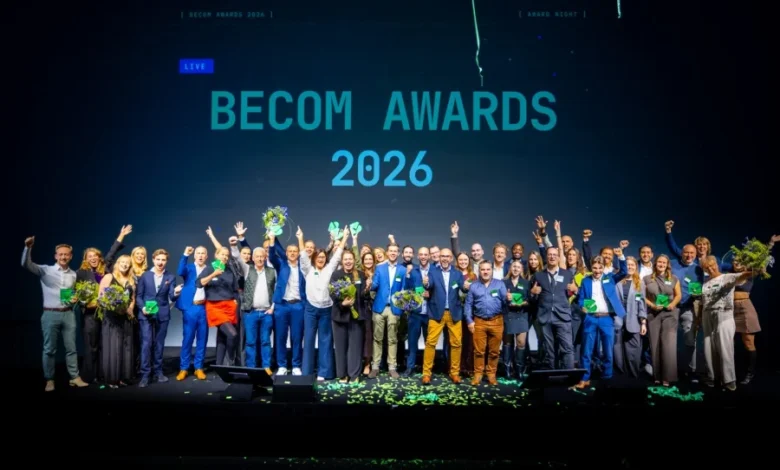
The annual Becom Awards, widely recognized as the premier celebration of excellence within the Belgian e-commerce landscape, reached its climax yesterday in Brussels. Amidst a gathering of industry leaders, innovators, and digital entrepreneurs, the trade association Becom unveiled the recipients of its prestigious Diamond Awards. This year, the top honors were bestowed upon Kentucky Horsewear and Woosh, two companies that have demonstrated exceptional growth and sector-defining innovation. The ceremony, which serves as a barometer for the health and trajectory of Belgium’s digital economy, showcased 29 finalists vying for recognition across 10 distinct categories, ultimately resulting in 13 companies being crowned as industry leaders.
The Becom Awards are more than a simple recognition of sales performance; they represent the rigorous evaluation of digital transformation, consumer experience, and sustainable business models. Organized by Becom, the primary trade body for online retailers in Belgium, the event highlights the evolution of the market from traditional retail to sophisticated, data-driven e-commerce ecosystems. This year’s edition saw a surge in participation, with over 120 candidates submitting applications, representing a diverse cross-section of the Belgian economy ranging from agile startups to established international players.
A Chronology of Growth and Recognition
The evolution of the Becom Awards mirrors the rapid acceleration of the Belgian digital sector over the past decade. Established to provide a platform for retailers navigating the complex shift toward omnichannel and direct-to-consumer (D2C) strategies, the awards have evolved from a niche industry gathering into a nationally recognized benchmark.
Last year, the ceremony celebrated the success of companies such as Flo Féa, Rootsum, and Baunat—names that have since become synonymous with digital agility. The process of selection remains intentionally arduous. A panel of ten industry experts, comprising academics, veteran retail consultants, and digital strategists, evaluated the 2026 cohort based on quantitative metrics such as revenue growth, market share, and international footprint, as well as qualitative factors including brand resonance and operational innovation.
The timeline for the 2026 awards began with an intensive open call for entries, followed by a multi-stage judging process that included interviews and technical audits. By the time the finalists were announced, the selection committee had sifted through an unprecedented number of entries, reflecting a market that is becoming increasingly crowded and competitive. The winners, announced in Brussels, are not merely the largest companies in their sectors but those that have demonstrated the most significant capacity for adaptation.
The Diamond Award Winners: Redefining Market Standards
The Diamond Awards, the highest accolades conferred during the event, were awarded to companies that have effectively disrupted their respective business models to capture dominant market positions.
Kentucky Horsewear, the winner of the Diamond Award for D2C, serves as a compelling case study for scaling a niche product into a global phenomenon. Founded in 2011, the company initially entered the market with a modest revenue of 200,000 euros. Through a strategic pivot from traditional third-party retail to a robust D2C framework, the brand has scaled its operations to generate nearly 27 million euros in revenue last year. Today, Kentucky Horsewear operates in 75 countries, providing premium equestrian and canine equipment. The jury’s selection was driven by the brand’s ability to maintain high-quality manufacturing standards while simultaneously digitizing the consumer journey, effectively turning a specialized hobbyist market into a global retail powerhouse.
Conversely, the Diamond Award for B2B was awarded to Woosh, a company that has effectively pioneered a new market segment in Belgium: sustainable, circular diaper services. By integrating logistics, waste management, and subscription-based retail, Woosh addressed a previously unserved consumer need. The jury highlighted that Woosh was a finalist in three separate categories, underscoring the depth of their innovation. By transforming the traditional model of disposable goods into a circular, sustainable service, the company has proven that B2B operations can achieve environmental impact alongside commercial profitability.
Detailed Breakdown of Category Winners
The diversity of the winners list highlights the breadth of the Belgian e-commerce ecosystem. The following table illustrates the categories and their respective recipients:
| Category | Winner |
|---|---|
| Rising Star | X-Oats |
| Growth Champion | Just Russel |
| Reinvention | Zelektro |
| Digital Innovation | Qallo |
| Winning Concept | Couvert |
| Sustainable Impact | Rootsum |
| Experience Excellence | Curafyt |
| Channel Excellence | In den Olifant |
| Marketplace Excellence (Big) | Louis de Poortere |
| Marketplace Excellence (Small) | Gigacrea |
| Global Growth Out | Baunat |
Insights from the Leadership: A Shift in Perspective
Greet Dekocker, the managing director of Becom, addressed the attendees with a message that resonated with the broader economic climate in Europe. "These winners prove that you do not have to be a multinational to innovate, grow internationally, or transform an entire sector," she stated. This sentiment underscores a critical trend in the digital economy: the democratization of global trade. Modern digital infrastructure allows smaller, specialized firms to punch above their weight, utilizing AI, localized logistics, and targeted marketing to compete with much larger, traditional organizations.
The jury’s remarks further emphasized that the winning companies share a common trait: resilience. In an era marked by supply chain volatility and fluctuating consumer confidence, the companies honored at the Becom Awards have demonstrated an ability to pivot their strategies in real-time. Whether it is through the digital transformation of a legacy brand like Louis de Poortere or the rapid growth of subscription services like Just Russel, the winners are defined by their agility.
Broader Implications and Future Trends
The Becom Awards provide more than just trophies; they offer a window into the future of retail. Several key trends emerged from this year’s submissions that analysts believe will shape the industry in the coming years.
First, the emphasis on "Sustainable Impact"—exemplified by the win for Rootsum—signals that ESG (Environmental, Social, and Governance) criteria are no longer optional for retailers. Consumers are increasingly using their purchasing power to support brands that demonstrate clear ecological commitments. The success of Woosh further cements the idea that circular economy models are becoming financially viable and scalable within the Belgian market.
Second, the prevalence of "Digital Innovation" and "Experience Excellence" suggests that the bar for customer interaction has been raised. It is no longer sufficient to have a functional e-commerce site; companies must now integrate AI-driven personalization, seamless omnichannel experiences, and responsive customer service to remain relevant. The winners of these categories are those that have successfully blurred the lines between the digital and physical customer experience.
Finally, the success of firms like Baunat in the "Global Growth Out" category demonstrates the international ambition of the Belgian e-commerce sector. Despite the small size of the domestic market, Belgian companies are increasingly viewing the world as their target audience, utilizing sophisticated digital platforms to overcome geographical barriers.
Conclusion
As the curtains close on the 2026 Becom Awards, the industry is left with a clear blueprint for success. The winners represent a mix of technical prowess, sustainable vision, and traditional business acumen. By fostering this competitive environment, Becom continues to play a vital role in ensuring that the Belgian e-commerce sector remains a robust, innovative, and globally competitive force. As these companies continue to scale, their progress will likely serve as a benchmark for the next generation of digital entrepreneurs, proving that innovation is not a function of size, but of strategic focus and the willingness to challenge established industry norms. The achievements recognized in Brussels this week ensure that the Belgian digital economy is not only surviving in a volatile global market but is actively defining the next phase of retail evolution.